

‘Colors of Evil: Black’ Ending Explained: What the Town Was Hiding and What Bilski Could Never Fix

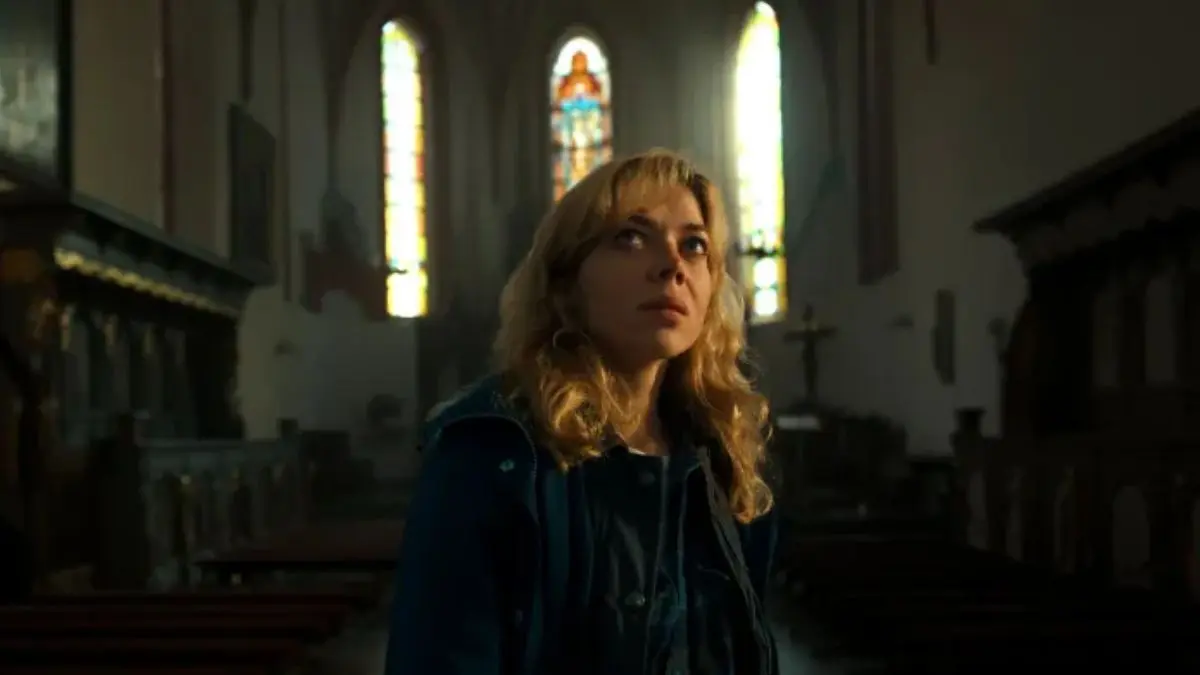

Spoiler Warning: The full ending of ‘Colors of Evil: Black’ is discussed in detail below.
Polish crime cinema has been finding one of its richest moments in years on Netflix, and the ‘Colors of Evil’ franchise sits at the center of that wave. When ‘Colors of Evil: Red’ arrived on the platform in May 2024, it quietly became one of the streamer’s most compelling international acquisitions, pulling audiences into a story of institutional silence, buried crimes, and a prosecutor who simply refused to stop pulling on threads. The sequel was never going to arrive quietly.
‘Colors of Evil: Black’ dropped on Netflix on June 10, continuing the adaptation of Małgorzata Oliwia Sobczak’s bestselling crime novel series. Director Adrian Panek returns, writing the screenplay himself, with Jakub Gierszał reprising the role of prosecutor Leopold Bilski alongside Marianna Zydek, Andrzej Chyra, Robert Gonera, Beata Ścibakówna, and Adam Bobik.
The shift in setting from the coastal urban world of the first film to the forested insularity of Kashubia is immediate and deliberate, and the film uses that geography to say something specific about how communities protect their own crimes.
The plot sends Bilski to a seemingly peaceful Kashubian town where the disappearance of a child begins to expose dark secrets. Following a trail of disturbing signs, psychological puzzles, and local legends, he must confront the darkness lurking beneath apparently ordinary everyday life. What looks like a missing child case quickly reveals itself to be something much more deeply rooted.
What Is Actually Happening in Kartuzy
Bilski’s opposite lead is Julia Sarman, played by Marianna Zydek, a local woman who feels separated from the town because of the way it has handled its own crimes. The abduction of her son Piotrus gives both her and Bilski a direct and personal thread to follow, and their relentless investigation eventually unravels an entire system of abuse and silence that has been threaded through with exaggerated local folklore. The folklore, it turns out, is not atmosphere. It is cover. It is the mechanism the town used to obscure crimes carried out by its most powerful members and to give ordinary people a way to not ask the obvious questions.
The film is deeply curious about how these cycles are perpetuated, examining the way fear, social ostracization, habit, and mythologizing all work together to keep a community complicit. The sequel disappears into the forests and revels in the insularity of local culture as a structural explanation for how evil survives across generations.
What the Ending Actually Means
By the time Bilski and Julia understand the full shape of what happened, the more disturbing recognition is how many ordinary people had to do nothing for it to keep happening. Bilski can close a disappearance. He cannot make a place confess to the thing it agreed, long ago, never to say.
This is where the film departs most meaningfully from conventional crime thriller territory. What the case cannot answer, and the film is honest enough to leave this open, is whether a community that buried its own crimes can ever be made to account, or whether an outsider with a badge and a file simply moves the silence from one town to the next. The film ends exactly where that question begins, and the filmmakers treat that as the right place to stop.
Much like the first film, ‘Colors of Evil: Black’ deliberately avoids being a traditional whodunit and instead uses the crime as a vehicle to explore deeper social issues. As Bilski investigates and pushes through the resistance surrounding the case, he realizes that things are entirely different from what he initially assumed, and the film’s real subject is not the culprit but the structure that produced and protected them.
A Divided Critical Reception
The film has received a genuinely mixed response. The critics are praising the stoic and grounded portrayal of Bilski and the film’s cinematography, noting that ‘Colors of Evil: Black’ leaves viewers disturbed by the time the end credits roll and the truth is exposed.
But some critics argued that Panek’s faux-intense tone is matched by paper-thin characters and that the film is so joyless and unvarying that even the identity of the culprit, when revealed, feels entirely unsurprising.
What is not in dispute is the franchise’s ambition. Sobczak’s series encompasses titles named Red, Black, White, Yellow, Blue, and Green, each using color symbolism to reflect emotional states, violence, and the psychological weight of crime in modern Polish society. Netflix has already adapted two of those entries, and the universe has significant room to expand.
Let us know in the comments what you thought of the ‘Colors of Evil: Black’ ending and whether you think Bilski can ever truly bring justice to the communities he investigates.


