‘Euphoria’ Season 3’s Burning Tree Ending Is Deeper Than You Think — And Sam Levinson Confirms It



‘Euphoria’ has never been shy about borrowing from the dramatic end of the symbolic spectrum, but Season 3 may have just delivered its most layered image yet. A burning tree on a dark road, a girl on her knees, and a creator who says the whole thing is built on a deliberate misread.
The moment arrives at the end of Episode 6, titled “Stand Still and See,” and it has sent fans and critics into full interpretive overdrive. Rue Bennett, buried alive one week and now kneeling before a burning tree the next, is no longer just a girl with a drug problem. The image is doing a lot of work, and the show knows it.
The Biblical Roots of Rue’s Burning Bush Vision
The ending of Episode 6 places Rue on a dark road, emotionally frayed and spiritually overloaded. Her Bible audio begins malfunctioning while she drives, and the distraction nearly gets her killed by an oncoming truck. She swerves, leaves the road, and steps out when she sees smoke. Then the tree in front of her catches fire.
The tree doesn’t burn away completely right away. It just keeps glowing, almost like it’s waiting for her to hear the message. In biblical terms, this isn’t just any fire. For Moses, the burning bush was the start of his calling to free his people. So for Rue, it could mean she’s at the edge of her own deliverance, that after all the running, burying, and near-deaths, something is stepping in to pull her through.
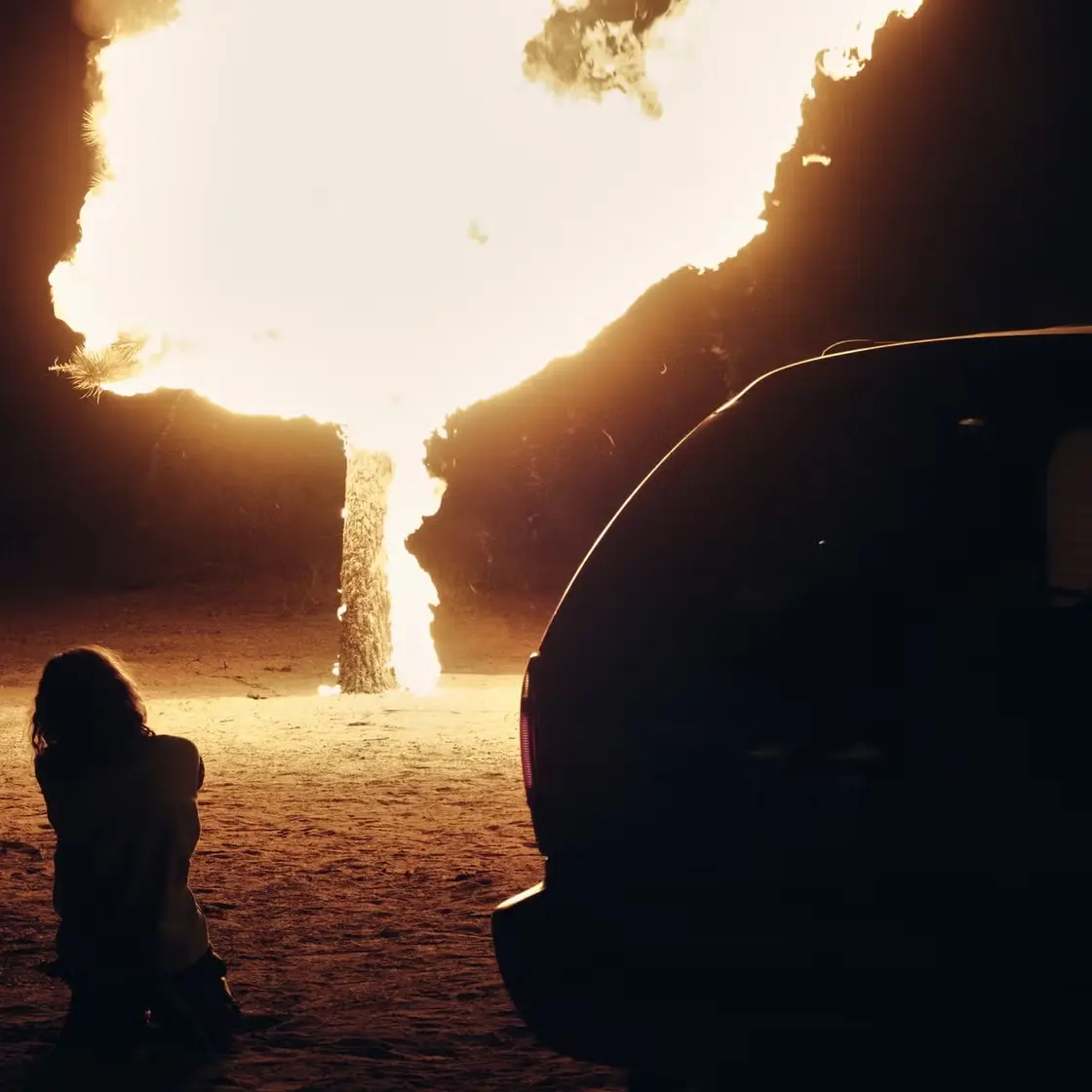
She has just prayed, confessed, apologized to Leslie, and wondered whether redemption is possible. So when the tree burns without warning, Rue falls to her knees because she thinks something bigger than herself is speaking.
The image is unmistakable, a direct echo of the burning bush from Exodus, a moment of divine intervention arriving at the precise second a person has run out of options. Whether the show treats it as literal or symbolic, the effect is the same.
Sam Levinson’s Twist on the Divine Intervention Reading
Here is where the scene gets genuinely unsettling, and where creator Sam Levinson steps in to reframe everything the audience thinks it just witnessed.
In a behind-the-scenes video for the new episode, Levinson said, “Rue is trying to search for something that’s more important than herself.” As for the meaning behind the final sequence, he explained, “It was just an early image that I had of Rue just staring at this burning Joshua tree.”
However, Levinson suggests it is much more complicated. Speaking in HBO’s behind-the-scenes featurette, he said, “What happens if God gives me some big sign and for some reason I just misinterpret it?” In other words, Rue is misinterpreting it, implying that she may be projecting meaning onto the moment as she wants to believe her actions are justified and that her life has a purpose.
Production designer François Audouy elaborated on how they created the moment, saying, “It was something that looks like we did nothing, but we did everything. We created a steel structure, sculpted a Joshua tree on top of it, and added real branches on top of that.”
What the Symbol Actually Foreshadows for Rue Bennett
The production craftsmanship is impressive, but the thematic weight is what makes viewers linger. This could be a genuine miracle confirming Rue’s faith and offering a real path forward. It could also symbolise her mind that is exhausted from trauma, drugs and constant danger, turning a near-death moment into a hallucinated message from God.
It could also be seen as a stark warning that everything in her life is literally on fire and that charging forward won’t save her or the people she loves. The tree foreshadows that Rue’s redemption arc will burn everyone around her, especially now that Bishop has direct contact with her mom.
At the same time, the context around the vision screams caution. Alamo just forced her to be the one who robs Laurie’s safe herself. Bishop’s python tale is a direct warning about things that feel safe and loving but are actually preparing to swallow you whole. That tender church moment has a threat baked in, since Alamo can reach her family anytime.
That’s when the burning tree will take on a whole new meaning, by which it’d start to look like a sign from Satan, not God. She’s the protagonist of the show but she’s not a hero. She’s caused quite a lot of harm to those around her.
Zendaya’s Performance and the Season’s Final Stretch
Zendaya keeps the story bruisingly intimate, and the episode is stronger when it stays inside Rue’s spiritual panic. The performance anchors what is essentially a scene built on theological ambiguity, and it works precisely because her conviction is total even when the audience’s certainty is not.
As Rue previously narrated, “Maybe every mistake I made led me to the right place after all.” Right now, she’s caught between the DEA and violent drug traffickers. The burning tree is not a resolution. It is a question dressed up as an answer.
With only two episodes remaining in what may be the series’ final season, the question of whether anyone in this story actually survives to something resembling peace feels genuinely unresolved for the first time. ‘Euphoria‘ has built its entire third season around the idea that survival is not the same as salvation. The burning Joshua tree puts that tension on full display, and with Sam Levinson himself saying Rue has the meaning wrong, the fire may be spreading toward something far darker than a miracle.
If you’ve watched “Stand Still and See,” does the burning tree read to you as divine grace, a warning Rue is too far gone to decode, or something the show is leaving deliberately open for the final two episodes?