Five Ways ‘Supergirl’ Let the DCU Down Right When It Needed to Fly

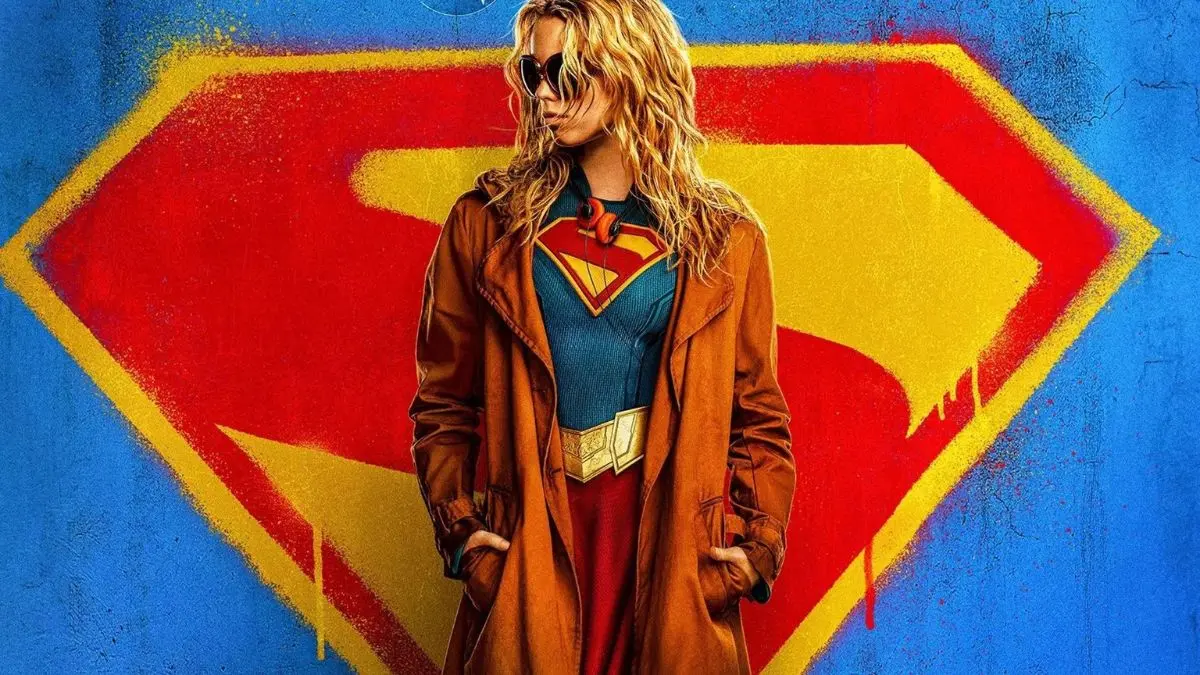

DC had genuine momentum heading into the summer. James Gunn’s reboot was building goodwill fast, and ‘Supergirl‘ arrived carrying the hopes of an entire cinematic universe riding a wave that started with the critically beloved ‘Superman’ the year before. Milly Alcock had already proven herself in the role. The source material, Tom King’s ‘Supergirl: Woman of Tomorrow,’ was widely regarded as one of the character’s finest stories in years. Everything looked set for a winning follow-up.
Instead, the movie landed with a thud. Despite its appealing lead, ‘Supergirl’ defaults to too many clichés of superhero cinema at its worst, with action sequences described by critics as jerky and disjointed. It earned a Rotten Tomatoes score of 57%, which sees it slipping just over the edge into Rotten territory. Here are the five biggest problems holding it back.
The ‘Supergirl’ Script Problems Run Deeper Than Anyone Expected
Many of the film’s core issues can be traced directly to the script, written by relative newcomer Ana Nogueira, who Gunn has also hired to write the upcoming ‘Wonder Woman’ and ‘Teen Titans’ films. That fact alone has rattled critics and fans who worry the problems seen here are not isolated. A weak foundation in one film risks spreading to two of the DCU’s most anticipated projects.
Criticisms of the screenplay include how it feels unfocused and fails to properly make Kara as complex as the movie keeps suggesting she is. Rather than genuinely exploring Supergirl’s grief or moral outlook, the film leans on surface-level shorthand. Everything the movie tells us about how Supergirl has been dealing with trauma and grief is described by critics as a big “cool girl” cliché, presenting her as a hard-drinker, a wisecracker, and a no-nonsense fighter in ways that are supposed to conceal her vulnerabilities.
Variety’s Owen Gleiberman, writing for the outlet, called it a comic-book movie with the worst script he could remember, arguing the entire film mistakes irreverence for purpose. CBC’s Jackson Weaver described the writing and direction as amateurish, leaving the film equal parts inane and inert. For a studio that publicly committed to putting script quality first, that is a damaging verdict on only its second theatrical outing.
Another commonly pointed-out flaw is that the screenplay fails to adapt the heart and epic scale of the ‘Supergirl: Woman of Tomorrow’ comics, as well as Supergirl’s inconsistent stance on violence throughout the story. When a film’s source material is this beloved, failing to capture what made it resonate feels like a particularly costly misstep.
The Krem Villain Failure Drags the Whole Movie Down
No single problem in ‘Supergirl’ has drawn more unanimous criticism than its antagonist. As villains go, Krem is bottom-of-the-barrel fare. Aside from being a generic sadist, he lacks charisma and menace, feeling more like a street-level thug than a worthy foe for a Kryptonian powerhouse. In a genre where the villain defines the stakes, a forgettable bad guy makes the hero’s journey feel pointless.
A great villain forces a hero to grow, pushing her not just physically but morally. Sadly, Krem offered minimal moral nuance, and the conflict felt repetitive because his danger was solely tactical or physical.

Matthias Schoenaerts is never given the material needed to make the character threatening. Critics compared Krem to the most forgettable, bottom-tier comic book villains ever seen, including Malekith from ‘Thor: The Dark World’ and Steppenwolf from the theatrical cut of ‘Justice League.’
The irony is particularly sharp given that Gunn himself once admitted to a weak villain problem on ‘Guardians of the Galaxy,’ pointing to Ronan the Accuser as something he would redo. This time, however, Gunn is not the director being overruled by a committee. The DCU is his greenlight, his slate, and his creative call. There is no committee left to absorb the blame. The Supergirl movie villain is also criticized for having a generic design compared to that of a background ‘Guardians of the Galaxy’ character, and for never settling on a firm identity, oscillating between frightening and comedic without conviction.
Bland Visuals Betray the Comic’s Gorgeous Cosmic Scale
One of the most consistent complaints across reviews concerns the film’s look. Supergirl’s reviews heavily criticize the movie’s visuals for being bland, boring, and overly grey and brown, which is a major blow to its appeal given the vibrant source material. The space-adventure setting should have been the film’s greatest visual asset, and it became one of its biggest liabilities instead.
In the pages of the ‘Supergirl: Woman of Tomorrow’ comics, Ruthye and Kara’s journey across the galaxy felt unique and impossible to look away from, thanks to Bilquis Evely’s gorgeous cosmic artwork. The film strips away that visual distinctiveness, replacing it with drab and lifeless rocky terrains. The contrast between what this story looked like on the page and what it looks like on screen has genuinely frustrated fans of the source material.
Multiple reviews criticize the movie for feeling familiar, borrowing elements and visuals from other Marvel and DC movies perceived to be better. When a film is supposed to establish a character’s cosmic scale and instead evokes a cheaper version of something audiences have already seen, it is very difficult to recover. Critics have noted that ‘Superman’ was visually stunning with colors that popped like crazy, making the disappointment with ‘Supergirl’s’ drab palette hit even harder by comparison.
Lobo Gets Shoehorned In at the Expense of Kara’s Story
Jason Momoa’s arrival as Lobo was one of the most anticipated elements of the entire film. The character is a natural fit for the actor, and early buzz suggested he would be a scene-stealer. Most reviews agree that Momoa’s energetic Lobo is a comics-accurate scene-stealer, but there does not seem to be a particularly strong role for the character in the larger narrative.
Fans who were excited about Momoa’s Lobo found it baffling that the character feels boring in execution, noting he stumbles in and out of the larger plot with all the consequence of a Stan Lee MCU cameo.
The very quality that should have made the character a highlight becomes a structural problem when he occupies screen time that Kara desperately needs. Lobo ends up taking too much of the film’s runway for himself without actually strengthening Supergirl’s own journey, bringing explosive action and fun lines without any narrative substance behind them.
Lobo is completely jammed into the movie to hunt some random brigand audiences never fully get to know, with the script relying on awkward, exposition-heavy dialogue to introduce characters rather than letting the story do the work organically. A character as wild and over-the-top as Lobo requires a story strong enough to contain him, and ‘Supergirl’ simply is not that story.
A Supergirl Box Office Disappointment the DCU Cannot Ignore
The critical reception directly impacted the film’s commercial performance. Against a reported budget of around $186 million, the film reportedly needs to earn $300 million worldwide in order to break even in theaters, a benchmark that is far from guaranteed. For context, Gunn’s ‘Superman’ debuted to $125 million last summer and ended its run with $618 million globally. The gap between those two figures tells its own story about audience confidence.
The reviews hamstrung the film considerably, and being sandwiched between ‘Toy Story 5’ and ‘Minions and Monsters,’ two installments in massively popular family-friendly franchises, was not the best strategic positioning. The domestic opening aligns with opening weekends for famous DC disappointments like ‘The Flash’ and ‘Green Lantern.’ That is not the company any studio wants its flagship new hero standing beside.
What the numbers might represent is a broader trend: the era where any superhero could become a global box office star simply by being the new superhero on the block may be over. The story of ‘Supergirl’ is not just one film misfiring. It is a warning about what happens when a promising hero and a genuinely talented lead actress are not supported by the storytelling they deserve.
Now that the reviews are in and the opening weekend numbers are settled, are you convinced that ‘Supergirl’ is a one-film stumble for the DCU, or does Milly Alcock’s clear potential as Kara Zor-El make you believe the character still has a future worth fighting for?