‘Fjord’ Ending Explained: What Noora’s Walk on Water Really Means for Elia, the Gheorghius and the Verdict Mungiu Never Gives


Cristian Mungiu has built a career on films that refuse to hand viewers an easy answer, and ‘Fjord‘ might be his most stubborn one yet. The Romanian filmmaker won his second Palme d’Or at Cannes for the drama, which Neon released in the United States on October 9.
The film follows the Gheorghius, a devout Romanian Norwegian couple played by Sebastian Stan and Renate Reinsve, who move with their 5 children to a remote village in Norway. It is loosely inspired by the true story of the Bodnariu family, whose children were taken by the Norwegian authorities, and it asks hard questions about faith, discipline and who gets to decide what protects a child.
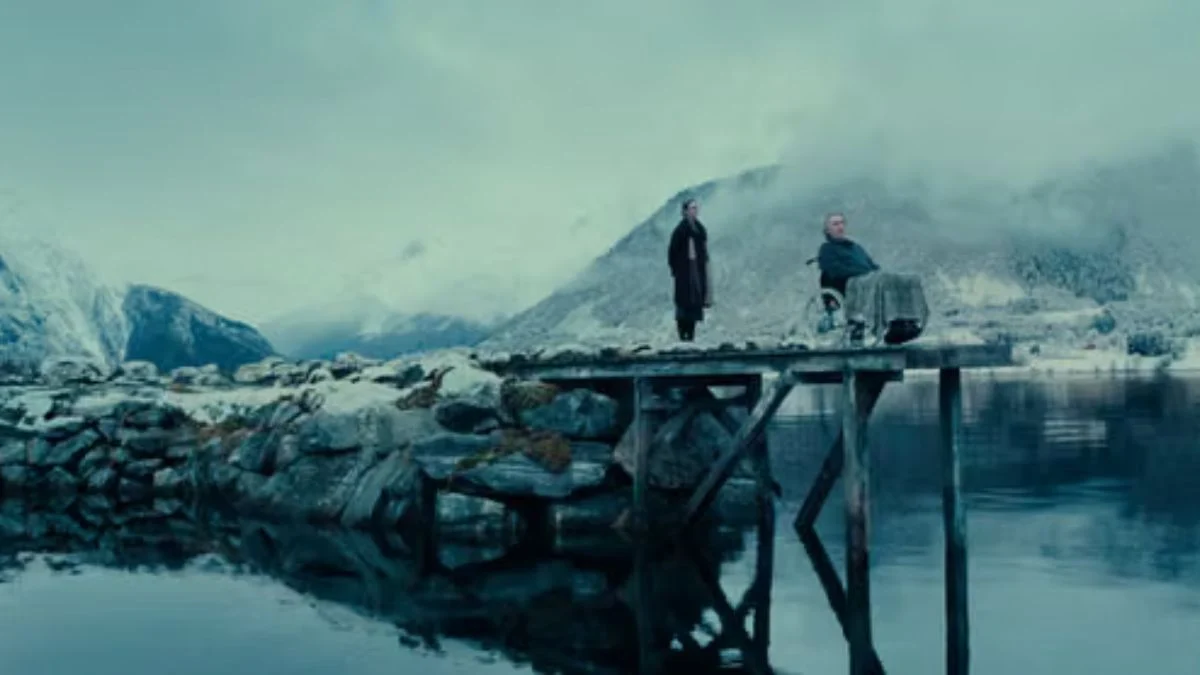
The ending, though, is where the film leaves many viewers stunned and a little confused. By the final scene, the family has been reunited, but a pending criminal trial still threatens to separate them again, so they leave Norway rather than risk it. Elia boards the boat without a proper goodbye, and the film closes on Noora racing to the water, seemingly walking on the fjord as she cries out to her friend.
After a long legal fight, a Child Services panel conditionally returns the children to their parents, pending a ruling in a separate criminal case. Mia, the neighbor who had represented the family, declines to take the criminal trial. That leaves Mihai and Lisbet facing the very real fear of losing their children for good.
At the same time, Mihai begins to suspect that there is a romantic attraction between his daughter Elia and Noora, the neighbor’s daughter. Those fears help push the family to flee. Noora tracks the phone she gave Elia and rushes after them, but she arrives just after the boat has left.
As the boat pulls away, Noora calls out that she loves Elia, and the eldest Gheorghiu daughter calls back a warning for Noora to be careful. Then Noora runs out into the fjord, and the film cuts to black on her seemingly walking on water.

The film never says. Mungiu deliberately leaves open what really happened inside the family, and he withholds the courtroom verdict a traditional legal drama would offer. Mihai admits to spanking his children, but the origin of Elia’s bruises is never settled, and the story keeps both the parents and the state under scrutiny.
That refusal is the point. Each side believes it is protecting the children, and the children are the ones who lose their friendships, their home and their stability. The ending doesn’t repair any of that, since the family simply leaves and the connections they made in the village are cut off.
The official trailer for Cristian Mungiu’s ‘FJORD’ has been released. Starring Sebastian Stan and Renate Reinsve. In theaters on October 9. https://t.co/vKmEQxkVVp
— Film Updates (@FilmUpdates) August 27, 2026
The image is a deliberate echo. Earlier in the film, Noora is fascinated by seeing Elia move near the boats as if she is walking on the water, and Elia hints that she will reveal her secret. In the closing shot, the roles reverse, and Noora is the one who seems to perform the miracle.
Mungiu also keeps a practical explanation in play. Noora is moving across a partly submerged structure, not floating, so the shot holds the rational and the spiritual side by side. It is a religious image that the film never fully commits to.
According to the filmmaker, the two teenage girls are the characters who actually change over the course of the story. One comes to see that life can hold intuition and spirituality that reason can’t explain, while the other learns that obeying her parents and upbringing without question isn’t the only path. The adults, meanwhile, dig in.
Some readers also see a quiet romantic undercurrent between Elia and Noora. Noora makes plans to help Elia and her brother avoid being separated again, and her declaration of love as the boat leaves lends weight to the idea. It also explains why Mihai’s concern about their closeness may have influenced the decision to leave.
Whether or not you read it that way, the final image leaves the impression of a bond that the adults’ choices have cut short. It is the film’s saddest note, and it shifts the focus away from the courtroom and toward two young people who were changed by each other.
‘Fjord’ ends on an image instead of a ruling, and that is the whole design. It is a story about good intentions colliding, and about the pain left behind when each side is certain it is right.
What do you think the ending is really telling us?
Have something to add? Let us know in the comments!