‘Hokum’ Skips the Post-Credits Scene Entirely, and Here’s Why That Actually Works

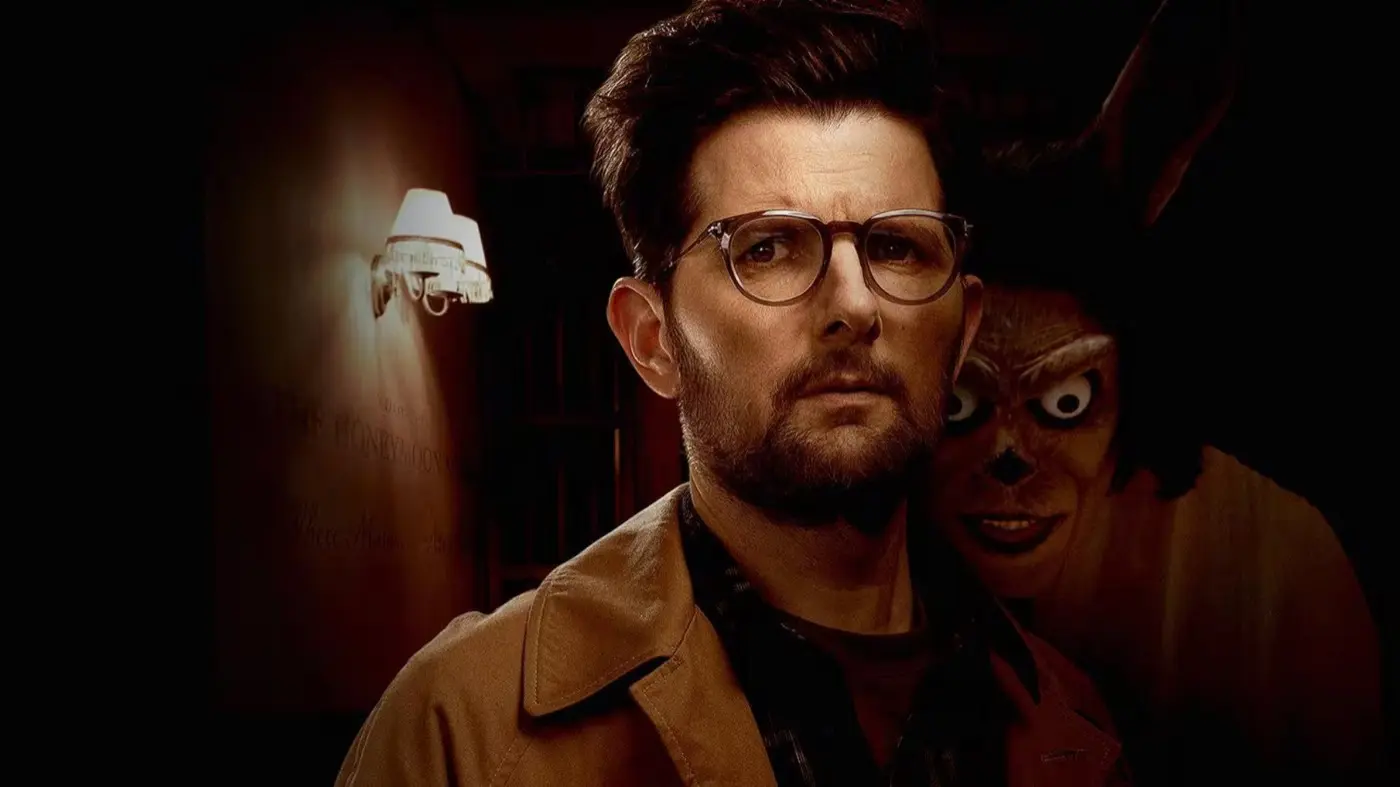

Adam Scott has made a quietly brilliant return to horror with ‘Hokum’, and audiences heading into theaters are right to ask one very practical question before settling in. Do you need to stay glued to your seat through the full credits roll, or can you make a clean exit once the story wraps up? The answer is refreshingly straightforward for a genre that has increasingly leaned on bonus footage as a marketing tool.
There is no post-credits scene in ‘Hokum’. Confirmed by multiple reviewers, the film contains neither a mid-credits nor a post-credits scene, so audiences can walk out the moment the credits begin without missing a single frame of additional content. For a film this deliberately crafted and psychologically dense, that creative choice says a great deal about what director Damian McCarthy was going for.
The Adam Scott Horror Movie You Did Not See Coming
Adam Scott, who gained widespread recognition with ‘Severance’, is no stranger to horror, having previously appeared in films such as ‘Little Evil’, ‘Krampus’, and ‘Piranha 3D’, and even had a role in the 1996 film ‘Hellraiser: Bloodline’ during the early years of his career. None of that history quite prepared audiences for what ‘Hokum’ delivers, though.
In ‘Hokum’, Scott stars as Ohm Bauman, a bitter alcoholic novelist who travels to the remote Bilberry Woods Hotel in Ireland to procrastinate on finishing the last book in his popular Conquistador series. The premise sounds deceptively simple, but McCarthy uses it as a pressure cooker for something far more layered and unsettling than your average haunted hotel story.
Many reviews have described Scott’s dramatic performance as a career best for portraying a snarky but emotional protagonist. That combination of sharp comedic energy and genuine psychological weight gives the film a texture that sets it apart from genre contemporaries. There is a stroke of brilliance in casting Scott, as the miserable novelist is amusingly a jerk to nearly everyone he comes across, pulling from his persona as a comedic actor while playing a character as miserable as the disturbing books he writes.
What Happens at the Damian McCarthy Haunted Hotel
When reclusive novelist Ohm Bauman retreats to a remote Irish inn to scatter his parents’ ashes, the staff’s tales of an ancient witch haunting the honeymoon suite take hold of his mind, and soon disturbing visions and a shocking disappearance draw him into a nightmarish confrontation with the darkest corners of his past. That disappearance belongs to Fiona, a hotel bartender played by Florence Ordesh, whose vanishing sets the plot into full motion.
The film feels inspired by horror video games like ‘Alan Wake’, ‘Silent Hill’, and ‘Amnesia’, with a man in a jacket looking for a missing woman while unraveling a mystery and solving puzzles along the way. That observation from Newsweek captures something real about the film’s architecture. It is built around a protagonist forced to move through layers of dread at his own pace, confronting things he would very much prefer to leave buried.
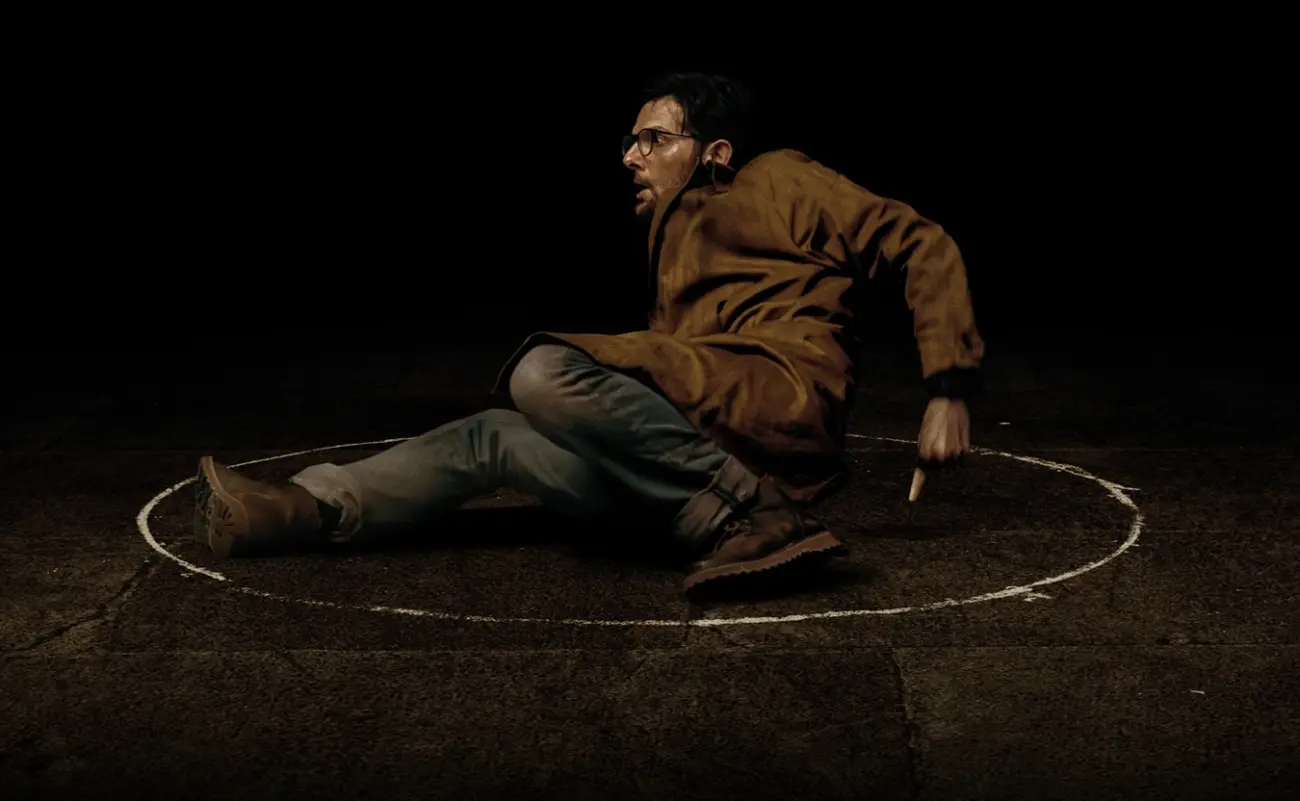
‘Hokum’ rises above so many films like it because it takes its character’s plight seriously, never winking at the audience even as the impossible happens, and the folk tales woven into its story are ones you dismiss at your own peril. McCarthy treats the supernatural elements with the same weight he gives the emotional ones, and that tonal consistency is what makes the scares land with such genuine force.
The film opens with a conquistador wandering a barren desert, a child trudging behind him, and a map to treasure stuck inside a bottle that can only be retrieved by shattering it against the boy’s skull. It is bleak, and this preamble is a feint, but it does serve to set up the troubled mindset of Ohm Bauman, who is the author of this imagined standoff.
The Hokum Ending and Why No Bonus Scene Was Ever Needed
Reviewers have called the film’s final scene one that could not have been any better, suggesting the movie wraps with intention and closure rather than a dangling hook. That consensus across critics is telling. When a film’s final beat lands with that kind of weight, tacking on a post-credits sequence would actively undermine what came before it.
By the end of the film, as Ohm recovers in a hospital bed, he changes the fictional scene he had been agonizing over throughout the story. In his new version, the child in his novel does not accept the hit and instead throws the bottle away, rejecting the Conquistador’s violence. This shift represents Ohm’s hard-won move toward self-acceptance. It is a quiet, earned moment of grace in a film that spends most of its runtime in psychological darkness.
In an interview conducted by CBR, star Adam Scott and writer-director Damian McCarthy opened up about the horror movie’s surprisingly hopeful ending and revealed that the film almost went in a much darker direction. That the creative team ultimately chose hope over bleakness gives the ending real emotional resonance, and it explains perfectly why no additional scene was ever part of the plan. The story is complete.
How ‘Hokum’ Fits Into Damian McCarthy’s Growing Legacy
McCarthy’s latest film firmly stands on its own two feet even as it plays with folk horror and the idea that real-world violence can unearth a supernatural reckoning. If ‘Caveat’ and ‘Oddity’ were indicators of a strong future by their creator, ‘Hokum’ is the fulfillment of that promise. That is high praise from a publication as respected as Roger Ebert’s platform, and it reflects a critical consensus that has built steadily around this film.
McCarthy got introduced to more audiences with ‘Oddity’, which holds a 96% on Rotten Tomatoes, and it did not take him long to get his next project off the ground, with ‘Hokum’ released less than two years after ‘Oddity’. The momentum is real, and the speed of production has not cost him anything in terms of quality. The film currently holds an 88% score on Rotten Tomatoes and has been labeled Certified Fresh by the review aggregator.
Principal photography took place in West Cork in Ireland in February and March 2025, and Neon acquired worldwide rights to the film handling international sales at the 2025 Toronto International Film Festival. From festival circuit buzz through to a wide theatrical release, ‘Hokum’ has followed a path that feels earned rather than manufactured. The film premiered at SXSW and carries a runtime of 107 minutes, distributed by Neon in the United States and Black Bear Pictures in the United Kingdom and Ireland.
‘Hokum’ is exactly the kind of horror film that does not need to beg for your attention after the credits roll, and whether you found the Bilberry Woods Hotel genuinely terrifying or thought Adam Scott’s broken novelist was the real monster all along, that ending debate is one worth starting in the comments.