The Ring, the Octopus, and the Truth: ‘Remarkably Bright Creatures’ Ending Fully Explained

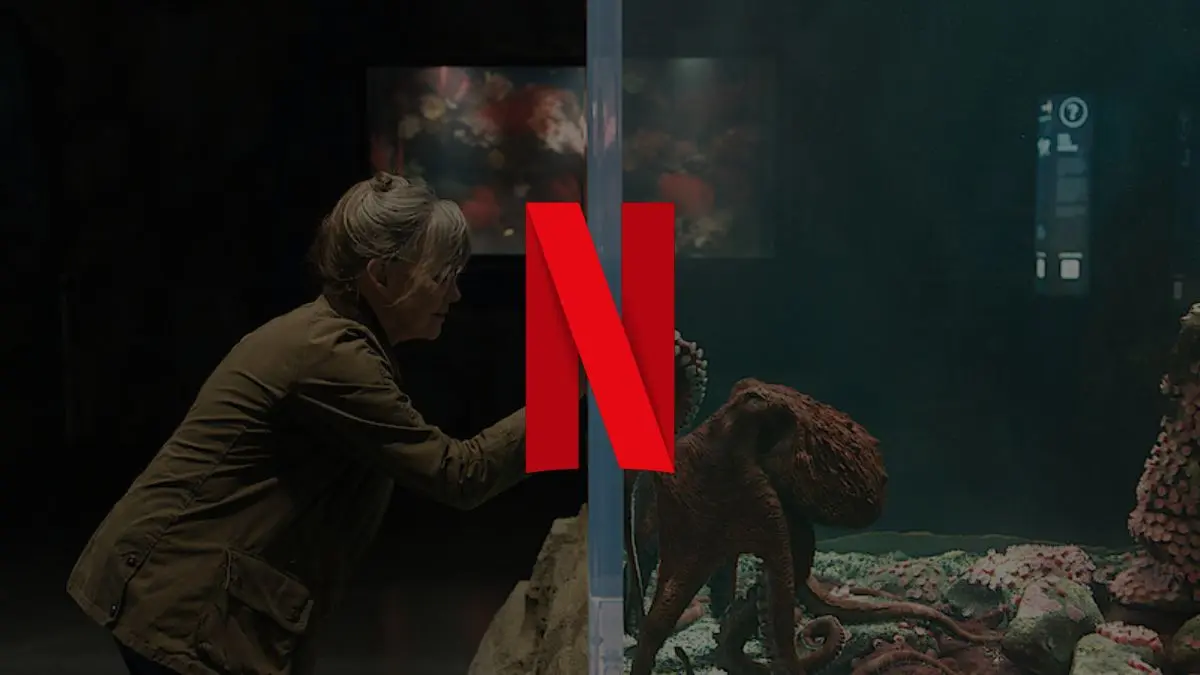

Few Netflix films in recent memory have landed with quite as much emotional weight as ‘Remarkably Bright Creatures,’ the streaming giant’s adaptation of Shelby Van Pelt’s beloved debut novel. Van Pelt’s book spent more than 64 weeks on the New York Times hardcover fiction bestseller list, and the screen version carries that same warmth and literary pedigree into a deeply affecting drama. Directed by Olivia Newman, who previously adapted ‘Where the Crawdads Sing,’ the film brings together an extraordinary cast navigating grief, identity, and the strange consolations of unexpected connection.
The film stars Sally Field as Tova, a widow who cleans a small aquarium by night, alongside Lewis Pullman as Cameron, the adrift young man who drifts into her orbit, and Alfred Molina voicing Marcellus, the giant Pacific octopus at the centre of the story. The coastal small-town setting, the cozy rhythm of night shifts, and the peculiar friendship between an elderly woman and a cephalopod all establish a quiet, tender atmosphere that makes the film’s final act hit so much harder by comparison.
What Happens at the End?
The ending reveals that the missing father Cameron came to Sowell Bay in search of was Tova’s son all along. The ring’s inscription, “EELS,” is not the high school mascot as Cameron had long assumed. It stands for Erik Ernest Lindgren Sullivan, Tova’s son, who died in a tragic boating accident at 18. This revelation is the culmination of a slow-burning mystery that neither character could have unravelled alone.
The mechanics of how the truth surfaces fall entirely to Marcellus. In the film’s finale, Cameron grows frustrated after every lead on his father’s identity runs dry. He throws his father’s class ring into the eel tank in a moment of anger. Marcellus, who has already deduced that the ring is key to everything, breaks out of his own tank, sneaks into the eel tank to retrieve it, and begins making his way toward the aquarium’s back door. It is a sequence of pure cinema, built on the improbable and quietly magnificent logic of an octopus who understands what the humans around him cannot yet see.

Tova and Cameron’s True Connection
When Tova notices a wet streak leading away from Marcellus’ tank, she goes looking for him and finds the octopus on the floor next to the back door, looking out at the sea. She realises what he wants: freedom, a return to the ocean. Knowing that Marcellus is in the later years of his life, she decides to set him free.
But before that goodbye arrives, the ring delivers its revelation. Tova Sullivan’s thirty-year search for the truth about her son ends not with a police file, but with a class ring retrieved from the bottom of an aquarium tank. The film confirms that Cameron is the living legacy of Erik Sullivan, and the finale ends with Tova releasing Marcellus back into the ocean, symbolising her transition from a life defined by grief to one defined by a newfound family.
At the start of the film, Tova has locked herself away in an isolated life completely built around her grief and loneliness. But thanks to Marcellus and Cameron, she learns to open up and embrace the world again. A big focus of the story is how Tova has spent so much of her life consumed by the deaths of her son and husband that she has forgotten how to live.

What Happens to Marcellus?
The film makes clear that Marcellus is near the end of his life. Giant Pacific octopuses have a relatively short lifespan of only between three and five years. Dictated by his counting of days, Marcellus is already squarely between these figures and headed toward his death. The people at the aquarium have settled into moving on, and a new octopus has already been adopted to eventually take his place.
When Marcellus stands at the door overlooking the water, Tova decides to release him. He is placed into the ocean, where he is able to live out the rest of his days in peace, in a vast and open natural habitat. Tova eventually winds up taking a new role at the aquarium as a docent, while Marcellus is replaced by another octopus, a female this time. The circle closes gently.
Why the Ending Works
As a film about people, ‘Remarkably Bright Creatures’ has a gentle sense of humour and depth of feeling enough to sweep you away on a wave of emotion. Critics have noted that the chemistry between Field and Pullman carries enormous weight throughout the film, and the ending channels all of that built-up feeling into a payoff that is both earned and deeply moving.
Director Newman deserves credit for allowing the mystery to breathe rather than race. The revelation about the ring does not arrive as a twist engineered for shock. It arrives as something closer to inevitability, the satisfying last piece of a puzzle that Marcellus, smarter than any human in the room, assembled long before anyone else. Alfred Molina voiced Marcellus bringing his sassy barbs and pearls of wisdom to life, saying he did not arrive with any preconceived ideas of how an octopus should sound, since the character operated by different rules than voicing a human.
Whether you read Shelby Van Pelt’s source novel or came to the story fresh through Netflix, the ending of ‘Remarkably Bright Creatures’ offers something increasingly rare in mainstream streaming: a resolution that is warm without being saccharine, and bittersweet without being cruel.
Share your thoughts on the ending of ‘Remarkably Bright Creatures’ in the comments below.