Is Longshot’s Luck Field More Than a Mutant Power Or Just Advanced Game Theory in Action?


The question of luck has been around for centuries, and various people and nations have interpreted it in vastly different ways. The ancient Romans personified it as Fortuna, a goddess who spun a wheel that could elevate or ruin anyone without warning.
Norse tradition spoke of wyrd: a kind of fate woven into the fabric of existence. Eastern philosophies tied fortune to karma, suggesting that outcomes are shaped by the moral quality of past actions. Across all these traditions, one tension persists: is luck something that simply happens to you, or is it something you can influence?
Nowadays, the question of luck often arises in the context of casino games, with some games being more reliant on luck than others. This question has become even more pronounced since Insider Gaming’s sweepstakes picks were released. As these platforms offer a variety of casino-style games tailored to different tastes, more players have been joining them and actively debating how much luck truly governs outcomes versus skill, timing, or strategy.
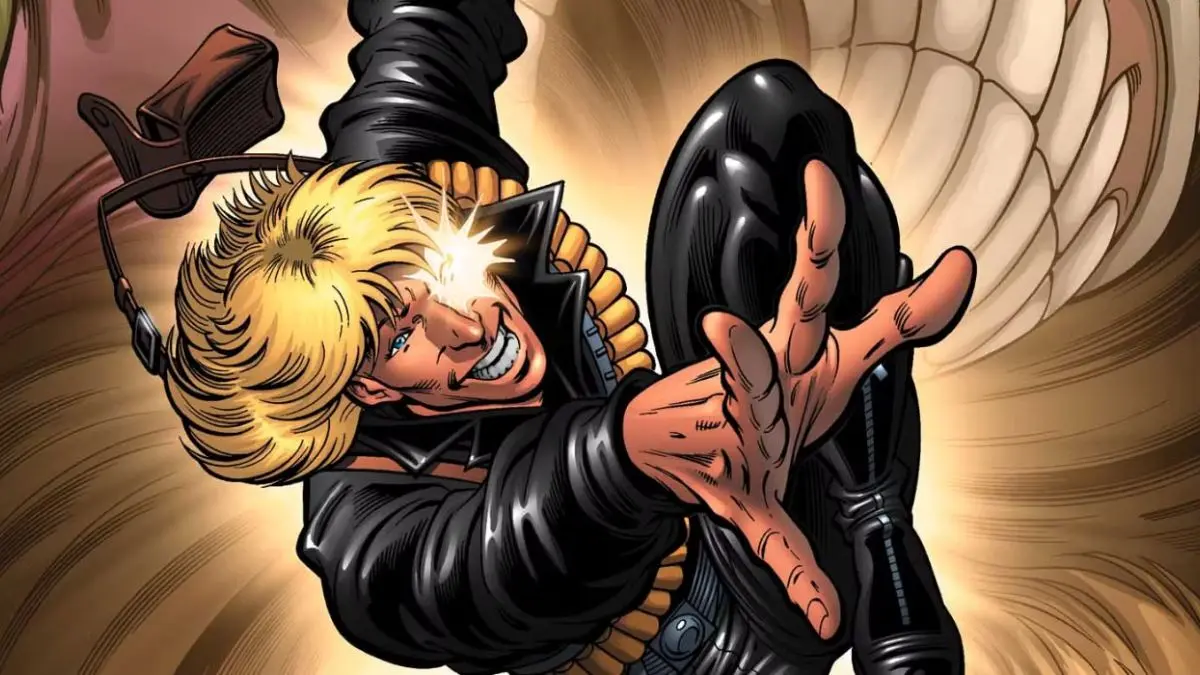
But the element of luck is also omnipresent in the comic book world, and few characters embody that theme more completely than Longshot. He is Marvel’s most philosophically loaded take on fortune, a character whose entire existence raises questions about chance, morality, and the nature of probability itself.
He is, without exaggeration, one of the best representatives of what luck can look like when given physical, measurable, and morally conditional form.
Who Is Longshot?
Longshot first appeared in his own limited series in 1985, created by Ann Nocenti and Arthur Adams. He is a humanoid being who escaped from the Mojoverse, a slave dimension ruled by the tyrant Mojo, and arrived on Earth with no memory of who he was or where he came from.
He looks human, carries hollow bones that make him extraordinarily agile, and has four fingers on each hand. He also carries throwing blades and possesses an almost supernatural ability to survive situations that should kill him.
Here is where many readers get surprised: Longshot is not technically a mutant. He was artificially created, genetically engineered to serve as an entertainer and fighter in Mojo’s gladiatorial broadcasts.
His abilities were further augmented through magical means during his creation. This distinction matters when the title’s question is examined. Calling his luck field a mutant power is inaccurate by Marvel’s own classification. It is a designed and magically enhanced ability in a being who was built, not born. That foundation alone makes his power significantly more complicated than it first appears.
How the Luck Field Actually Works
At its core, Longshot’s ability is psionic probability manipulation. He can psionically influence probability fields around him, bending the likelihood of outcomes in his favor without any conscious calculation.
In practice, this means enemies trip at critical moments, weapons jam before they fire, ropes somehow tie themselves around pursuing guards, and debris falls in ways that block his attackers but clear his path. The environment around him shifts in subtle ways, cumulatively producing outcomes that should be statistically impossible.
The power operates partly at a subconscious level, which means Longshot does not always choose when or how it activates. One notable signal is his left eye, which glows when the ability engages, a visual cue that something in the probability field has shifted. This unconscious dimension is important.
He is not sitting down and calculating odds. The field responds to his situation and, crucially, his intentions. That distinction between conscious strategy and instinctive probability warping is central to everything that makes this power unusual.
The Moral Catch: Why Pure Intentions Matter
This is the element that separates Longshot from virtually every other probability-based power in comics. His luck field does not function neutrally. When his motives are selfless, when he is acting to protect others, to do what is right, to serve a cause beyond himself, the power works reliably.
When he attempts to use it for personal gain, or when his intentions carry any shade of selfishness or corruption, the field reverses. Bad luck floods in. The very probability warping that saves him becomes the mechanism that undoes him.
Ann Nocenti, who wrote much of his defining material, articulated this clearly. The underlying idea is that pulling probability toward yourself necessarily takes it from somewhere or someone else.
Luck is not infinite. When Longshot draws good fortune selfishly, the imbalance creates a debt that the field collects immediately and badly. This transforms the power from a cheat code into something closer to a philosophical contract: a constant, living test of character. Every time his luck holds, it is confirmation that his motives are clean. Every time it fails, the field is telling him something about himself.
So, Is It Actually Game Theory?
Game theory is the study of decision-making in situations where outcomes depend on the choices of multiple actors, often under conditions of uncertainty. A perfect game-theory player identifies the optimal path through a chaotic system by weighing probabilities, anticipating opponent moves, and selecting the strategy most likely to produce the best result.
Watching Longshot operate, there is a surface-level resemblance. He consistently finds the optimal path to the outcome. He survives scenarios where the odds are stacked against him. He threads through chaos in ways that, in retrospect, look like perfect strategic execution.
But the comparison breaks down at a fundamental level. Game theory is rational, calculated, and entirely amoral.
A chess grandmaster does not need a pure heart to identify the best move, only a clear mind and sufficient skill. Longshot’s system inverts this entirely. His optimal outcomes are not produced by calculation. They are produced by moral alignment. The moment selfishness enters the picture, the optimal path closes.
No game-theory framework accounts for the ethical state of the decision-maker as a variable in the probability calculation. Longshot’s luck field does exactly that, which means it belongs to a different category of logic altogether.
Comparing Longshot to Other Probability Manipulators
Marvel has several characters who operate in the probability space, and placing Longshot among them clarifies what makes him distinct. Domino, the X-Force mercenary, has a power that functions in a more straightforward statistical way.
Her subconscious telekinesis subtly alters physical variables (her body position, small environmental factors) to produce outcomes that favor her survival. It is a physical, unconscious process without a moral gating mechanism. She can be selfish, cynical, or mercenary, and her power still works.
Scarlet Witch operates at the other extreme. Her chaos magic does not merely nudge probability; it rewrites reality at a fundamental level. The scale is entirely different, and the mechanism is rooted in her connection to chaos energy rather than in any probability-field logic.
Between these two, Longshot occupies a precise middle ground: more structured than Wanda’s reality reshaping, more morally loaded than Domino’s statistical nudging. The moral dimension is his alone among Marvel’s probability manipulators, and it is what makes his version of the power genuinely unique within the publisher’s roster.
Mutant Power, Advanced Probability, or Both?
The honest answer to the question is that Longshot’s luck field is neither purely a mutant power nor a clean expression of game theory; it is something more specific and more interesting than either label allows.
It is a psionic and magically augmented probability manipulation system that happens to produce outcomes consistent with optimal game-theoretic decision-making, but only when the operator’s conscience is clear.
That combination does not fit neatly into any existing category, which is precisely why the character has endured and why writers keep returning to him when they want to explore what luck actually means.
What Nocenti built into the character from the beginning was a power that doubles as a moral accountability system. That is rare in superhero fiction, where powers are usually defined by what they can do rather than by the conditions under which they operate. Longshot’s luck field is, at its core, a statement: good outcomes follow good intentions, and the universe keeps score.