Martin Scorsese Revealed the Two Filmmakers Who Rewired His Entire Career

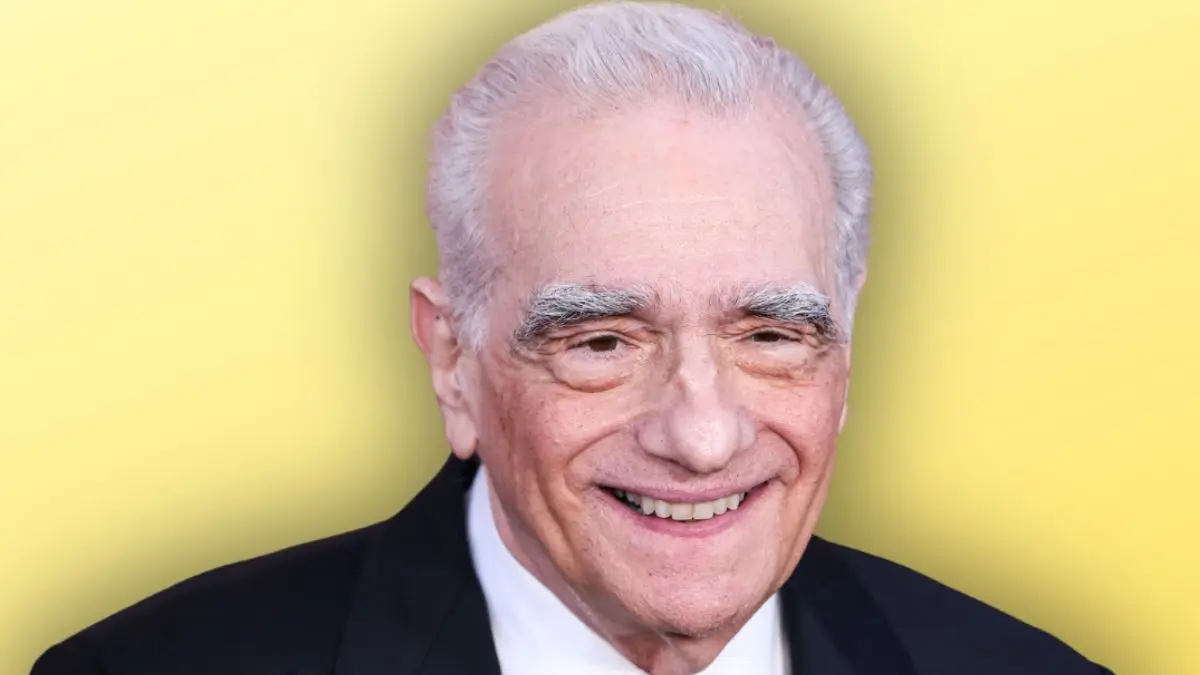

Few directors from the New Hollywood generation are still working with the urgency Martin Scorsese brings to a set nearly sixty years into his career. Steven Spielberg’s blockbuster instincts have cooled, Francis Ford Coppola’s late-career swings have grown unwieldy, and Brian De Palma has settled into a quieter, less essential run of projects.
Scorsese, by contrast, keeps finding new gears. From the manic energy of ‘The Wolf of Wall Street’ to the hushed spirituality of ‘Silence’, his filmography has refused to flatten out the way so many of his peers’ have. That consistency, it turns out, traces back to two filmmakers who reshaped how a young Scorsese thought about what a movie could even be.
According to a resurfaced passage from Mary Pat Kelly’s 1991 Scorsese biography, the director credited John Cassavetes and Shirley Clarke with cracking open his understanding of personal filmmaking. He recalled watching Cassavetes’ ‘Shadows’ and Clarke’s work and realizing you could make a narrative film about your own life, something Hollywood simply was not built to produce at the time.
He remembered his father dismissing the idea that a studio would ever greenlight something so raw, which only pushed him to ask himself what if he did make a film like that.
That question turned out to define an entire career. Scorsese has spoken about Cassavetes in similar terms elsewhere too, once saying that after ‘Shadows’ arrived there were no more excuses for filmmakers who wanted to make something personal, adding that if Cassavetes could do it, so could the rest of them.
Cassavetes, who financed most of his own films outside the studio system and shot ‘Shadows’ for around forty thousand dollars, became something of a patron saint for the independent movement Scorsese would later be lumped into alongside ‘Mean Streets’.
Clarke’s own boundary-pushing work sat alongside Cassavetes’ in that same New York scene, both filmmakers proving that guerrilla, low-budget storytelling could carry as much weight as anything coming out of a studio backlot.
Scorsese also pointed to his NYU professor Haig Manoogian as the final push he needed, crediting the teacher with helping him express himself using the new cinematic language being forged by the French New Wave, Italian neorealism and the American Underground movement of the late 1950s and early 1960s.
That lineage feels especially relevant right now given the release of ‘Mr. Scorsese’, Rebecca Miller’s five-part Apple TV+ documentary that traces the filmmaker’s evolution from an NYU film student to the man behind ‘Taxi Driver’, ‘Goodfellas’ and ‘Killers of the Flower Moon’.
The series, built from unrestricted access to Scorsese’s private archives and interviews with collaborators like Robert De Niro, Leonardo DiCaprio and Steven Spielberg, digs into exactly the kind of formative influences that pushed him toward personal storytelling in the first place.
It is a reminder that even a filmmaker as singular as Scorsese was shaped by watching someone else refuse to play by Hollywood’s rules first. Does knowing about Cassavetes and Clarke’s influence change how you see the DNA running through Scorsese’s own body of work?