Matt Damon Reveals the Wild Trick Behind ‘The Odyssey’s’ Terrifying Giant Battle


Christopher Nolan has spent his entire career avoiding digital shortcuts whenever humanly possible, and ‘The Odyssey’ has proven to be the ultimate test of that philosophy. From a puppet Cyclops to animatronic pig transformations, the film has leaned almost entirely on practical filmmaking, even for its most fantastical mythological creatures.
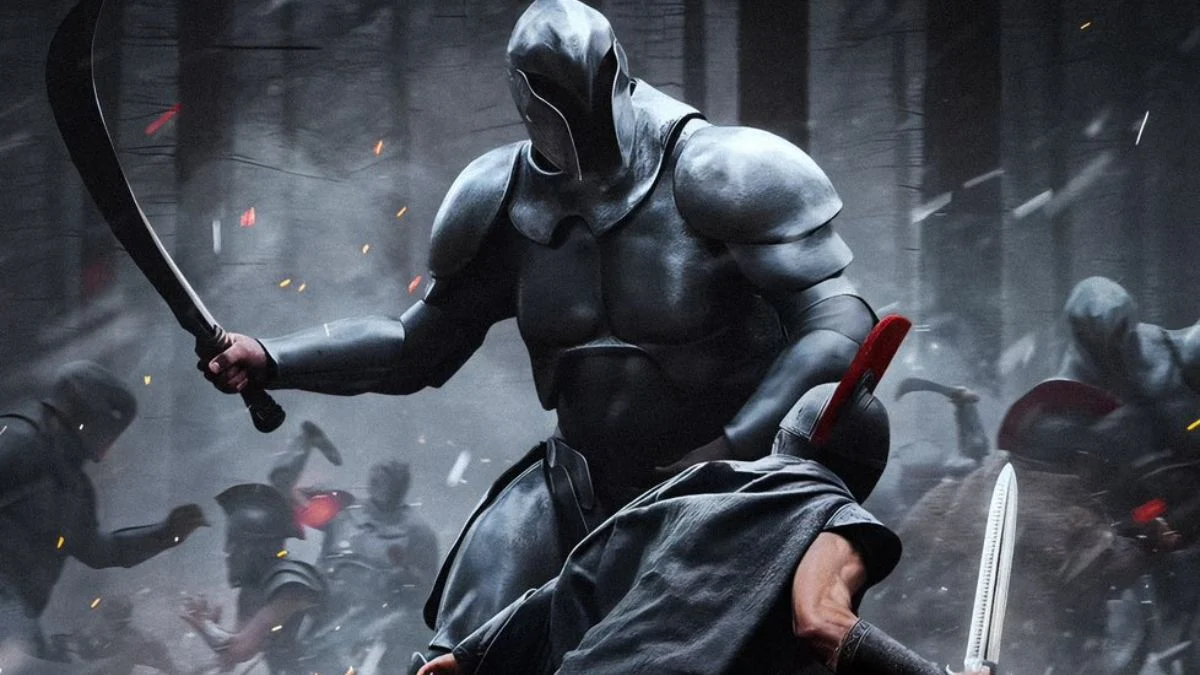
That commitment reached its most physically demanding extreme during one of the film’s most punishing sequences, a brutal clash between Odysseus’s crew and a race of towering giant warriors. Getting that confrontation on screen without relying on CGI required a level of old-school ingenuity that fans are only now learning the full details of.
Matt Damon has revealed exactly how Nolan pulled off the illusion of giant Laestrygonians looming over Odysseus and his men, and the answer involves some seriously mismatched casting. Speaking to Happy Sad Confused, Damon explained that the production hired stuntmen standing at least seven feet tall to play the towering warriors, paired against a group of stunt performers under five feet.
That extreme height gap became the foundation for an old fashioned forced perspective technique, the same kind of camera trick famously used to make Hobbits and Dwarves appear smaller throughout ‘The Lord of the Rings.’ Damon noted that his own stunt double for these specific shots was actually a woman, allowing the camera angles to sell an illusion of scale that no amount of digital de-aging or CGI scaling could replicate as convincingly.
The results speak for themselves once you see the giants looming over Odysseus in the finished film. Damon made clear that despite needing a stunt double for certain angles in this sequence, almost every other physical moment in the movie, including the muscular arms audiences have been buzzing about, belongs entirely to him.

The Laestrygonian sequence was shot on location in Scotland’s Culbin Forest using seven IMAX cameras, continuing Nolan’s pattern of favoring real locations and in-camera spectacle over soundstage work. That commitment to physical filmmaking extended across the production, which spent 91 days shooting across six countries including Morocco and Greece during the summer of 2025.
Nolan himself has spoken about the intent behind the sequence, describing it as an opportunity to convey genuine brutality given how far the Laestrygonians’ weapons and armor sophistication outmatches anything Odysseus had previously encountered on his journey. That kind of grounded menace fits the director’s broader approach to bringing Homer’s mythological creatures to life without losing their physical weight.
The giants were not the only mythological beings brought to screen through practical means. The film’s Cyclops, Polyphemus, was portrayed by Bill Irwin using puppetry techniques, reuniting him with Nolan following his work voicing and operating the robot TARS in ‘Interstellar.’ A 60-foot animatronic version of the creature was reportedly built purely as a reference tool to help the cast gauge scale during filming.
With ‘The Odyssey’ continuing its record-breaking run in theaters, these kinds of behind-the-scenes reveals only add to the film’s reputation as one of the most ambitious practical effects showcases in recent blockbuster history. Between the giant stunt performers and the puppeteered Cyclops, Nolan’s commitment to old-school filmmaking techniques has clearly resonated with audiences drawn to seeing something built in camera rather than rendered on a computer.
Were you surprised Christopher Nolan used practical effects for The Odyssey's giant battle?
What do you think about the practical trick behind The Odyssey’s giant battle scene? Let us know in the comments.