Who Kills Odysseus in Greek Mythology, And Why Nolan’s ‘The Odyssey’ Leaves That Part Out?

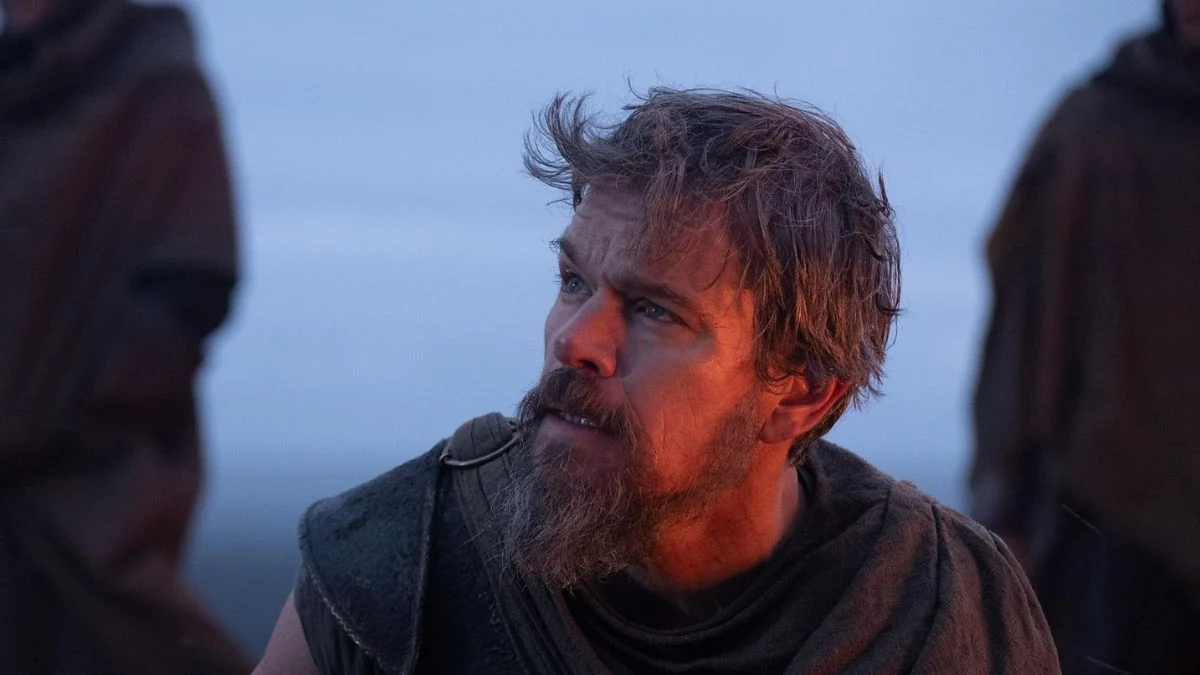

Christopher Nolan’s ‘The Odyssey‘ has audiences leaving theaters with one persistent question, and it has nothing to do with the Trojan Horse or the suitors. It has to do with what happens after the credits roll, because Homer’s original story does not actually end where Nolan’s movie ends.
The film, released July 17, 2026 and starring Matt Damon as the wandering king of Ithaca, closes on an ambiguous note that has fans searching for answers in older, darker mythology. That search leads straight to the question of who actually kills Odysseus, and the answer is stranger than anything that made it onto the IMAX screen.
‘The Odyssey’ Movie Ending Explained
Nolan’s film follows Odysseus through his ten year journey home from Troy, then into the reclaiming of his kingdom from Penelope’s suitors. The adaptation ends in a fashion similar to Homer’s poem, with Odysseus disguising himself as a beggar, testing the suitors, and ultimately reuniting with Telemachus to spring a trap on the men trying to steal his throne and his wife.
Where the movie splits from tradition is in its final moments. After murdering the suitors who had been trying to court Penelope, Odysseus is exiled from Ithaca rather than settling comfortably back into his throne. He cannot stay in his kingdom, and instead chooses exile, sailing west to pay tribute to his fallen men.
That final scene is deliberately murky. Odysseus collapses from his wounds in Penelope’s arms and promises her, quote, not death, exile, before he is next shown on their ship with bandages covering his injuries as the two sail out chasing the setting sun. Fans immediately began debating whether that sunset voyage was meant to be read literally or as something more symbolic.
Does Odysseus Die at the End of the Movie?
The short answer is no. Multiple analyses of the ending confirm that survival, not death, is where Odysseus’s story lands within the runtime of the film itself. The exile is framed as punishment and penance rather than a death sentence.
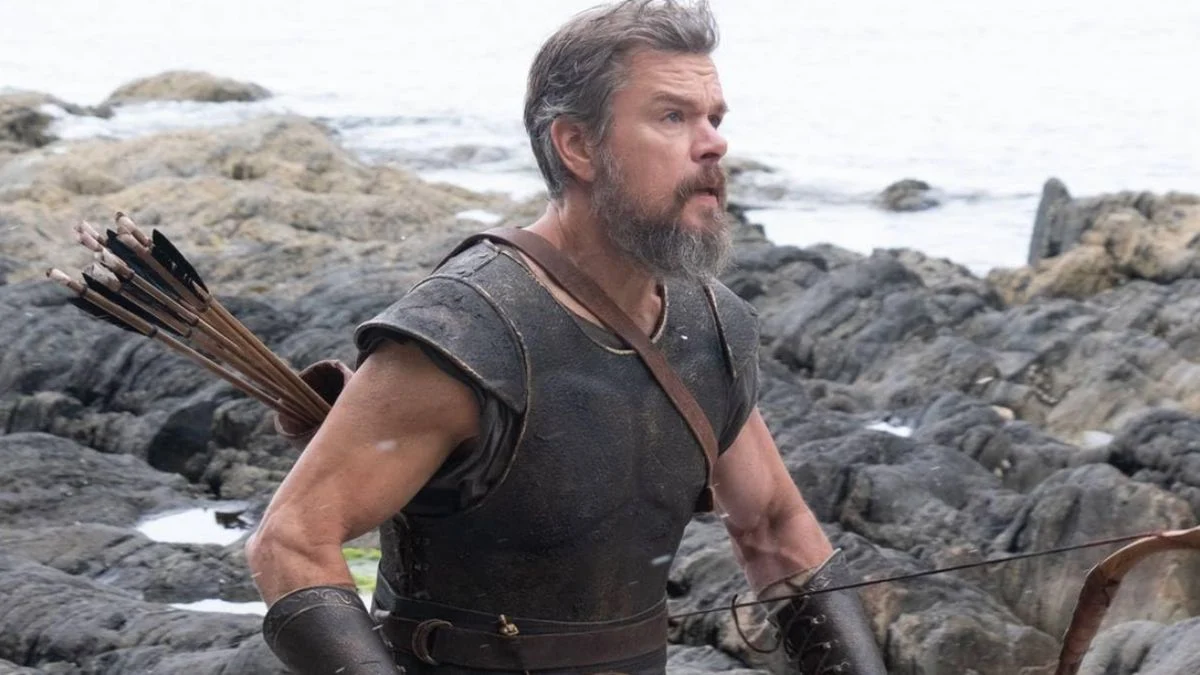
Still, Nolan leaves the door open. Because the west is traditionally associated with the land of the dead in Greek myth, and because of the severity of Odysseus’s wounds, some viewers have argued the voyage could be read as symbolic rather than literal. That ambiguity is very much intentional, and it lines up with how Nolan handled the ending of his previous film.
Notably, the movie changes how Penelope even recognizes her husband. Rather than the marriage bed test from Homer’s poem, Penelope identifies Odysseus through an icon he carried, a deviation that fans of the source material have already started dissecting online.
Who Really Kills Odysseus in Greek Mythology?
The film never touches this, but Homer’s original epic was not actually the last word on Odysseus’s fate. A separate, much stranger poem called ‘The Telegony’ picks up where ‘The Odyssey’ leaves off, and it delivers one of the most brutal ironies in all of Greek myth.
According to that ancient text, Odysseus is killed by Telegonus, his own son by the sorceress Circe, in a dispute over cattle that Telegonus did not even realize involved his father. The kicker is that this death was foretold all along. Telegonus struck Odysseus with a spear tipped with the point of a venomous stingray, fulfilling the old prophecy that death would come to Odysseus from the sea.
The mix up happened because Circe had sent Telegonus to Ithaca as an adult to summon Odysseus home, but Telegonus mistook the island for Corcyra and began plundering it. Odysseus rushed out to defend his land, not knowing the intruder was his own child, and the confrontation turned fatal before either man understood what was happening.
An oracle had actually predicted Odysseus would be killed by his own son, which is why Telemachus had once been banished from Ithaca as a precaution, only for the real threat to come from a son nobody in the family even knew existed.
What Happens After the Mistaken Killing?
The aftermath is almost as strange as the murder itself. Telegonus took his father’s body back to Circe’s island along with Penelope and Telemachus, and once there, Circe granted the surviving family immortality, with Telegonus marrying Penelope and Circe marrying Telemachus. It is a tangled, almost soap opera style resolution that stands in stark contrast to the quiet dignity of Nolan’s ending.
Some later traditions add even more layers. One version introduces Cassiphone, a daughter of Odysseus and Circe, in which Telemachus marries Circe before eventually killing her after a quarrel, prompting Cassiphone to kill Telemachus in revenge. It is a family tree soaked in tragedy that Homer’s original poem never even hints at.
Why Nolan Chose Not to Adapt ‘The Telegony’
Nolan’s film was always going to end where ‘The Odyssey’ poem ends, since ‘The Telegony’ survives only in fragments and summaries rather than as a complete text scholars can adapt with confidence. Classics scholar Jonathan Burgess has noted that it remains unclear whether ‘The Odyssey’ even acknowledges ‘The Telegony’ as a continuation, since the relationship between the two texts is genuinely murky to modern scholars.
That uncertainty makes ‘The Telegony’ a poor fit for a tentpole summer movie, but it also explains why the ambiguous ending of Nolan’s film has sparked so much curiosity. Once audiences learn that the mythology technically continues past the final scene, and that it ends with a son accidentally killing his own father, the open ended sunset voyage starts to feel a lot more loaded than it did in the theater.
So which reading of that final scene feels truer to you, a hero sailing toward genuine survival or a director quietly nodding toward the darker myth waiting just past the frame?