Netflix’s ‘The Witness’ Ending Explained: The True Story of Justice, Survival, and a Father-Son Bond That Refused to Break



Few true-crime dramas arrive carrying the emotional and historical weight of ‘The Witness.’ Premiering globally on Netflix on June 4, 2026, the three-part British limited series plunges into one of the most shattering murder cases in modern UK history, the 1992 killing of Rachel Nickell on Wimbledon Common, and unflinchingly traces the decades-long catastrophe that followed.
What separates ‘The Witness’ from the crowded true-crime landscape is its refusal to sensationalize the story it tells. Rather than lean heavily into whodunnit territory, the series delivers the right facts at the right times, not hiding or embellishing elements for dramatic purposes, while always circling back to the personal circumstances of father and son André and Alex. For viewers reaching the end of the final episode in shock, here is everything that happened, and what it all means.
The Crime That Shattered Two Lives
Rachel Nickell was a 23-year-old mother walking on Wimbledon Common in south-west London in July 1992 when she was stabbed 49 times and killed, with her two-year-old son Alex the sole witness to the attack. The brutality of the crime, committed in broad daylight in a public park, instantly made it a national flashpoint.
Her partner André Hanscombe was left at the centre of everything that followed, and Alex was found beside his mother by passers-by calling out for her to wake up. In the series, Jordan Bolger plays André, with Jahsaiah Williams and Max Fincham portraying Alex at different ages.
In the immediate aftermath of Rachel’s murder, André made the heartbreaking decision to move with Alex to a quiet rural area of France. With the killer still at large and his son having witnessed the attack, André feared for their safety and wanted to protect his little boy from further trauma. The family would later relocate to Spain, as distance proved unable to outrun the ongoing media attention.
The Wrong Man and the Investigation’s Catastrophic Failure
The Metropolitan Police, frustrated at the lack of evidence and feeling the heat of the gutter press, became determined to hone in on their sole suspect, a decision that would have catastrophic consequences. That suspect was Colin Stagg, an unemployed local man whose only crime was walking his dog on the same common.
Without forensic evidence, detectives employed an undercover operation called Operation Edzell, using a female officer to pose as a romantic interest in an attempt to extract a confession.
A judge later ruled the police had used deceptive conduct of the grossest kind, and Stagg was acquitted in September 1994. He remained in custody for 13 months until the case was dismissed, and was later compensated £706,000 for the wrongful charge.
Those unfamiliar with the story will be dumbfounded by the catalogue of mistakes that not only put Stagg behind bars for 14 months, but allowed the real killer to roam free and kill again for another two years. Stagg’s acquittal represented one of the biggest miscarriages of justice in British history.
The DNA Breakthrough That Finally Named Robert Napper
The case remained unsolved for over a decade until 2002, when Scotland Yard reopened the investigation using advanced DNA techniques. Detectives identified Robert Napper, a convicted murderer already held at Broadmoor psychiatric hospital, as a suspect. Napper had been convicted in 1993 of murdering Samantha Bisset and her four-year-old daughter Jazmine, crimes committed just months after Nickell’s death.
A new profiling technique was developed that was able to identify the killer’s DNA, something the original investigation had not been able to do. After running the profile through the database, it ruled out Colin Stagg but identified Robert Napper. Napper was later found guilty of Nickell’s murder, and even confessed to the crime, leading to his conviction in 2008.
He is currently detained indefinitely at Broadmoor Hospital. The series does not treat this resolution as a triumphant climax, instead presenting it as a grim, overdue administrative fact in an institution’s long history of failure.
What the Finale Really Means for André and Alex
The emotional beating heart of the series is never the police procedural strand. It is a study of how the cold murder of Rachel Nickell changed the trajectory of their lives, with the media pressure and constant attention seeing André move to France and then Spain. The final episode brings that decades-long arc to its most honest and human conclusion.
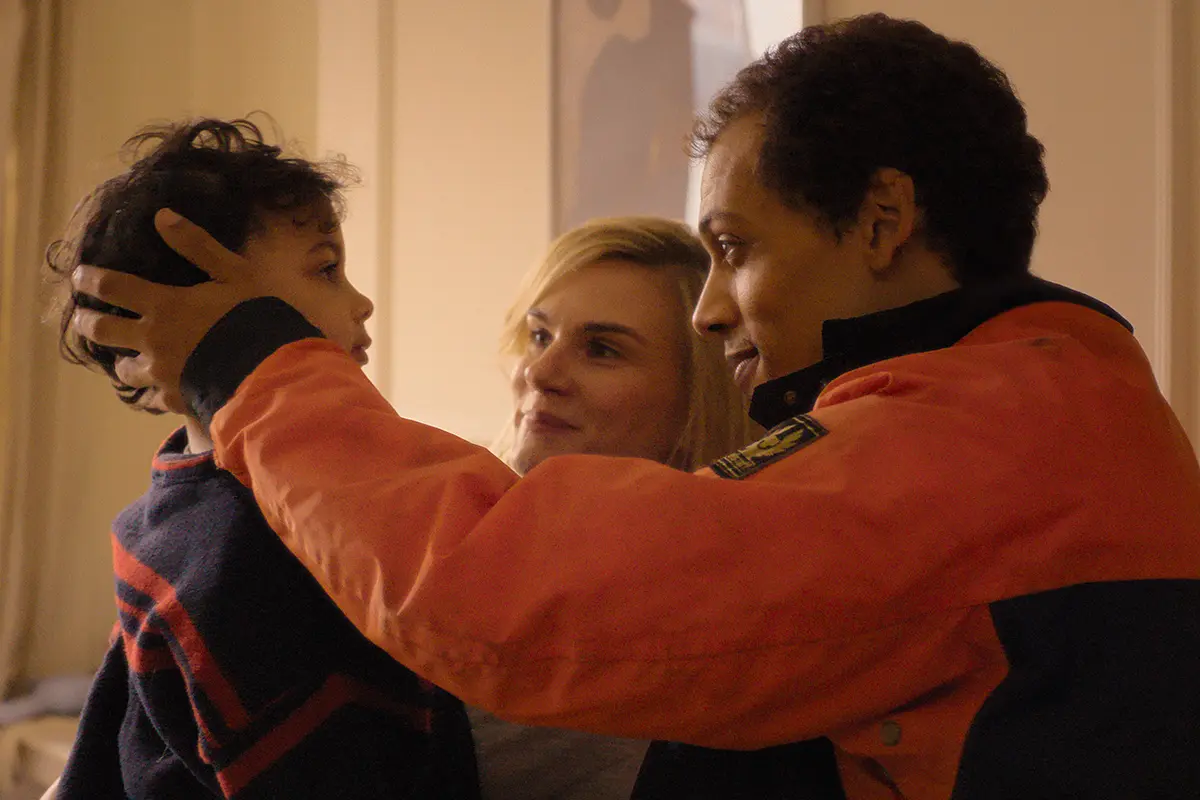
In a specific scene in the finale, the two discuss the case and its conclusion following the news about Robert Napper. Alex tells his father, “I once told you that I don’t respect you, Dad. And I meant it. I don’t feel that way anymore. I’ve got nothing but respect for what you’ve done for me.” It is the quiet emotional payoff the entire series has been building toward.
It is a testament to Rachel’s legacy that André and Alex’s complex relationship, as the epilogue states, is now closer than ever. The series, written by ‘Killing Eve’ creator Rob Williams and directed by Alex Winckler, lets the damning evidence speak for itself, with melodramatic impulses kept in check by the direct input from Nickell’s partner André Hanscombe and their now-grown-up son Alex.
A Companion Documentary That Completes the Picture
Netflix released a standalone documentary, ‘The Murder of Rachel Nickell,’ on the same day as the drama series. BAFTA-nominated director Lucy Bowden examines the notorious, years-long police investigation, blending rare archive footage with powerful interviews from family members and expert analysis from leading forensic specialists, carefully retracing the case step by step.
The companion documentary paints a much fuller picture of Rachel herself, addressing one of the drama’s acknowledged blind spots. Alex and André Hanscombe acted as consultants on the series, and in a joint statement, they said that their journey had been a battle and that they hoped audiences would be left with a testament to the tough battle of life they all face and to the power of faith, hope, love, and never giving up.
Unshowy, unhurried, and methodical, ‘The Witness’ is ultimately less true-crime dramatisation and more invaluable public service broadcasting. It is a series that earns its devastating ending precisely because it never once exploits it. Now that you have watched André and Alex finally reach the other side of the unimaginable, do you think ‘The Witness’ did justice to their story in a way British television has never quite managed before?