New ‘The Odyssey’ Photo Reveals Why Christopher Nolan’s Epic Must Be Seen in IMAX

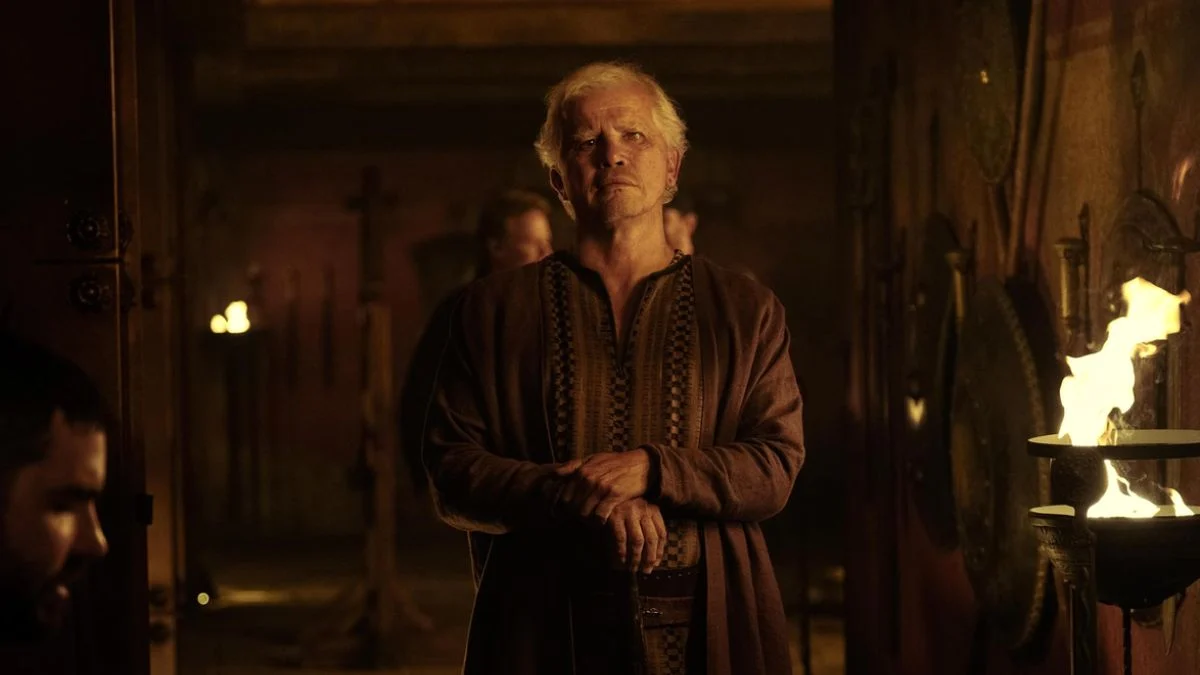

Christopher Nolan has built his entire directing career on convincing audiences that the theater experience still matters, and few filmmakers have pushed that argument as hard as he is right now. With his new film just days away from release, the promotional rollout has leaned heavily into one central idea: that how you watch this movie is just as important as what you are watching.
That idea has taken over social media in recent days, with fans sharing side-by-side comparisons showing just how dramatically the picture changes depending on the format. One widely shared image, split-screen style, highlights the stark difference between a standard theater presentation and the full IMAX picture, and it has fans rethinking where they plan to buy their tickets.
‘The Odyssey’ was shot entirely using IMAX film cameras, and the difference audiences are noticing online comes down to aspect ratio. In IMAX 70mm theaters, the film is presented in IMAX’s Expanded Aspect Ratio of 1.43 to 1, a nearly square frame that fills the screen from floor to ceiling rather than the wider, shorter rectangle most moviegoers are used to seeing.
That taller frame is exactly what fans are highlighting online, since it reveals significantly more picture at the top and bottom of the frame compared to a standard screen.
That extra image is not a marketing gimmick, either. Standard IMAX theaters show the film in a slightly less expanded 1.90 to 1 ratio, while regular digital and 35mm presentations crop the picture down to a much more traditional 2.39 to 1 widescreen frame. In practice, that means audiences watching outside of true IMAX are seeing a noticeably smaller slice of what Nolan and cinematographer Hoyte van Hoytema actually captured on camera.
The cast has been vocal about why that distinction matters so much for this particular film. Tom Holland, who plays Telemachus in the film, explained that premium theaters are built specifically to maximize that sense of scale, saying exhibitors design these theaters to give audiences an enhanced and more immersive experience, according to Variety. Matt Damon and Anne Hathaway have echoed similar sentiments in the film’s official format guide, both emphasizing that the movie was designed from the ground up to be seen on the largest screen possible.
Nolan’s commitment to the format reportedly goes back to a very specific moment during preproduction. According to reporting on the film’s promotional rollout, van Hoytema shot a test using IMAX cameras of a child reciting lyrics from David Bowie’s Sound and Vision, proving the format could handle intimate, dialogue-driven scenes just as effectively as massive action sequences.
That test is said to have convinced Nolan he could shoot an entire feature entirely on IMAX cameras for the first time in his career.
The catch for fans hoping to see the film exactly as intended is availability. Fewer than 30 theaters in the world are equipped to show ‘The Odyssey’ in true IMAX 70mm, including well-known locations like the TCL Chinese Theatre in Los Angeles and AMC Lincoln Square in New York City. Tickets for those specific screenings have reportedly been in high demand for months, with some resale listings climbing into the hundreds or even thousands of dollars.
For everyone else, the film will still be widely available across standard IMAX, Dolby Cinema, 70mm, 35mm, and regular digital screens starting July 17. Each format offers its own tradeoffs in resolution, contrast, and aspect ratio, but none fully replicate the floor-to-ceiling immersion that true IMAX 70mm provides. Given how much of the online conversation has centered on that exact gap, it is clear plenty of fans are now weighing whether the extra effort and expense of finding a 70mm screen is worth it.
How Are You Planning to Watch Christopher Nolan’s 'The Odyssey'?
With Nolan positioning ‘The Odyssey’ as one of the most format-conscious releases in recent memory, the comparison images circulating online are only adding fuel to the debate. Whether casual moviegoers will notice the difference as much as devoted cinephiles remains to be seen once the film hits wide release.
Have something to add? Let us know in the comments!