Paramount’s Warner Bros. Discovery Takeover Just Cleared Its Final Hurdle, Here’s What Ellison’s Company Is Now Legally Required to Do

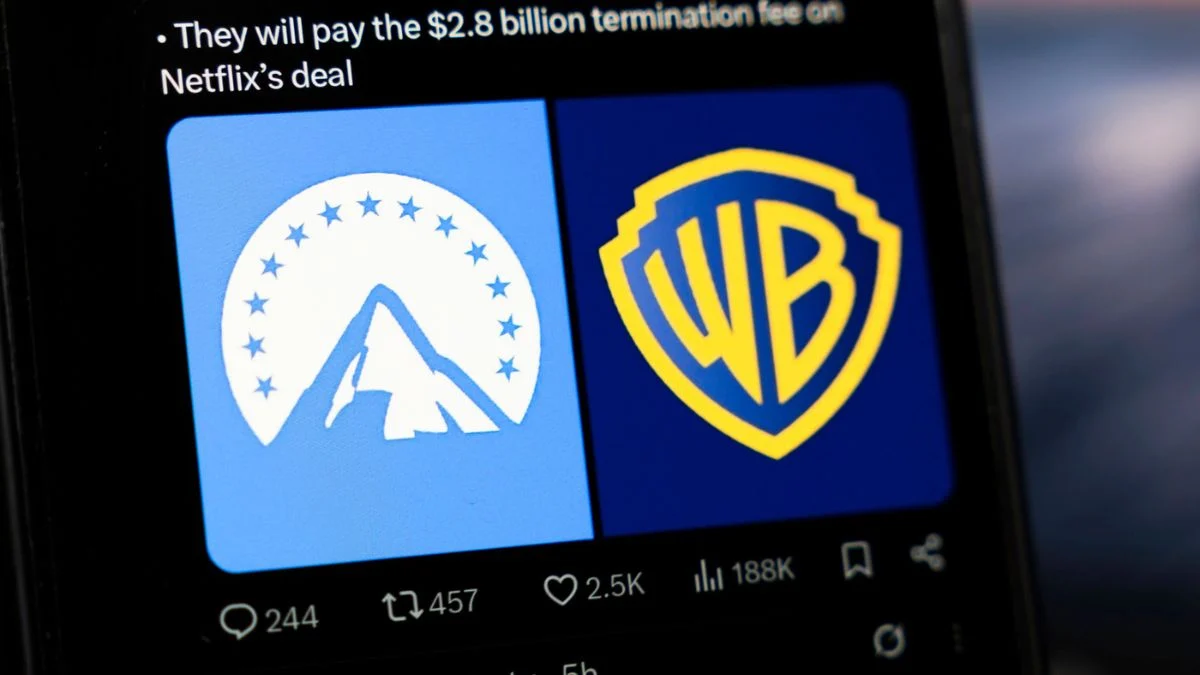

Hollywood’s biggest merger in decades has been inching toward the finish line for months, with regulators, unions, and a coalition of state attorneys general all weighing in along the way. What started as a straightforward bid to combine two entertainment giants has turned into one of the most scrutinized corporate deals the industry has seen in years.
That scrutiny came from a real place. Attorneys general across multiple states had filed an antitrust lawsuit over fears that combining two such similar competitors could trigger mass layoffs, shrink the number of films being made, and drive up ticket prices for moviegoers.
Now, new details have emerged about the settlement Paramount reached with those states, and the terms are far more binding than a simple handshake agreement. Under the deal, Paramount is required to keep its operations in California, meaning it cannot sell either the Paramount Pictures or Warner Bros. studio lots.
That’s a significant concession, especially given that Paramount Skydance chief David Ellison had previously threatened to leave the state altogether if he couldn’t close the Warner Bros. Discovery deal by October 1. Keeping both storied lots intact and operating in-state should offer some reassurance to the thousands of industry workers whose jobs are tied to those properties.
Beyond the real estate commitments, Paramount has agreed to significantly ramp up its financial investment in domestic filmmaking. The company will spend at least $300 million more annually on film production in the United States, a pledge that adds up to $1.5 billion in new investment over five years.
On top of that spending commitment, Paramount is obligated to release at least 30 movies theatrically every year for the first two years following the merger, with that number climbing to 32 films annually for the three years after that. A chunk of those releases have to be wide releases hitting at least 2,000 theater screens, and at least four each year must be independent films.
If Paramount falls short of those release commitments, the consequences are steep. The company would face a $30 million penalty for every film it fails to deliver, and repeated failure to meet the theatrical goals could even force Paramount to divest Miramax entirely.
Ellison has publicly maintained that this level of output is something he always intended to deliver, framing the merger as a way to strengthen theatrical filmmaking rather than hollow it out. Following the settlement announcement, the Paramount CEO said the company now has “complete clearance for this merger and can move toward closing,” in a statement reported by CBS News.
Perhaps the most notable piece of the settlement has nothing to do with movie theaters at all. As part of the agreement, a third-party board will be established to oversee CNN and CBS News, ensuring the two news operations remain editorially independent from corporate influence following the merger.
That provision was a direct response to concerns raised by several of the attorneys general involved in the lawsuit, who worried that combining two massive media companies under one roof could open the door to newsroom interference. A trustee will be responsible for monitoring Paramount’s compliance with the settlement’s terms going forward.
The stakes for actually following through are real. If Paramount doesn’t hold up its end of the deal, officials have signaled the states are prepared to take the company back to court to enforce it.
The settlement effectively clears the last major obstacles standing between Paramount and full control of Warner Bros. Discovery, following a lawsuit from the Writers Guild of America that had also threatened to complicate the timeline. With both the states and the union concerns addressed, the merger is now positioned to move toward its formal closing.
For an industry that’s spent the better part of two years anxious about what this level of consolidation could mean for jobs, film output, and ticket prices, the terms Paramount agreed to offer at least some concrete guardrails. Whether 30 or 32 films a year proves sustainable for the newly combined studio remains to be seen, especially as Ellison faces pressure to compete with streaming giants like Netflix, Amazon, and Apple.
Market reaction to the news was relatively muted, with Paramount’s stock holding steady while Warner Bros. shares saw a notable bump following the announcement. It’s a sign that investors, at least for now, see this settlement as the clearest path yet toward finally closing one of the most consequential deals in Hollywood history.
Which Paramount–WBD merger requirement matters most?
Have something to add? Let us know in the comments.