Penelope Knew Odysseus Was the Beggar All Along, and Here’s How the Bow Contest Proves It

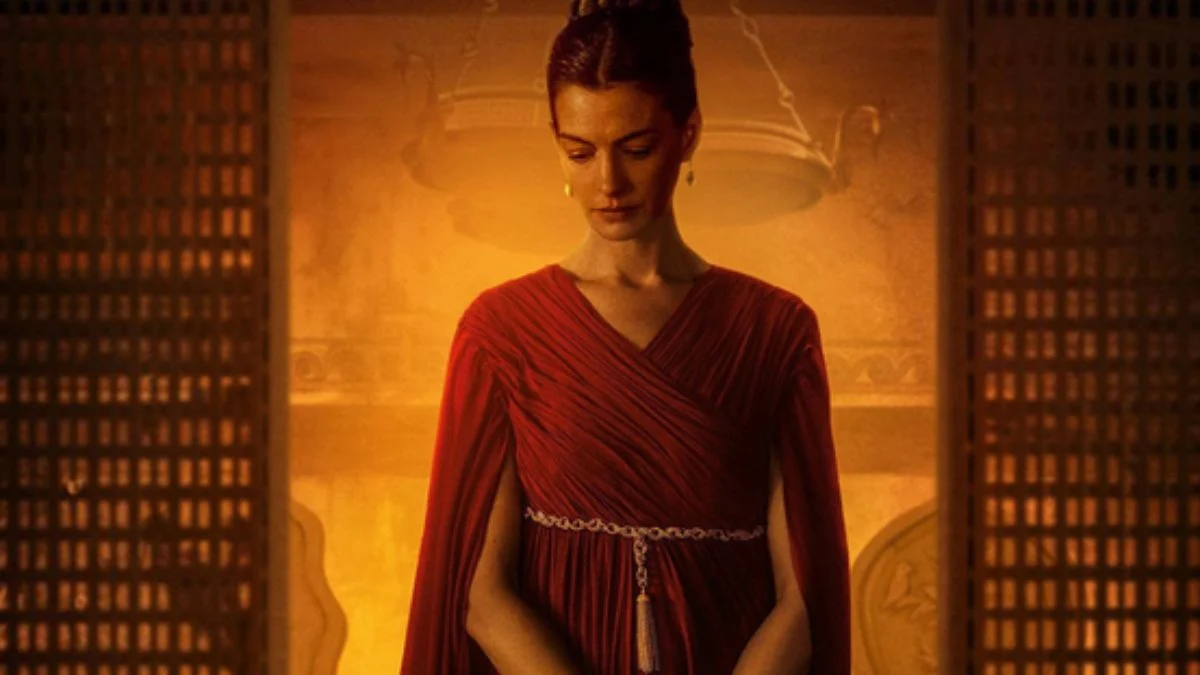

Few moments in Greek mythology spark as much debate as Penelope’s decision to hold an archery contest right when a mysterious beggar shows up in her hall. Fans revisiting Homer’s ‘Odyssey‘ after Christopher Nolan’s new adaptation are asking the same question all over again, did Penelope actually recognize her husband, or was the whole thing a coincidence dressed up as fate.
The timing has always felt too perfect to be an accident. Odysseus returns home disguised as a ragged stranger, and almost immediately his wife announces a competition that only he could possibly win, using his own bow no less.
Did Penelope Recognize the Beggar?
In the original poem, Odysseus comes back to Ithaca disguised as a beggar, hoping to quietly figure out which of the men crowding his home actually deserve to live and which don’t Penelope, who suspects the beggar to be her long-lost husband, devises a plan of her own. That single detail has fueled centuries of scholarly argument, because it strongly implies Penelope’s suspicion is doing the heavy lifting long before the bow ever gets strung.
Nolan’s film leans into this same idea rather than softening it. In the movie, Penelope sets up a challenge she knows will bring things to a climax, stringing Odysseus’ bow and completing an arrow shooting contest.
That phrasing matters a lot, because it isn’t framed as a random test of strength for hopeful suitors, it’s staged specifically as a trap that Penelope understands only one man in the room can actually pass.
Whether she consciously “knows” it’s him or simply can’t shake a gut feeling is left intentionally blurry in both the poem and the film. That ambiguity is arguably the whole point, since Penelope has spent years being clever and cautious, and revealing her suspicion outright would put both of their lives at risk with the suitors watching her every move.
Why Penelope Chose the Bow Contest
The bow itself isn’t just any prop lying around the palace, it belonged to Odysseus specifically, and that ownership is central to why Penelope picks this particular contest. No one else has ever been able to string it, which quietly rigs the entire competition in favor of the one person who actually has the muscle memory and history with the weapon.
Nolan’s version keeps this mechanic almost entirely intact. As one breakdown of the film explains, the suitors take part in a challenge that Penelope knows only Odysseus can win, stringing his bow and firing an arrow through a line of axes. That’s a near one to one translation of Homer’s version, and it shows Nolan wasn’t interested in reinventing this particular beat.
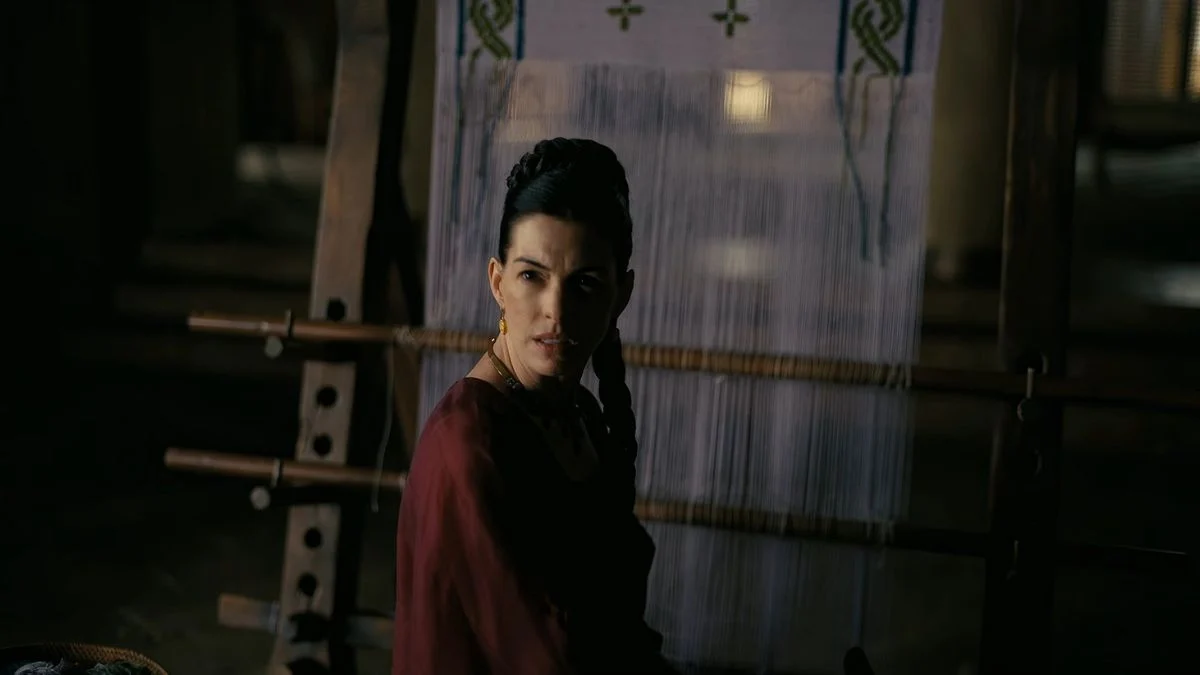
Where the film does diverge is in trimming away some of the poem’s stranger textures. The Homeric version originally paired the bow trial with a separate secret test involving the couple’s immovable marriage bed, but the movie skips that entirely in favor of a tighter, more visually driven climax built entirely around stringing his bow and firing an arrow through a line of axes.
That simplification makes sense for a blockbuster running on a massive scale, since Nolan’s ‘The Odyssey’ is already juggling gods, monsters, and a decade spanning journey. Streamlining the recognition scene into one dramatic set piece keeps the emotional stakes legible for audiences who may not know every twist of the source material going in.
How Nolan’s Odyssey Movie Changes the Ending
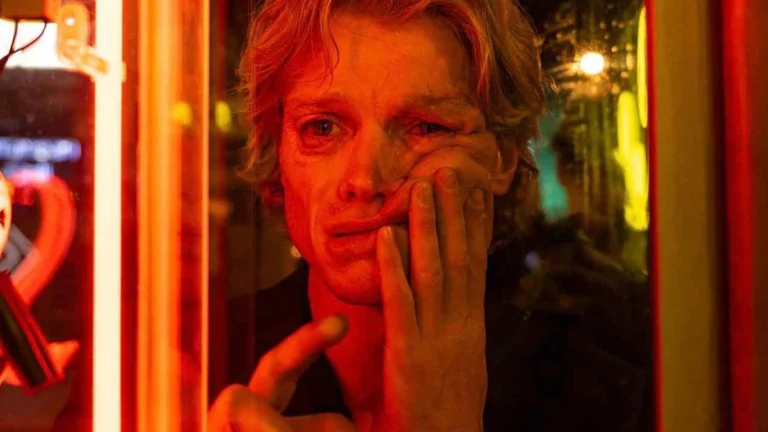
Beyond the bow, Nolan made a handful of deliberate departures from Homer that reshape how audiences experience Penelope and Odysseus’ reunion. Rather than the classic disguise involving a weathered, aged appearance courtesy of Athena’s magic, the film opts for something more grounded, since Nolan’s film does away with the wrinkled old man ruse, instead having Odysseus shield his bruised and battered face with the hood of his cloak.
That choice subtly changes the recognition dynamic too. A hood obscuring a bruised face is a far more human, believable disguise than divine magic aging someone decades in an instant, and it makes Penelope’s lingering suspicion feel even more grounded in intuition rather than supernatural interference.
The aftermath of the bow contest also gets a notably different tone in Nolan’s cut. Once the suitors are dealt with, the film pivots toward consequence and guilt rather than pure triumph, and Odysseus ultimately abdicates the throne to his son and takes exile as his punishment, sailing westward with Penelope to live out his days healing from the trauma and guilt of what he’s wrought.
That’s a meaningful shift from Homer’s more triumphant restoration of Odysseus to his throne, and it reframes the entire Penelope and beggar storyline as less of a triumphant homecoming and more of a bittersweet reckoning. The recognition through the bow becomes not just a happy reunion, but the beginning of a much heavier emotional journey for both characters.
The Cast Bringing Penelope and Odysseus to Life
Anne Hathaway takes on Penelope opposite Matt Damon’s Odysseus, with the pair anchoring a sprawling ensemble that includes Tom Holland as Telemachus, Robert Pattinson, Lupita Nyong’o, Zendaya, Charlize Theron, and Jon Bernthal . The film carries a reported budget of $250 million and marks Nolan’s first directorial effort since ‘Oppenheimer’ .
Nolan has been candid about why he wanted to tackle this particular myth after decades of circling war epics and heist thrillers. He told Empire that the story truly contains all stories, and that as a filmmaker he was looking for gaps in cinematic culture, things that hadn’t been done before with the weight and credibility a big budget IMAX production could bring.
Production reportedly involved shooting over two million feet of film across 91 days, with much of it done on the open ocean. That commitment to physical, tangible filmmaking tracks with Nolan’s reputation, and it likely explains why the bow contest and recognition scene land with such grounded, tactile intensity onscreen compared to a more effects heavy fantasy approach.
‘The Odyssey’ arrived in theaters on July 17, 2026, giving audiences a fresh chance to weigh in on whether Penelope’s suspicion feels earned . So now that you’ve seen how Nolan handles Penelope’s recognition of the beggar, do you think she knew it was Odysseus from the moment he walked through the door, or did the bow itself convince her.