‘Sense and Sensibility’ Review: Can Austen’s Dashwood Sisters Still Break Hearts After Thirty Years?


Jane Austen’s 250th birthday year has brought a fresh wave of adaptations, and ‘Sense and Sensibility‘ reaches cinemas on October 16 with plenty of expectation riding on it. Georgia Oakley, the filmmaker behind ‘Blue Jean’, directs from a screenplay by Diana Reid. It is the third Austen outing for Focus Features and Working Title, following ‘Pride & Prejudice’ in 2005 and ‘Emma’ in 2020.
The story will be familiar to anyone who has spent time with the novel. After their father dies, the Dashwood women are pushed out of the family estate, and Elinor and Marianne have to find their footing in a world where money and reputation decide everything. Daisy Edgar-Jones plays the sensible Elinor and Esmé Creed-Miles plays the impulsive Marianne, with Caitríona Balfe as their mother and Bodhi Rae Breathnach as young Margaret.
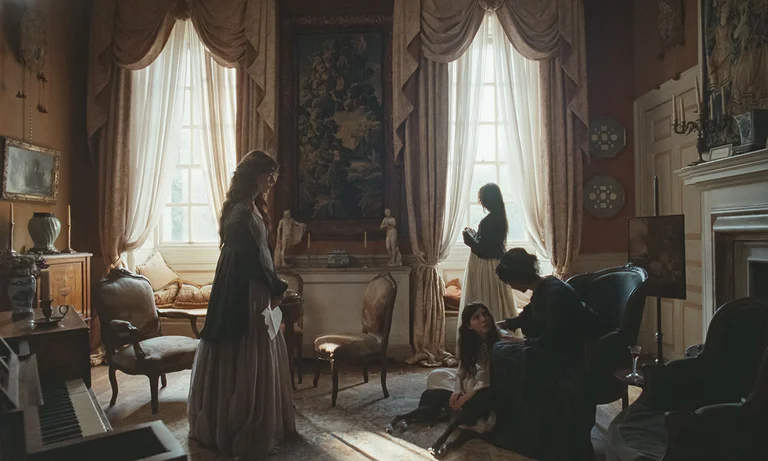
Oakley’s version is quieter and more earthy than Ang Lee’s 1995 film, and I found that restraint more rewarding than I expected. Feeling builds through small glances and held silences rather than grand declarations. It plays like a story about real people who are short of money and afraid of what comes next.
The casting is the film’s greatest strength. Edgar-Jones gives Elinor a steady surface with visible strain underneath, so when her composure finally slips it lands hard. Creed-Miles is a live wire as Marianne, openly passionate and wounded without ever tipping into caricature. Together they feel like genuine sisters, which matters because their bond is the real love story here.
The men are well chosen too. George MacKay brings a decent, tangled quality to Edward Ferrars, a man hemmed in by the expectations of his wealthy family. Frank Dillane makes Willoughby charming enough that you understand Marianne’s blindness, while Herbert Nordrum gives Colonel Brandon a gentle and watchful dignity. Fiona Shaw adds warmth and mischief as Mrs Jennings, and Stacy Martin and Tom Brooke are grimly funny as the grasping relatives.
Not everything works. At two hours and twelve minutes the film can feel overly careful, as though it is ticking off every beat of the novel, and a few of the heavier emotional turns pass without the full wallop they deserve. Oakley is a touch too respectful at times, and I wanted one or two bolder choices to justify the retelling.
Still, the grounded look keeps the period setting from feeling like a museum piece, and the photography and costumes are handsome without showing off. The way the film treats money as a constant background pressure feels sharp and timely. Austen’s humour in the drawing rooms also still gets its laughs, which is no small thing after two centuries.
I came away with real affection for this adaptation. It is warm, intelligent and beautifully acted, and it earns its tears even if it never quite reinvents the material. It does not dethrone the 1995 version for me, but it carves out its own space through its two leads and their sisterly bond, and I give it 8 out of 10.
How did you like 'Sense and Sensibility'?
Did Oakley’s ‘Sense and Sensibility’ win you over, or do you still prefer the 1995 version, so tell me in the comments whether you agree with my verdict?