Skeletor vs. Hordak: Which ‘Masters of the Universe’ Villain Actually Deserves the Throne of Evil?

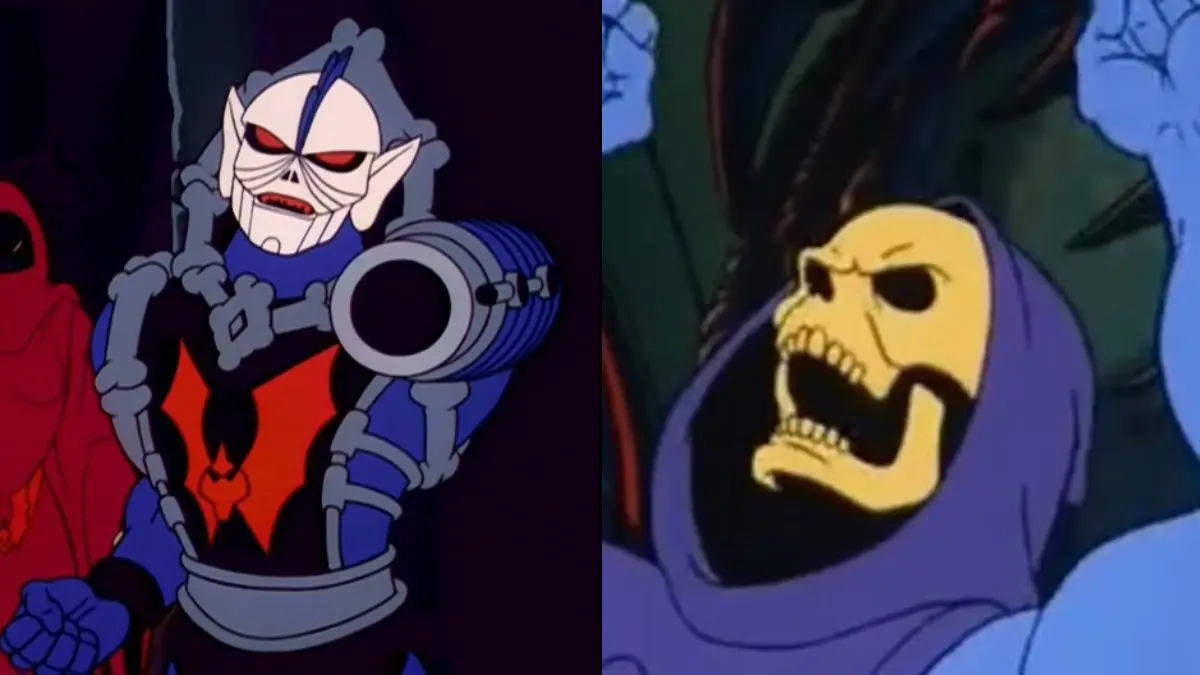

With a brand-new live-action ‘Masters of the Universe‘ film now in cinemas, the eternal debate among fans of Eternia has roared back to life with fresh intensity. The franchise’s rogues’ gallery is deep, but two names sit permanently at the top of the evil pyramid, each with a ferociously loyal fan base ready to argue their case to the death.
The question of who reigns supreme between Skeletor and Hordak is one that has divided fans since the 1980s, and with the new film shifting the spotlight in a very specific direction, the stakes of this conversation have never felt more relevant. This is not just a matter of who looks more menacing. It is a question of legacy, cultural resonance, and sheer villain craftsmanship across four decades of storytelling.
Skeletor’s Stranglehold on Pop Culture
There is a reason that when most people close their eyes and picture evil in Eternia, they see a blue skull leering back at them. Although He-Man is the central character of ‘Masters of the Universe’, Skeletor has become a fan favourite over the decades due to his over-the-top nature and screechy voice. That voice, that cackle, that theatrical menace delivered with maximum camp have kept the character lodged in the pop culture memory in a way few animated villains have ever managed.
That humanizing vocal quality is a huge part of why the Skeletor character personality has remained a meme-worthy staple of 1980s pop culture for decades. His image has appeared on everything from ironic birthday cards to workout motivation posts, a villain who became a symbol of lovable, deranged ambition that transcends any single incarnation of the franchise.
In the modern and now widely accepted canon established by the 2002 animated series, Skeletor’s real name was Keldor, a member of Eternia’s royal family, and the brother or half-brother of King Randor himself. This means Skeletor is not just He-Man’s greatest foe but his uncle, reframing the entire conflict as a Shakespearean family tragedy. That single narrative revelation transformed a cartoon villain into a genuinely layered character with understandable grievances and devastating flaws.
This transformation elevated Skeletor from a simple tyrant into a tragic figure, a fallen noble whose thirst for power cost him his humanity, his family, and ultimately his face. Across every reboot, reimagining, and timeline shift the franchise has undergone, the skull-faced lord of destruction has remained the one villain too essential to leave behind.
Hordak’s Claim as the True Architect of Evil
To dismiss Hordak is to fundamentally misunderstand the architecture of evil that the ‘Masters of the Universe’ universe is built upon. Hordak is the supreme leader of the Evil Horde, the former mentor of Skeletor, and serves as the archenemy of She-Ra. Long before other threats formed against Eternia, the Evil Horde existed as an army of pure evil with the singular goal of destroying the light.
In ‘Masters of the Universe’ lore, Hordak was Skeletor’s mentor, and his manipulation of Skeletor adds a tragic layer to the origin story of the franchise’s most famous villain. Hordak’s quest for power leads to a path of darkness, and his sinister intentions shaped Skeletor into the villain fans ultimately came to know. Every scheming move Skeletor ever made, every dark spell and siege on Castle Grayskull, traces its roots back to lessons learned under Hordak’s shadow.
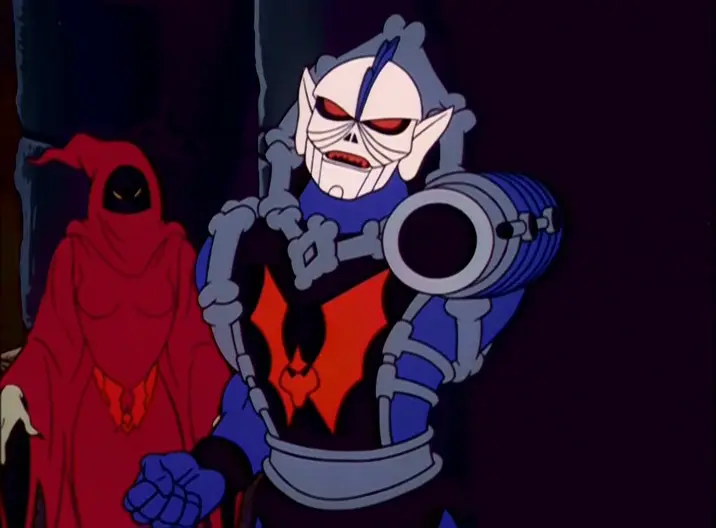
As Supreme Leader of the Horde, Hordak taught Skeletor everything he knew about the art of combat, and his nanotech armor is equipped with technology that can transform his hands into plasma cannons and his legs into thrusters, also featuring integrated cloaking technology and the ability to increase speed to the speed of sound. Where Skeletor relies heavily on theatrical sorcery, Hordak operates as a cold, clinical war machine. That blend of brutality and intelligence makes him a fundamentally different and arguably more frightening kind of antagonist.
That Hordak never got his chance to truly shine on screen is considered one of the biggest injustices in the history of the ‘Masters of the Universe’ franchise. Hordak managed to frighten a generation of children who encountered his earliest appearances, and every indication suggested his later incarnations would do the same before the character was repeatedly sidelined.
The New Film and What It Says About the Villain Hierarchy
The newly released ‘Masters of the Universe’ film directed by Travis Knight makes one very deliberate choice: it plants Skeletor front and center as the primary threat. The film follows Prince Adam, who crashed to Earth as a child and was separated from his magical Power Sword. After tracking it down almost two decades later, Prince Adam is whisked back to defend Eternia against the evil forces of Skeletor.
Jared Leto is confirmed in the role of Skeletor in the film, with the cast also including Sam C. Wilson as Trap Jaw, Hafthor Bjornsson as Goat Man, and Kojo Attah as Tri-Klops. Nicholas Galitzine stars as Prince Adam and He-Man, with Camila Mendes as Teela, Alison Brie as Evil-Lyn, and Idris Elba as Man-at-Arms. It is a stacked ensemble built around the franchise’s most recognizable villain.
Screen Rant reports that during a roundtable interview, director Travis Knight explained how he reimagined Skeletor for the reboot, noting that the original animated voice was purposefully delivered with a silly, comical, and nasal tone to provide contrast with the character’s terrifying appearance. Knight did not want Leto’s version to be a copycat, discussing with the actor how to honor what Alan Oppenheimer brought to the character without merely doing an impression.
Hordak Waits in the Wings for a Sequel
While Skeletor dominates the new film, the post-credits scene has sent the fandom into a frenzy over what comes next. After Adam and Teela confront Skeletor and Evil-Lyn at Greyskull and successfully vanquish the skull-faced villain, the post-credits scene depicts She-Ra in the Fright Zone, which is considered Hordak’s base of operations, laying the groundwork for him to emerge as the next great threat in a potential sequel.
Hordak and his Evil Horde came late to the ‘Masters of the Universe’ game, debuting three years after the franchise launched in 1982, and in every iteration of the story Hordak served as Skeletor’s mentor. That mentor relationship, now seeded across comics and animated series, gives any sequel built around Hordak a rich and emotionally resonant foundation to explore.
Hordak remains missing from the new film’s lineup as a major villain, alongside She-Ra and Shadow Weaver, figures central to many of the most beloved storylines in the franchise’s comic and animation history. His absence only amplifies the appetite for what comes next, and smart franchise building suggests his time is finally approaching.
The verdict, ultimately, depends on what you value in a villain. Skeletor wins on personality, cultural icon status, and the kind of indelible presence that spans memes and blockbusters alike. Hordak wins on cold menace, narrative depth, and the terrifying logic of a conqueror who literally created the villain everyone else fears.
Both have a legitimate claim to the title, and that is precisely why this debate has lasted forty years and will likely survive another forty more. Which side of the argument do you fall on: do you think Skeletor’s unhinged charisma earns him the crown of evil, or is Hordak the master manipulator who was always the more dangerous villain lurking in the shadows of Eternia?