The Real Reason Skeletor Has a Skull for a Face Is More Tragic Than You Remember

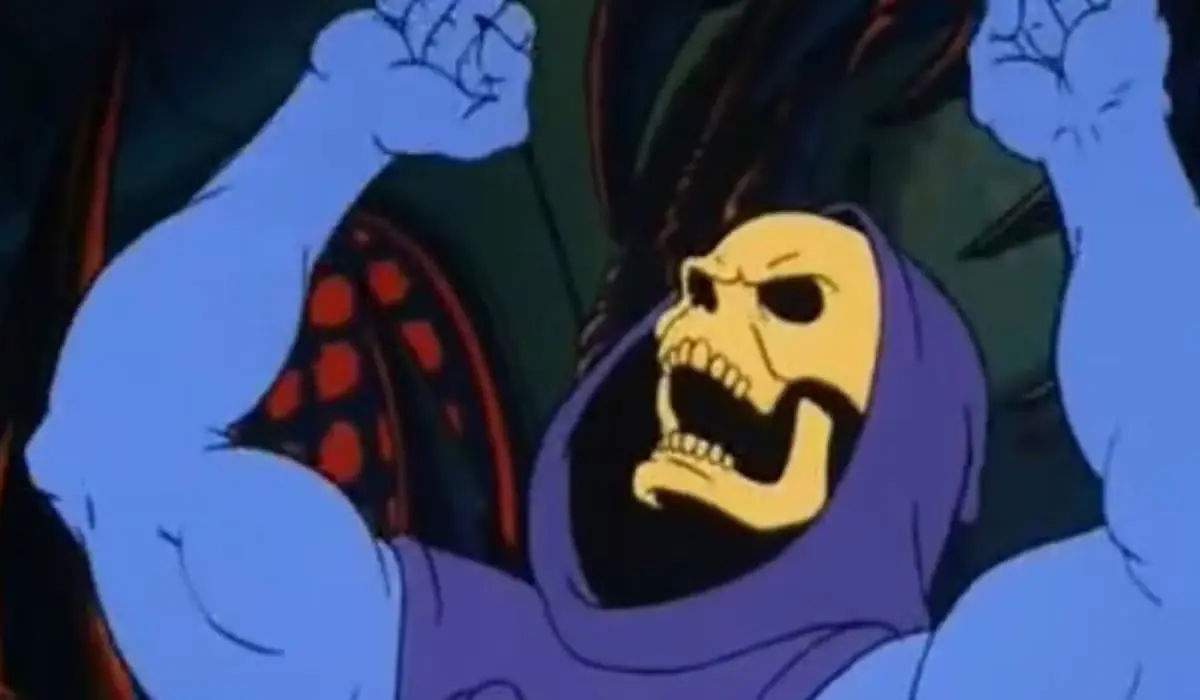

Few villains in pop culture history are as immediately recognizable as the skull-faced overlord of Snake Mountain. The moment that yellow, skeletal visage flashes on screen, you know exactly who you are dealing with. But ‘Masters of the Universe‘ fans, both nostalgic and newly converted, have been asking the same question for decades: why does Skeletor actually have a skull for a face?
The answer, it turns out, depends entirely on which version of the ‘Masters of the Universe’ mythology you grew up with. Across more than four decades of toys, cartoons, comics, and reboots, the explanation has shifted from the alien and mysterious to the genuinely heartbreaking.
Skeletor’s Design Origins: Built to Be Unforgettable
Before any lore came into play, the skull face was simply a brilliant piece of toy design. Skeletor was created for Mattel by designer and artist Mark Taylor and designer Roger Sweet, though formal credits for the development of the character have often been disputed over the years. The visual intent was pure impact. His name is obviously derived from the word “skeleton,” reflecting his skull face and making him instantly memorable.
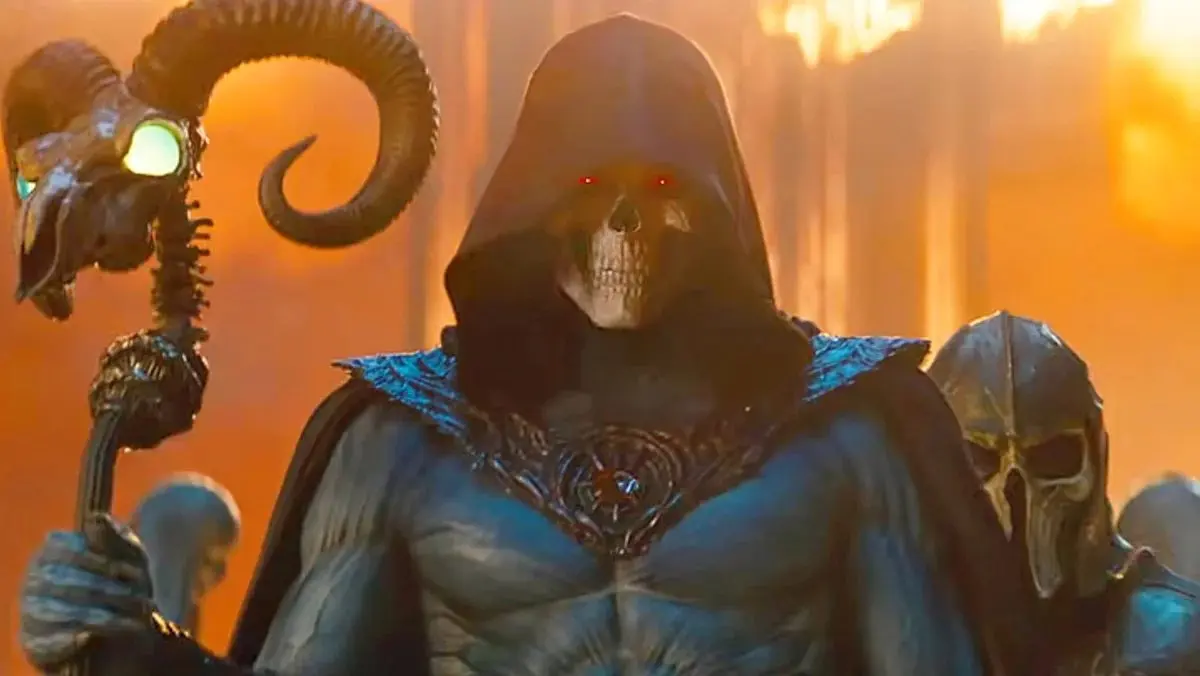
The early design went through an even darker prototype phase. According to early concept materials, Mark Taylor’s original design showed Skeletor with a decaying mummy face and decaying flesh on his arms. The decayed look was later dropped, and he was given a skull face instead. That creative pivot toward a clean, stark skull turned out to be one of the most iconic character design decisions in toy history.
The Original Mini-Comic Explanation: He Comes From Another Dimension
When the toys launched, the mini-comics packed inside each figure gave Skeletor his first official backstory, and it was distinctly otherworldly.
The original 1981 to 1983 mini-comic illustrated how Skeletor originated from another dimension, inhabited by others similar to him. During the Great Wars, a dimensional portal was opened and Skeletor was thrust out of his world and landed on the planet Eternia. In other words, his skull was simply his natural face.
The original mini-comics suggested that his bony dome was a natural part of his physiology. There was no trauma, no transformation, no tragedy. Skeletor was just a skull-faced being from a dimension full of skull-faced beings. It was a clean, simple explanation, and nearly every version of the franchise that came after would completely ignore it.
Prince Keldor and the Acid That Changed Everything
The most defining and dramatic answer to the skull face question came through the 2002 revival of the animated series. The 2002 animated reboot of ‘Masters of the Universe’ revealed that Skeletor was once Keldor, who trained in dark magic under Hordak. This version of the character repositioned Skeletor not as a supernatural outsider, but as a fallen member of Eternia’s own royal bloodline.
Keldor gathered a small band of warriors to attack the Hall of Wisdom, where they encountered resistance from Captain Randor and his officers. Keldor engaged Randor in a duel, where he was ultimately disarmed. Not willing to accept defeat, Keldor produced a hidden vial of acid from within his armor and hurled it at Randor, who blocked the impact at the last moment, causing the acid to splash back into Keldor’s face.
Keldor retreated and summoned Hordak in an attempt to save his own life. Hordak physically transformed him, removing the tissues and skin around his damaged face. Now named Skeletor, the former Keldor seemingly lost what grip he had on sanity. It remains the only on-screen portrayal of Skeletor’s origin ever depicted in animation.
The Keldor-Randor Brotherhood and the Tragedy Behind the Skull
What makes the Keldor origin so resonant is what it implies about Skeletor’s relationship to He-Man’s own family. Had the 2002 series been renewed for a third season, the show’s creators later confirmed that Skeletor and Keldor would have been revealed as King Randor’s half-brother.
The man whose acid disfigured Keldor’s face and the man whose brother became Skeletor are one and the same.
This revelation transformed Skeletor from a simple tyrant into a tragic figure, a fallen noble whose thirst for power cost him his humanity, his family, and ultimately his face. The skull is no longer just a design choice but a symbol of everything Keldor sacrificed chasing power he could never quite hold.
Hordak used dark magic to bind Keldor’s soul to a skeletal form to prevent his death, effectively making Skeletor Hordak’s apprentice. Skeletor eventually betrayed his master, leaving Hordak trapped in another dimension so that he could rule Eternia alone.
How ‘Masters of the Universe: Revelation’ and the New Comics Carry the Legacy Forward
The Keldor connection has only deepened in recent years. In the Netflix versions, both the kid-friendly CGI series and ‘Masters of the Universe: Revelation,’ Skeletor was formerly Keldor, King Randor’s brother. In ‘Revelation,’ Skeletor lost his memories of being Randor’s brother, explaining why he never brought it up in the original cartoon. It is one of the more elegant pieces of retroactive storytelling the franchise has produced.
Looking ahead, Dark Horse Comics and Mattel announced ‘Masters of the Universe: Genesis,’ a twelve-issue comic series diving into the history of Eternia through the eyes of its most heroic and most evil warriors, with issue one published in August 2026.
The opening three-issue arc focuses on Skeletor as a power-hungry demon-mage determined to seize control of Castle Grayskull, conquer Eternia, and become Master of the Universe.
His skull face began as a brilliant toy design choice, became a mark of alien otherness, and finally evolved into the permanent scar of a man who destroyed himself chasing greatness. Whether you grew up with the original cartoon or are discovering Eternia through new adaptations, that yellow skull carries more story than it first appears.
Which version of Skeletor’s origin do you think tells the most compelling story, the tragic fall of Keldor or the mysterious interdimensional demon of the original mini-comics?