Why He-Man Became One of Pop Culture’s Most Enduring Gay Icons

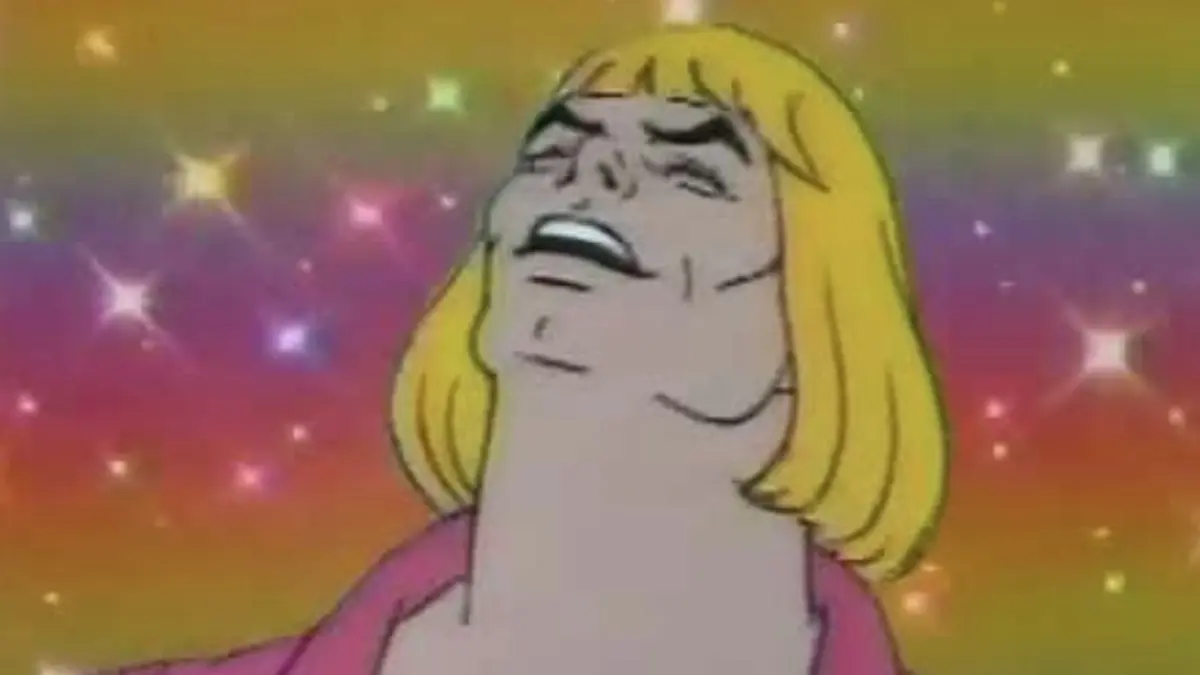

For a show aimed at selling toys to children in the early eighties, ‘He-Man and the Masters of the Universe‘ managed to do something that still baffles and delights cultural critics decades later. It became one of the most thoroughly queer-coded cartoons ever to air on television, and the LGBTQ community noticed long before the mainstream did.
According to Syfy writer Jordan Zakarin, the original cartoon is “the gayest show that has ever been on TV,” despite airing during the Reagan presidency. That contradiction is exactly what makes ‘He-Man’ such a fascinating cultural artifact, and it explains why the character has accumulated a devoted gay following that has only grown stronger with time.
The Queer Coding Hiding in Plain Sight
The visual language of ‘He-Man’ is so steeped in queer signifiers that critics have wondered how it ever made it past network censors. Prince Adam, He-Man’s alter ego, is a ripped Nordic pageboy who spends lazy afternoons pampering his timid pet cat and wears lavender stretch pants, furry purple Ugg boots, and a sleeveless pink blouse that clings to his pecs. None of that reads as an accident when you understand the cultural context of the era.
Lavender happens to be strongly associated with queer history and was even an open symbol worn to show Pride, and the intro sequence describes He-Man’s powers as “fabulous” and “secret,” words long associated with LGBTQ folk and the general concept of camp and flamboyance in television.
Even the transformation itself carries layered meaning. He-Man’s royal persona Prince Adam has a very gay blond pageboy haircut, and when he raises his magic sword his clothes disappear and he stands in what resembles a harness, imagery that in the eighties was strongly associated with leather subculture and homoeroticism.
NPR noted that He-Man’s outfit resembles those of leather subculture, including a bondage harness, which in the eighties was considered to be homoerotic imagery. Whether intentional or not, the cumulative effect of these choices created a character who spoke loudly to an audience that mainstream television was otherwise ignoring entirely.
The Double Life as a Closet Metaphor
Beyond the aesthetics, the structural premise of ‘He-Man’ maps onto the experience of closeted gay men with uncomfortable precision. His double life, being both He-Man and Prince Adam, has been viewed as reminiscent of closeted gay men, with elements of queer coding noted since He-Man’s inception.
Cultural commentators have posited that Prince Adam represents a suppressed or performative everyday self, while He-Man embodies an authentic, liberated expression of power and masculinity, with some analyses framing the transformation as a metaphor for coming out, where Adam sheds inhibitions to embrace a bolder persona. The emotional resonance of that reading for LGBTQ audiences, particularly those who grew up in the eighties, is hard to overstate.
British newspaper The Daily Telegraph said the character’s dual identity represents a man’s struggle to accept his sexuality, with Prince Adam being closeted and keeping a secret. That reading is reinforced by how carefully Adam guards his transformation. Prince Adam has a secret identity he can only tell to his closest companions, and his mother eventually learns but is supportive, if a little worried about the kinds of things Adam is doing. For an era when “coming out to mom” was a defining and often terrifying experience for gay men, that dynamic landed with real emotional weight.
Skeletor and the Art of the Homoerotic Rivalry
No conversation about ‘He-Man’ and queer culture is complete without addressing the Skeletor dynamic, which has fascinated critics for years. The live-action ‘Masters of the Universe’ movie turns the original cartoon’s gay subtext into more explicit text, portraying a tragic unrequited romance between He-Man and Skeletor, and singling out Skeletor’s warped obsession with He-Man alongside He-Man’s consistent lack of interest in women.
Queer cultural analyses frequently interpret the central antagonism between He-Man and Skeletor as laced with homoerotic tension, characterized by Skeletor’s obsessive fixation on overpowering He-Man, with Skeletor’s flamboyant taunts and repeated failures evoking camp villainy often associated with queer coding in media.
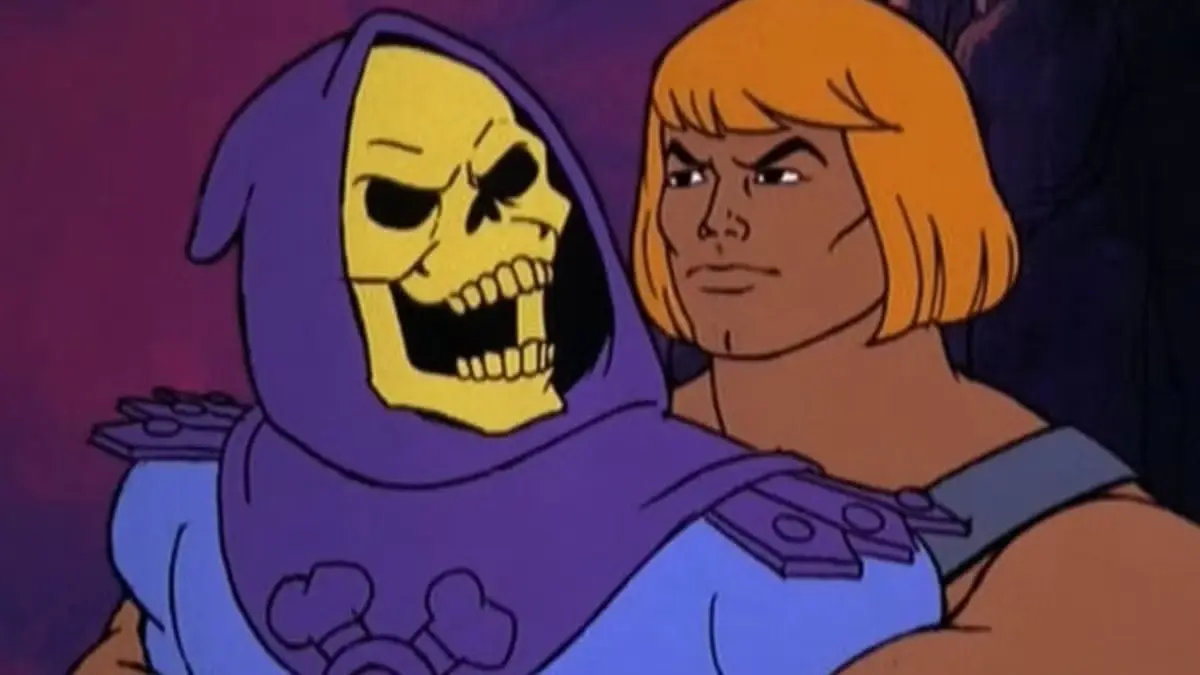
Skeletor himself, with his theatrical delivery and flamboyant rage, became a figure of queer identification for a different reason. Many LGBTQIA audiences identified with villains who were outsiders in society, much like the community was in the eighties, making Skeletor relatable in ways the show’s creators almost certainly never intended.
He-Man was created during the repressive Reagan era, when TV had no other recurring gay characters, meaning gay subtext was worked into media subversively through pro-wrestling, torture scenes, and superheroes. In that landscape, ‘He-Man’ was as close to queer representation as many young gay viewers were going to get on Saturday morning television.
How the Fandom Turned Subtext Into a Cultural Force
The gay community did not just passively enjoy ‘He-Man.’ They actively built a fandom culture around it that has had measurable real-world impact. Men’s Health reported that gay men were one of the three core groups that were collectors of He-Man toys at conventions, alongside bodybuilders and law enforcement.
One notable example of the fandom coming together productively was critic Chlopecki’s company Stick It Up raising money for LGBTQIA shelters through an art show showcasing Skeletor.
That kind of community engagement transformed the character from a queer-coded cartoon into an actual vehicle for activism and solidarity. ND Stevenson, the creator of ‘She-Ra and the Princesses of Power,’ has stated that He-Man is a gay icon, and the character’s LGBTQ fanbase has been credited as helping provide support for the inclusion of openly gay characters in the reboot.
Writer Tim Sheridan, who is gay, brought a queer lens to ‘Masters of the Universe: Revelation,’ bringing the existing LGBTQ themes that have made He-Man a gay icon to the fore in the Netflix continuation. Rob David, Mattel’s Vice President of Creative Content, confirmed that Mattel is very comfortable with He-Man’s gay icon status and queer following.
The fact that a major toy company is openly embracing this reading in the current era says everything about how far the conversation has traveled since those first eighties broadcasts.
The legacy of ‘He-Man’ as a gay icon is a story about how queer audiences have always found themselves in media that was never designed with them in mind, and how that act of reclamation can itself become a form of cultural power. What do you think, is He-Man the queer hero Eternia always deserved, or has his iconic status grown beyond anything even the most devoted Masters of the Universe fan could have imagined?