Why Odysseus Became Ulysses and What It Means for Christopher Nolan’s Epic?

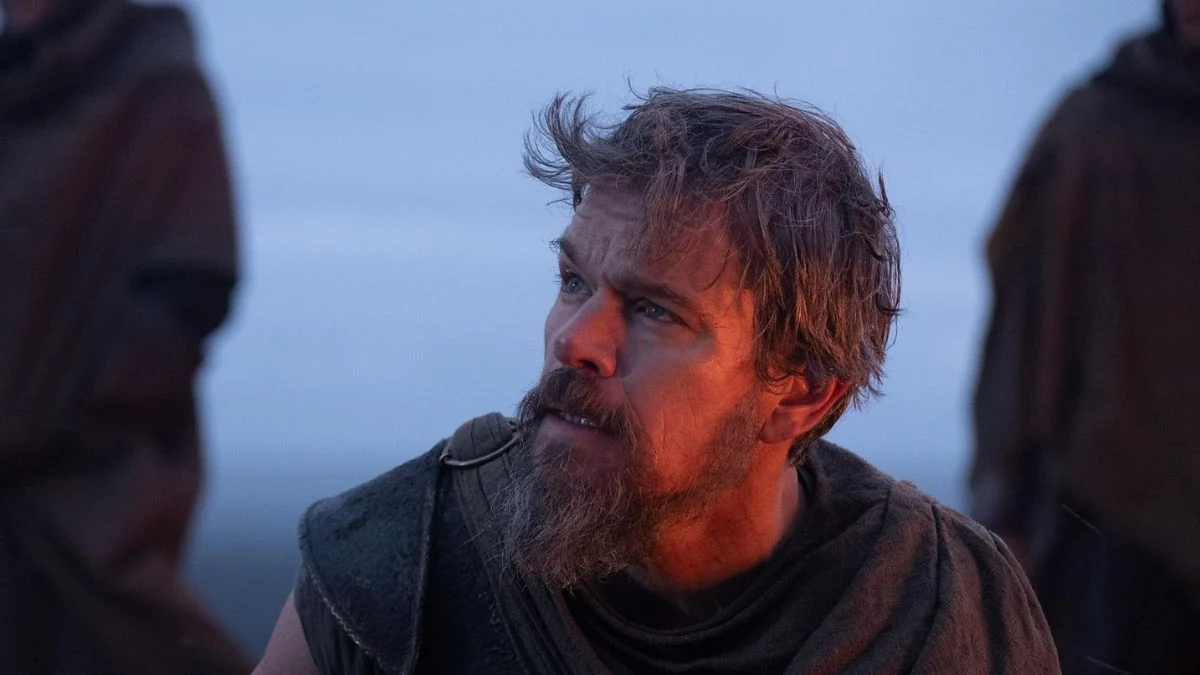

Homer’s cunning king of Ithaca has gone by two names for thousands of years, and thanks to Christopher Nolan’s blockbuster take on ‘The Odyssey,’ more people than ever are asking why. Matt Damon’s face is now plastered across theaters as Odysseus, yet the same character has quietly answered to Ulysses in everything from Roman poetry to a certain American president’s name.
The answer sits at the crossroads of language, empire, and a few thousand years of storytelling drift, and it turns out to be a genuinely fun rabbit hole once you start pulling on it.
The Greek Odysseus and His Roman Makeover
The original name is Ὀδυσσεύς, or Odysseús, and it shows up constantly across Homer’s Iliad and Odyssey, epics composed roughly in the 8th century BCE. In Greek and Roman mythology, Odysseus is a legendary Greek king of Ithaca and the hero of Homer’s epic poem the Odyssey, and he also plays a key role in the Iliad and other works in the same epic cycle.
Odysseus is renowned for his intellectual brilliance, guile, and versatility, often called polytropos, and is thus known by the epithet Odysseus the Cunning. That cleverness, more than his sword arm, is why the character has endured so long in the popular imagination.
When Rome absorbed Greek culture, the name got a serious phonetic overhaul. The form Ὀδυσ(σ)εύς actually varied a lot even in ancient sources, with vase inscriptions showing spellings like Oliseus, Olyseus, and Olysseus, while an early source in Magna Graecia used Oulixēs and the Greek grammarian Aelius Herodianus used Oulixeus. In Latin, he became Ulixēs, or less correctly Ulyssēs.
There is even a theory tying the shift to a completely different language family. Some scholars have suggested the Latin form derives from the Etruscan name Uthuze, which may explain some of the odd phonetic changes between the Greek and Latin versions. Others have floated something stranger still, that Odysseus and Ulixes might once have been two separate legendary figures who eventually merged into a single hero, though that idea remains speculative.
What Ulysses Actually Means and Where It Came From
The meaning behind the name is almost as murky as its spelling history. The etymology is debated, with some scholars deriving it from the Greek verb odyssesthai, meaning to be wroth against or to hate, and Homer himself plays with this idea when Odysseus’s own grandfather names him because he is wroth with many.
Other researchers land somewhere else entirely. Some trace the root to odussomai, roughly meaning he who causes pain or anger, which tracks with how much suffering Odysseus causes and endures across his adventures, while other critics believe the root actually lies in olumi, meaning to perish or be lost. Either reading fits a guy who spent a decade getting shipwrecked, cursed, and generally tormented by vengeful gods.
The actual transition from Greek to Latin came down to ordinary linguistic evolution rather than some dramatic rebranding. The Latin form Ulixes is the version that appears in Livius Andronicus’s Latin translation of the Odyssey, written around 240 BCE, and the shift happened because Latin simply treats Greek words differently than Greek does, with sounds and spellings drifting over the centuries the Romans had to work with the name.
Geography sealed the deal for which name stuck where. When the Roman Empire spread across Europe it carried Latin literacy with it, while Greek literacy stayed largely confined to the Eastern Mediterranean, and by the time the Western Roman Empire fell in 476 CE most of Western Europe could read some Latin but almost nobody could still read Greek. That single fact is basically why Western literature leaned on Ulysses for centuries, from Virgil’s Aeneid all the way to James Joyce.
From Ancient Myths to Christopher Nolan’s Big Screen ‘Odyssey’
Nolan’s new film has reignited interest in the character under his original Greek name rather than his Latin one, and the timing could not be more fitting. Christopher Nolan’s film ‘The Odyssey’ was released on July 17, 2026, starring Matt Damon as Odysseus and Anne Hathaway as Penelope, marking Nolan’s first release since ‘Oppenheimer’ in 2023.
The scale of the production matches the scale of the myth itself. The film was shot across multiple countries entirely with IMAX film cameras, with Nolan assembling an epic cast filmed in Morocco, Greece, Italy, Iceland, Scotland, and the United States.

The story follows Odysseus and his soldiers on a long, treacherous journey home after the Trojan War, one plagued by storms, monsters, and visions of the goddess Athena, played by Zendaya.
Damon is not carrying the film alone. He stars alongside Tom Holland as Telemachus, Robert Pattinson as the suitor Antinous, and John Leguizamo as Odysseus’s loyal friend Eumaeus, with a supporting ensemble that includes Lupita Nyong’o, Charlize Theron, Jon Bernthal, and Mia Goth, among others. Even the film’s box office numbers sound like something out of an epic. The Odyssey opened to 120.5 million dollars domestically, a career best debut for Damon, and 257.8 million dollars worldwide, making it Nolan’s biggest global launch ever according to Deadline.
Why the Ulysses Name Still Echoes Through Pop Culture
Even with Nolan’s film committing fully to the Greek Odysseus, the Roman Ulysses never really faded from the culture. The name Ulysses was made more famous in modern times by American Civil War hero and eighteenth president Ulysses S. Grant, whose parents borrowed directly from the old Latin tradition. It is a reminder that Homer’s hero has been quietly shaping Western names, literature, and even politics for centuries under his Roman alias.
The Lisbon legend is another example of how far the Ulysses name traveled beyond literature. Greek legend even credits Ulysses as the founder of Lisbon, Portugal, supposedly calling it Ulisipo or Ulisseya during his twenty year journey across the Mediterranean and Atlantic, a folk etymology recounted by ancient writers like Strabo and later echoed in Camões’s epic poem Os Lusíadas. Whether or not audiences leaving Nolan’s film know that particular myth, it says a lot about how deeply this one hero’s two names got woven into European culture.
So between the wrath filled Greek original and the empire spanning Latin version that gave America a president’s name, which one feels more true to the guy Matt Damon is playing on IMAX screens right now, and does Nolan’s choice to stick with Odysseus change how you think about the character’s legacy?