Sergio Leone Once Named Personal Top 5 Movies

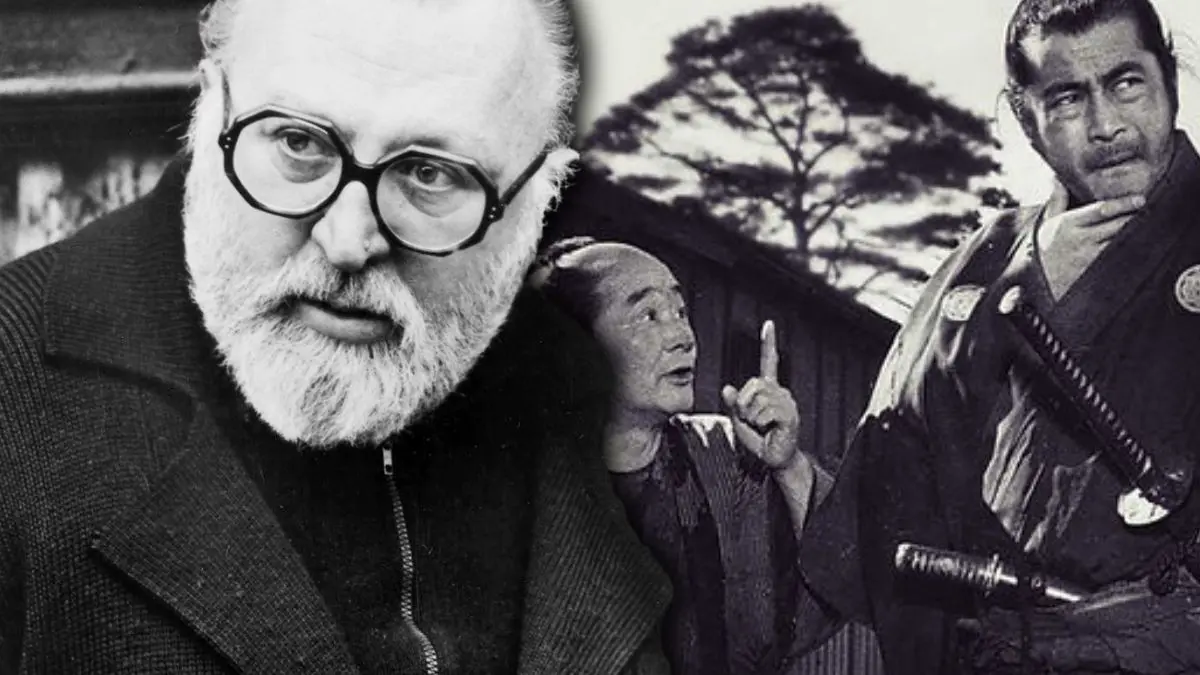

Sergio Leone, the legendary director behind classics like The Good, the Bad and the Ugly, was a huge fan of films that explored the themes of the wild west.
Not surprisingly, all five of his favourite films are either westerns or films that share the same spirit. One of his top picks is Akira Kurosawa’s 1961 samurai classic Yojimbo. The story follows a clever samurai who arrives in a town divided by two rival criminal gangs. Instead of picking a side, he plays both gangs against each other to help the townspeople.
Leone admired the movie so much that it led to a lawsuit with Kurosawa, who famously said that while A Fistful of Dollars was “a fine movie, but it was my movie.” Yojimbo was praised for its inventive storytelling, sharp dialogue, and strong performances, and it went on to influence countless films in both the samurai and western genres.
Another favourite of Leone’s is John Ford’s The Man Who Shot Liberty Valance, released in 1962. Starring James Stewart and Lee Marvin, the movie is a more traditional western, shot in black and white even though colour films were becoming the norm.
Ford explained, “In black and white, you’ve got to be very careful. You’ve got to know your job, lay your shadows in properly, get your perspective right, but in colour, there it is. Black and white is real photography.” The film tells the story of a senator who returns to a western town for an old friend’s funeral and recounts the story of his past.
Critics have long praised the movie for its thoughtful exploration of justice and heroism, as well as its striking cinematography.
Leone’s third favourite is High Noon by Fred Zinnemann, released in 1953. The movie follows town marshal Will Kane, played by Gary Cooper, as he faces a deadly gang alone when the leader arrives on the noon train.
High Noon was widely celebrated for its tension, moral complexity, and real-time storytelling. It became a symbol of courage under pressure, admired not just by film fans but also by US presidents Dwight Eisenhower and Bill Clinton. Clinton once said, “It’s no accident that politicians see themselves as Gary Cooper in High Noon…Any time you’re alone and you feel you’re not getting the support you need, Cooper’s Will Kane becomes the perfect metaphor.”
Leone also loved George Stevens’ Shane, another 1953 western. The film follows a weary gunfighter who tries to settle down on a family farm, only to be forced into violence by local ranchers.
Critics praised Shane for its emotional depth, visual style, and innovative effects, like hidden wires that made gunfights more realistic. Director Sam Peckinpah noted, “When Jack Palance shot Elisha Cook Jr. in Shane, things started to change,” highlighting its influence on future westerns.
Finally, Leone admired Robert Aldrich’s 1954 film Vera Cruz, a story about two mercenaries caught up in revolution-era Mexico. Praised for its action sequences, complex characters, and moral ambiguity, the movie has become a classic example of mid-century western storytelling.
Together, these five films, Yojimbo, The Man Who Shot Liberty Valance, High Noon, Shane, and Vera Cruz, showcase the kinds of stories and techniques that inspired Sergio Leone and helped shape his revolutionary approach to the western genre.
Have something to add? Let us know in the comments!