Is Emerald Fennell’s ‘Wuthering Heights’ Scary? It’s Not Horror, But It’s Definitely Disturbing

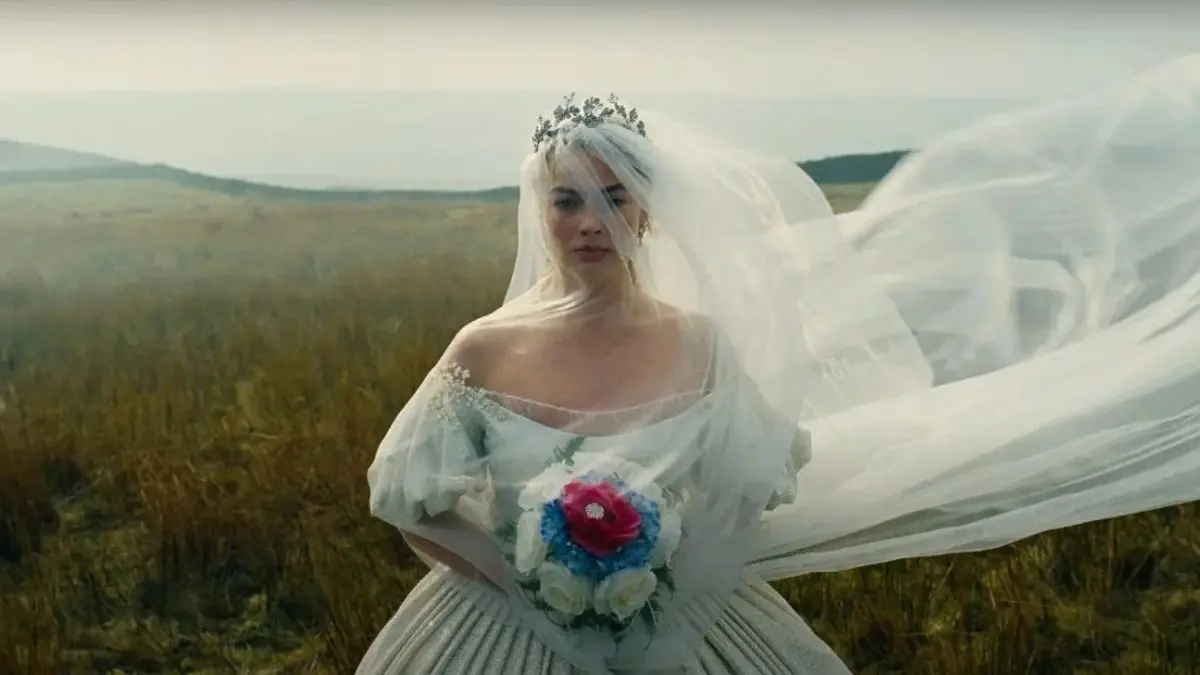

Emily Brontë’s ‘Wuthering Heights’ has haunted readers for nearly two centuries, its windswept moors and obsessive characters leaving an unmistakable chill that has never quite left popular culture. When Emerald Fennell, the Oscar-winning director behind ‘Saltburn’ and ‘Promising Young Woman’, announced she was bringing the story to the big screen with Margot Robbie and Jacob Elordi, audiences immediately started asking questions. Chief among them: just how dark is this going to get?
Released on February 13, the film is described as a romantic period drama, and Fennell has been clear that it is a loose reinterpretation of Brontë’s novel rather than a strict adaptation. Speaking at the Brontë Women’s Writing Festival, Fennell described the source material as something that “cracked me open” when she first read it at fourteen, calling it “so sexy, so horrible, so devastating.” That combination of adjectives, coming from the filmmaker herself, probably tells you everything you need to know about the kind of experience she was aiming to deliver.
Not a Horror Film, But Not Comfortable Either
To answer the question directly: ‘Wuthering Heights’ is not a horror film in any conventional sense. There are no jump scares, no supernatural monsters, and no slasher sequences. But comfortable viewing is another matter entirely.
The film leans heavily into gothic elements, making the Yorkshire moors feel like a character that traps its protagonists in their own misery, and what the film calls its “scare factor” is firmly rooted in human cruelty rather than anything supernatural. Fennell herself wrote in a column for the Los Angeles Times that she has always been drawn to the gothic as a genre where “comedy and horror, revulsion and desire, sex and death are forever entwined, where every exchange is heavy with the threat of violence, or sex or both.” That sensibility permeates every frame of her adaptation.
What Actually Makes It Dark
The film opens with creaking and moaning sounds during the credits, which are revealed to belong not to a romantic encounter but to a public hanging, with a crowd watching on in fascination. From there, the darkness is less about genre mechanics and more about atmosphere and emotional weight.
Domestic abuse is depicted through an alcoholic father figure, with sounds of a young boy being beaten and scarring shown on his back afterward. Several characters strike one another in anger. In one scene a character is seen pressing a sewing needle into her own hand, and another death is depicted with a significant volume of blood, symbolizing miscarriage. These are not exploitative flourishes but rather the film’s way of capturing what Fennell describes as the raw, jagged edges of Brontë’s world.
The MPA assigned the film an R rating primarily for strong sexual content, nudity, and violence, and unlike previous PG-13 adaptations of the story, this version explicitly sets out to capture the feral nature of Brontë’s characters. Interestingly, there is no explicit nudity despite that rating, with sex scenes performed clothed throughout, though the film does contain several deaths, graphic depictions involving blood, and the sounds and aftermath of severe physical child abuse.
A Psychological Weight That Lingers
Perhaps the most genuinely unsettling aspect of ‘Wuthering Heights’ is not any single scene but the cumulative psychological effect of spending two hours inside a story built entirely on toxic obsession, class resentment, and emotional manipulation.
Fennell told W Magazine that she sees Emily Brontë as someone who was “radically amoral” and “absolutely refused to make judgments,” adding that the lack of consensus around whether ‘Wuthering Heights’ is a toxic love story or a transcendent romance is both “the point and the fun of it all.” Her film deliberately preserves that moral ambiguity, which means viewers looking for a clear hero or redemptive arc will not find one.
Common Sense Media notes that Heathcliff and Cathy are not just in love but obsessed with each other, and that their dynamic is so all-encompassing it ultimately feels like the kind of love everyone fears experiencing. That psychological dimension, the portrait of a relationship that is both intensely desirable and clearly destructive, is where the film earns its most lasting unease.
Who Is It Actually For?
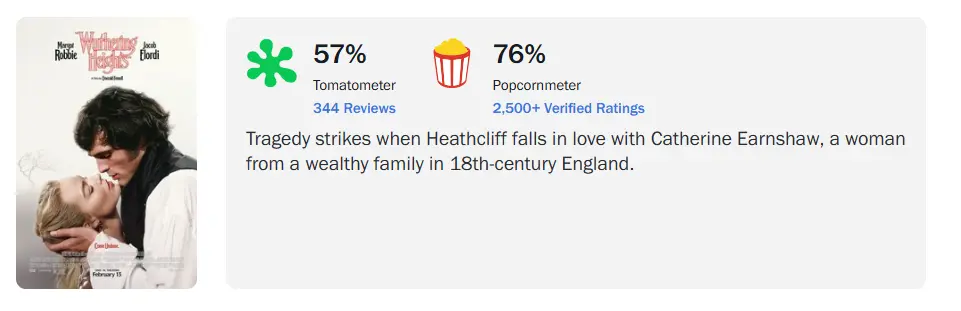
The film has been described as less a period piece and more a psychological thriller in corsets, owing more to Fennell’s own aesthetic than to traditional literary adaptation. Critics on Rotten Tomatoes have called it “draped in vibrant silks and gothic broodiness,” noting it strays from the source novel but captures the Brontë vibe with style. The film currently holds a 57% critics score on the site, reflecting the divide between those who respond to Fennell’s provocation and those who find it excessive.
Audiences who go in expecting a sweeping, traditionally romantic period drama may find the film more provocative than profound, while younger romantics may find it one of the most sigh-inducing movies they have ever seen. The truth, as with most of Fennell’s work, probably lies somewhere in between those two reactions.
If you are sensitive to depictions of emotional abuse, self-harm imagery, or psychologically heavy relationships, ‘Wuthering Heights’ is worth approaching with awareness rather than avoiding outright. It is not designed to terrify, but it is absolutely designed to disturb, challenge, and linger.
Let us know in the comments whether you found ‘Wuthering Heights’ genuinely unsettling or simply provocative for provocation’s sake.