‘Sense and Sensibility’ Recap and Ending Explained: How the New Adaptation Resolves Sisterhood and Romance



Jane Austen’s foundational 1811 novel has long served as a lodestar for British costume drama, capturing the delicate tension between social pragmatism and unrestrained romantic impulse. While generations of period drama enthusiasts hold Ang Lee’s 1995 cinematic milestone close to their hearts, Focus Features and Working Title Films returned to the English countryside to offer a contemporary audience its own interpretation. The resulting production bridges heritage filmmaking with a raw, earthy atmosphere under the guidance of British director Georgia Oakley.
Running at 132 minutes, the 2026 feature abandons the immaculate porcelain stiffness often associated with Regency-era filmmaking in favor of tactile immediacy shot on 35mm film. Working alongside Australian screenwriter Diana Reid, Oakley strips back the genteel veneer to emphasize the economic vulnerability faced by aristocratic women whose survival depended entirely on marriage laws. Before exploring the emotional twists of the final act, understanding the Dashwood family’s descent into sudden destitution provides essential grounding for every romantic choice they make.
The Fall of Norland and the Sisters’ Divided Romances
The narrative begins with the untimely death of Henry Dashwood, whose estate legally bypasses his widow and three daughters to fall into the hands of his callous firstborn son, John. Swayed by his ruthlessly self-serving wife, Fanny, John denies the women their promised financial support, banishing Mrs. Dashwood and her daughters—Elinor, Marianne, and young Margaret—to a modest cottage in Devonshire. Ahead of their displacement, the reserved Elinor forms a delicate romantic understanding with Fanny’s quiet brother, Edward Ferrars, though family pressure prevents him from declaring his intentions.
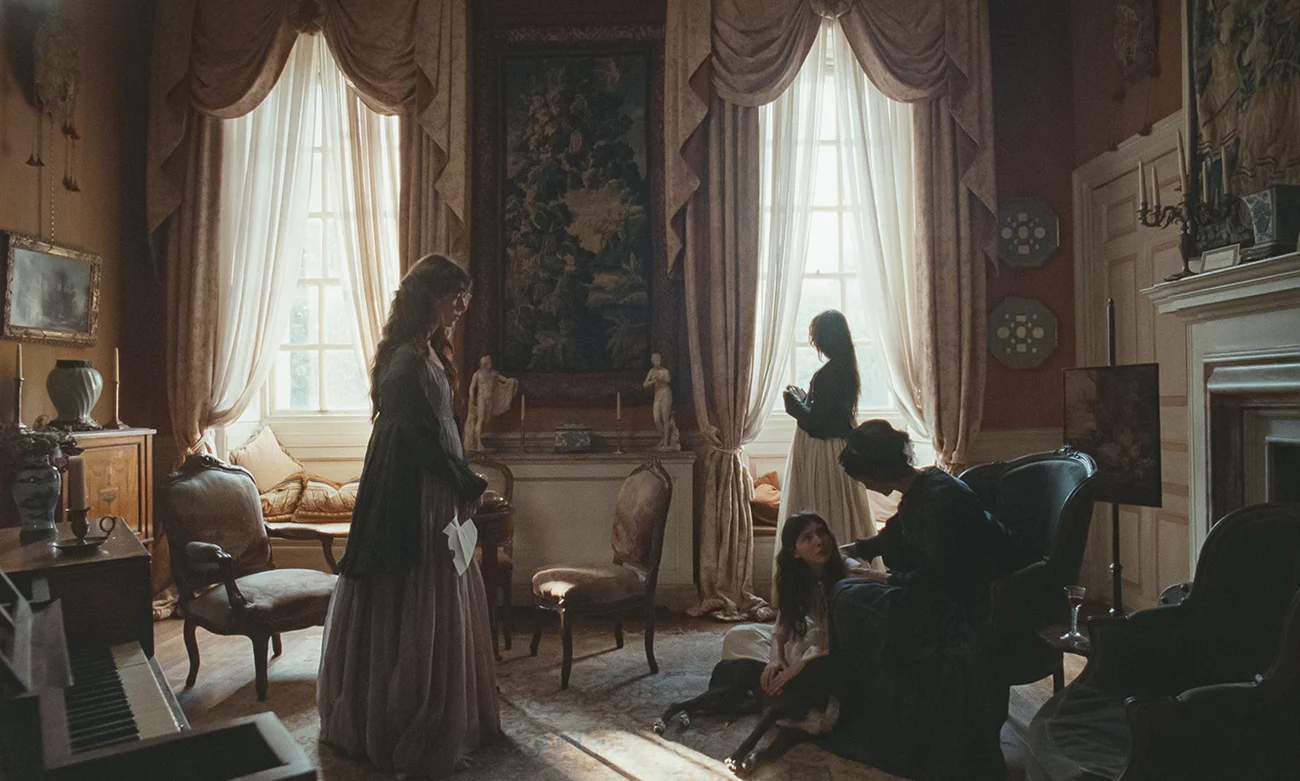
In Devonshire, the emotional paths of the two elder sisters diverge radically across opposite philosophical temperaments. The pragmatic Elinor suffers in silence after discovering that Edward is secretly bound to the spiteful Lucy Steele, choosing duty over selfish confession. Meanwhile, Marianne surrenders completely to open passion after being rescued across the rain-swept moors by the dashing John Willoughby, ignoring the quiet devotion offered by the melancholy Colonel Brandon.
The visual design reflects this internal turmoil and domestic intimacy, presenting characters who feel weathered by circumstance rather than dressed for costume exhibitions. Daisy Edgar-Jones shared in an interview with Bustle that “Georgia really wanted to bring nature into the film in a really interesting way,” noting the creative team envisioned “a version of the Dashwoods that is a little more undone, a little more of the earth.” That tactile vulnerability peaks when the family journeys to London, where Willoughby cruelly snubs Marianne at an aristocratic ball to announce his betrothal to a wealthy heiress.
The Climax and the Path to Emotional Balance
Willoughby’s betrayal shatters Marianne’s romantic idealism, driving her into a physical fever that nearly claims her life following an agonizing walk in a driving downpour. As Colonel Brandon rushes across the county to secure medicine and prove his steadfast character, Marianne begins confronting the perilous cost of unrestrained sensibility. Simultaneously, Edward faces the wrath of his own mother, who disinherits him after his covert betrothal to Lucy comes to light, yet he stubbornly refuses to abandon his moral word.
Colonel Brandon quietly steps forward to offer Edward a modest parsonage at Delaford, providing the impoverished gentleman an honorable path to make a living. In an excruciating conversation between Elinor and Edward, Elinor swallows her private grief to urge him toward duty, demonstrating immense emotional fortitude. This pivotal sequence underscores the film’s nuanced thematic balance, ensuring that both women confront their vulnerabilities before achieving romantic contentment.
‘Sense and Sensibility’ Ending Explained: Mutual Growth and Triumphant Sisterhood
The emotional climax arrives when news reaches the Dashwood cottage that a marriage has officially taken place between Lucy Steele and a Mr. Ferrars. Assuming that Edward is permanently lost to another woman, Elinor prepares to endure lifelong heartbreak until Edward himself unexpectedly arrives at Barton Cottage. In a stunning reversal of fortune, Edward explains that Lucy abandoned him as soon as he lost his fortune, choosing instead to wed his newly enriched younger brother, Robert Ferrars.
Liberated from his moral prison, Edward proposes to Elinor, prompting the usually unflappable heroine to break down into violent, joyous sobs that release years of internalized repression. Across the estate, Marianne gradually recognizes the genuine tenderness, intellectual compatibility, and devotion offered by Colonel Brandon, consenting to marry him not out of defeat, but out of mature clarity.
Screenwriter Diana Reid explained in an interview on the ScreenUK Podcast that she reworked the narrative dynamics so “both Elinor and Marianne feel truly triumphant – not just the one who wins the right husband.”
By allowing Elinor to embrace vulnerability and Marianne to cultivate discernment, Oakley’s resolution proves that neither sense nor sensibility is whole on its own. The final frames celebrate the Dashwood sisters’ restored prosperity and romantic joy while maintaining that their unbreakable bond remains the story’s true anchor.
What did you think of the new ending in the 2026 adaptation of ‘Sense and Sensibility‘, and how does it compare to previous versions?