Did You Know Aragorn Was Supposed to Fight Sauron During the Final Battle at the Black Gate? Thankfully, the Scene Was Removed

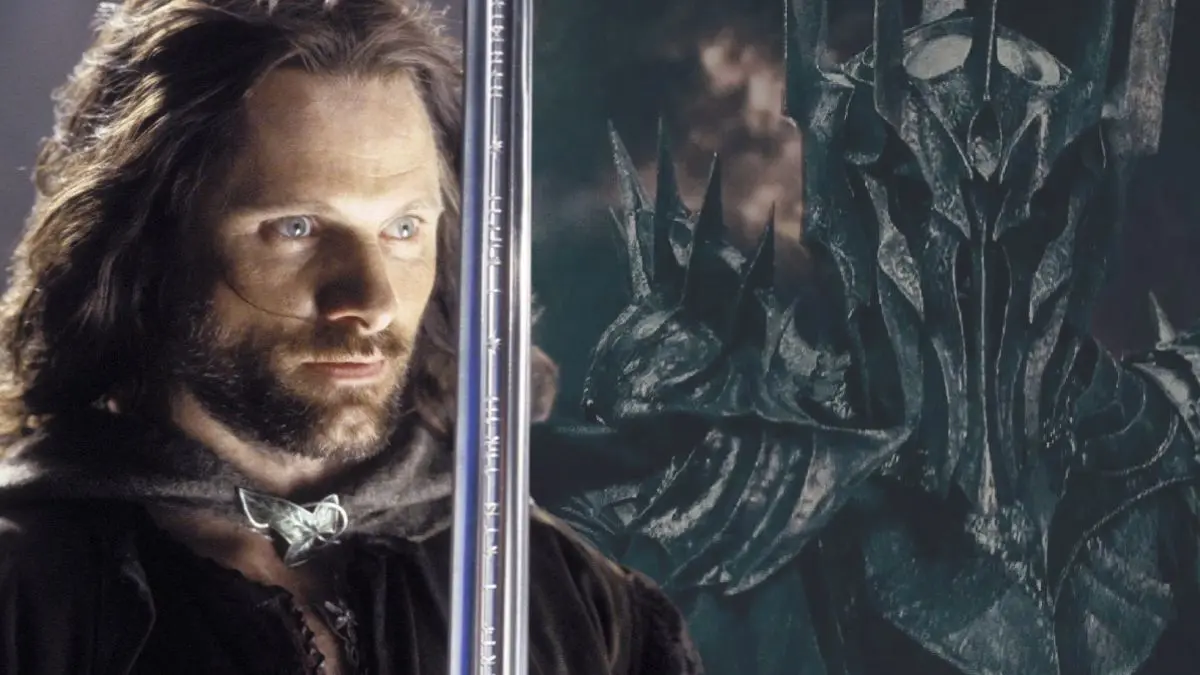

The final battle in The Lord of the Rings: The Return of the King is a monumental cinematic moment. At the Black Gate of Mordor, Aragorn and his small army stand against the overwhelming forces of Sauron. Their goal is not to win the battle but to create a diversion. They need to draw the Great Eye’s attention away from two small hobbits, Frodo and Sam, who are on a desperate quest to destroy the One Ring. The tension is immense as the gate opens and the legions of orcs pour out, surrounding the brave company of men.
In the film we all know, Aragorn gives a rousing speech, turns to his friends, and with the words “For Frodo,” leads the charge into the sea of enemies. The battle that follows is a chaotic and heroic struggle for survival. We see Aragorn courageously fight a massive armored troll, a moment that highlights his strength and determination as a king.
This entire sequence is designed to build suspense, cutting back and forth to Frodo and Sam’s perilous journey inside Mount Doom. The focus remains on the hobbits’ mission, the true purpose of this last stand.
However, the climactic battle at the Black Gate was originally planned to be very different. Director Peter Jackson filmed a version of events that would have drastically altered the finale of the entire trilogy.
In this abandoned concept, Aragorn was not meant to fight a troll; his intended opponent was none other than the Dark Lord Sauron himself, in physical form. This duel between the rightful king and the ultimate evil was conceived, storyboarded, and even fully filmed before the decision was made to remove it from the movie.
The scene was designed to be a major confrontation. As the Black Gate opened, Sauron would have first appeared in a fair, angelic form known as Annatar. This was the beautiful guise he used in the Second Age to deceive the elves.
Aragorn, with his lineage as Isildur’s heir, would see through this deception. Sauron would then transform into the towering, armored figure seen in the prologue of The Fellowship of the Ring, ready for combat. The battle would have been an epic duel, with Aragorn’s sword, Andúril, clashing against the Dark Lord’s might.
Storyboards and behind-the-scenes footage show that Aragorn would have even managed to stab Sauron, though the blow would have had little effect. The fight was intended to end with Sauron knocking Aragorn down, on the verge of delivering a killing blow just as the One Ring was destroyed, causing the Dark Lord to explode.
So, why was such a dramatic and fully filmed scene cut from the final movie? Peter Jackson and his team realized during the editing process that this epic duel, while visually spectacular, undermined the core story.
The central climax of The Lord of the Rings was always meant to be Frodo and Sam’s struggle at Mount Doom. Their journey, their sacrifice, and their courage are the heart of the narrative.
Shifting the focus to a heroic one-on-one fight between Aragorn and Sauron would have diminished the hobbits’ importance at the most critical moment. It would have turned the battle at the Black Gate from a strategic diversion into the main event, which was never its purpose.
Furthermore, the filmmakers felt that a physical confrontation with Sauron went against the spirit of J.R.R. Tolkien’s work. In the book, Sauron never appears in person at the final battle. His power is felt as an overwhelming presence, a commanding will, and through his all-seeing eye, which made him a more terrifying and less conventional villain.
Reducing him to a physical monster for Aragorn to fight would have made him less unique and would have been a significant departure from the source material. Jackson himself admitted that the scene was not what Tolkien envisioned and that it was demeaning to what Aragorn’s true heroic act was: sacrificing himself and his army to give Frodo a chance.
The decision to cut the scene was made late in production, but the footage did not go to waste. The shots of Aragorn fighting were cleverly repurposed. Sauron was digitally replaced with a large, armored CGI troll, creating the intense duel we see in the final version of the film.
If you watch the scene closely, you can see that the intensity of Aragorn’s fight seems almost exaggerated for a battle with a troll; this is because he was originally fighting a much more significant foe. The shots of the heroes reacting with awe and fear to Sauron’s initial appearance as Annatar were also reused for their reactions to the Eye of Sauron atop the Black Gate.
Ultimately, the removal of the Aragorn versus Sauron fight was a crucial decision that preserved the narrative integrity of the film. It kept the focus on the hobbits’ desperate quest and honored the subtler, more profound themes of Tolkien’s original story.
While the idea of a physical showdown between the king and the Dark Lord sounds thrilling, its absence makes the final film a more faithful and emotionally resonant conclusion to the epic saga.
What do you think? Would you have preferred to see Aragorn fight Sauron, or do you believe Peter Jackson made the right choice? Share your thoughts in the comments below.