‘Avatar: The Last Airbender’ Season 2 Recap and Ending Explained: The Season Ends on Its Darkest Note Yet — and Aang May Be Gone for Good


The wait is finally over. Netflix’s live-action ‘Avatar: The Last Airbender‘ Season 2 premiered on June 25, consisting of seven episodes that take the Gaang deep into the Earth Kingdom and into the most emotionally punishing chapter of the entire saga. If Season 1 was a warm-up, Season 2 is the sucker punch, and fans are still feeling the bruises.
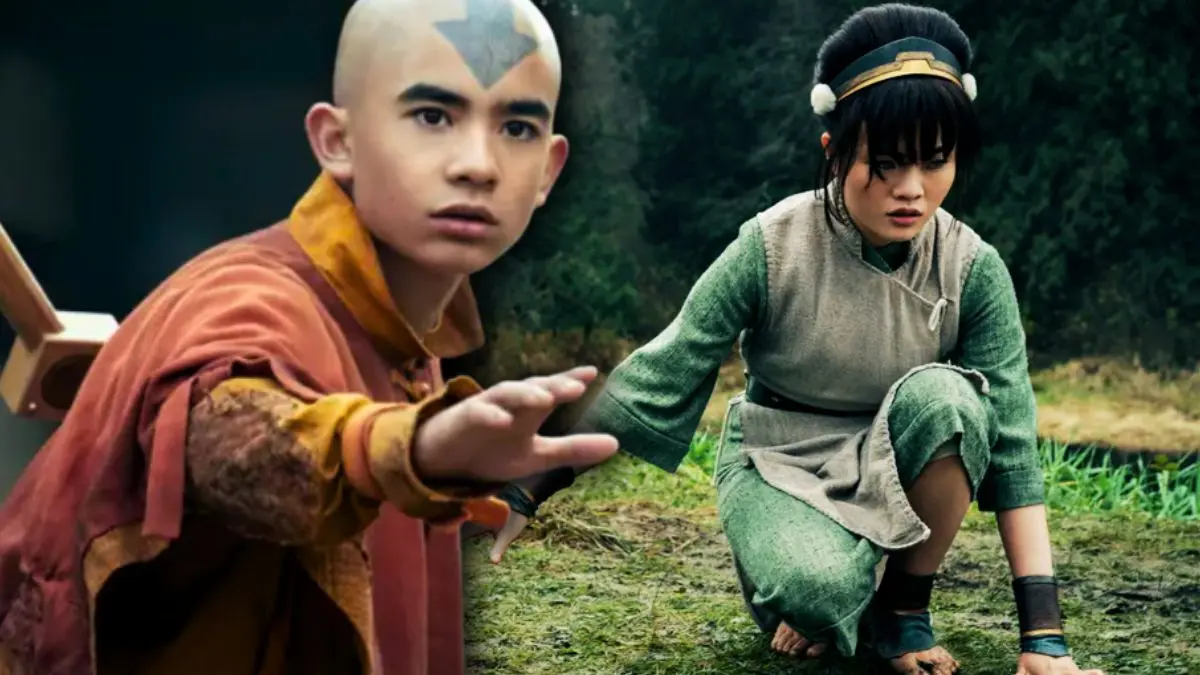
Season 2 continues the adventures of Avatar Aang (Gordon Cormier) and his friends Katara (Kiawentiio) and Sokka (Ian Ousley) as they venture deep into the Earth Kingdom to master earthbending and convince the Earth King to aid in the war against the Fire Nation.
Executive producers Christine Boylan and Jabbar Raisani told Tudum they were “going to show the real-world versions of iconic scenes from the original, and explore some of the stories that the animation didn’t.” They delivered on that promise in ways that will haunt viewers heading into the already-confirmed final season.
The Fall of Ba Sing Se and the Dai Li Conspiracy
Aang finally begins to master earthbending under Toph’s guidance and uncovers a conspiracy within Ba Sing Se involving Long Feng (Chin Han) and the king’s guard, known as the Dai Li. The city itself functions as a kind of villain in its own right, a place sustained by deliberate ignorance. The Dai Li, Ba Sing Se’s secret police, maintain an information blackout ensuring no citizen is aware of the war beyond the walls.
Team Avatar attempts to expose the conspiracy to King Kuei (Justin Chien), but he seems to care little about politics and appears annoyed that he is taken away from his gardening. They are soon captured and imprisoned. The arrival of Princess Azula (Elizabeth Yu) only accelerates the city’s collapse.
In a meeting with Long Feng, Azula kills all of Ba Sing Se’s highest-ranking men in the force when they question why the Fire Nation wants to control the city. Long Feng, however, begrudgingly but fearfully complies with Azula’s plan to raise Ba Sing Se’s drawbridge and let the Fire Nation troops roll in.
Production designer Michael Wylie and his team built Ba Sing Se as a full outdoor practical set on a back lot, with executive producer Christine Boylan describing the decision as central to the season’s tonal step-up. The grandeur of watching that hand-built world fall to the Fire Nation makes the defeat sting all the more.
Toph’s Metalbending Breakthrough Changes Everything
Miya Cech, who is of Chinese and Japanese-American descent, was cast as Toph after a review of more than 6,000 auditions, with co-showrunners Jabbar Raisani and Christine Boylan describing the selection as unanimous once they saw her chemistry read. Her introduction is one of the season’s greatest strengths, and she exits the season having rewritten the rules of what bending can be.
After being tricked and imprisoned by her mother in a metal cage and shipped back home against her will, Toph achieves a groundbreaking feat by inventing metalbending, allowing her to escape on her own and proving to her mother she is far from a “delicate flower.” The show establishes that no earthbender had ever bent metal before Toph, making the moment a genuine series milestone.
To build an inhabited performance of a character who navigates entirely without sight, Cech worked with blindness consultant Joe Strechay throughout the entire production. Strechay was present for every scene and every rehearsal involving Toph. That investment shows. Her physicality and confidence translate seamlessly to the screen, and by the finale she has become the team’s most indispensable weapon.
Zuko’s Redemption Arc Hits a Devastating Wall
Haunted by memories of his abusive father, Fire Lord Ozai (Daniel Dae Kim), sending troops to capture his mother (Lily Gao) as she tried to escape with her children, and inspired by the compassion and love of his Uncle Iroh (Paul Sun-Hyung Lee), Zuko (Dallas Liu) increasingly chooses to help others rather than serve the Fire Nation. Fans of the original animated series know where this arc is ultimately heading, but the show stretches the tension almost beyond tolerance.
When Princess Azula seizes control of the city, she learns that her brother was captured along with Team Avatar. Remembering a vow they both made to their mother to take care of each other, she offers to share the glory of the city’s capture with her brother. This causes Zuko to waver.
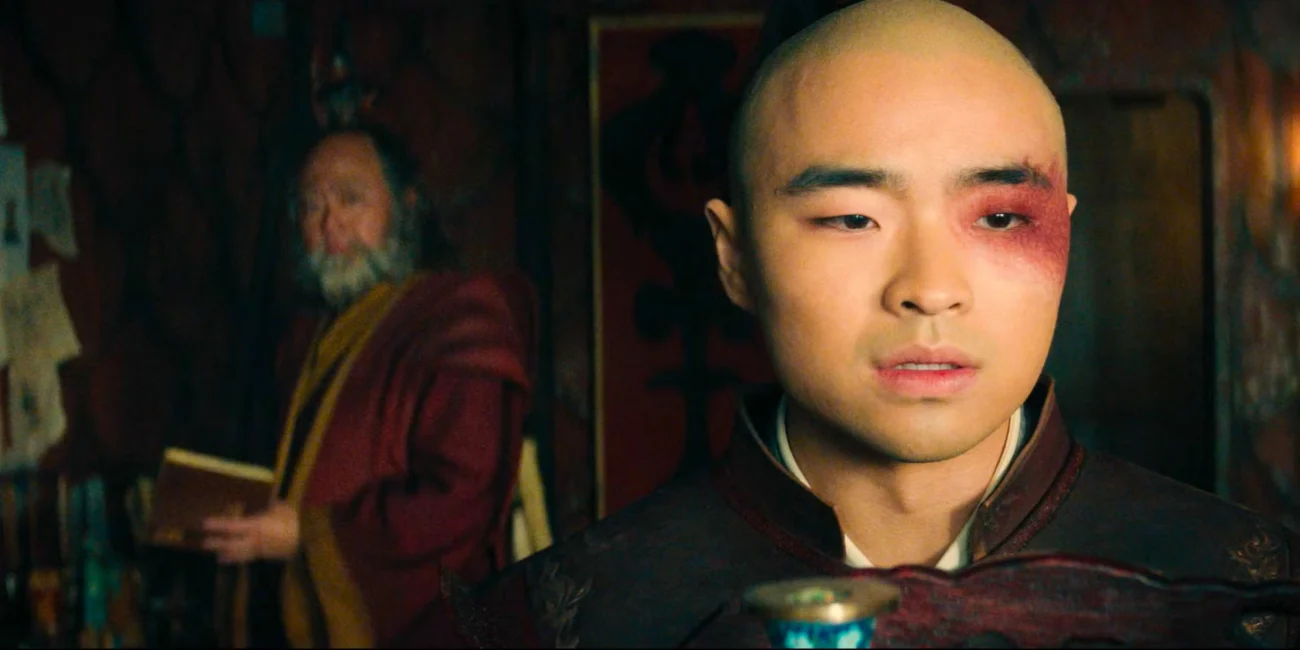
After their heart-to-heart, Katara hopes that Zuko will side with her and Aang in the fight against Azula, but Zuko reverts to his old ways and teams up with his sister. “I thought you had changed,” says Katara. “I have changed,” replies Zuko.
Rather than completing his redemption arc, Zuko ends the season caught between the person he wants to become and the family legacy he had wanted to escape. Iroh is handcuffed by the Dai Li, and throws a judgmental glance at Zuko as he is led away. It is one of the most quietly devastating moments of the entire season.
Did Aang Die in the Avatar State?
After rescuing his friends and reuniting with a captured Appa, Aang confronts Princess Azula in battle during the Fire Nation’s takeover of the city. When it appears his friends are about to lose, Aang enters the powerful Avatar State and nearly defeats Azula. However, he ultimately chooses mercy over killing her, and Azula uses the opportunity to strike him down while he is in the Avatar State, which is a potentially catastrophic event that could end the Avatar cycle forever.
That lightning bolt from Azula didn’t just seem fatal, it actually was. Aang temporarily died, but Katara brought him back to life by using the water from the Northern Water Tribe’s Spirit Oasis that she got in Season 1. However, the Netflix version makes a significant departure from the original animated series at this point.
The show has deviated from the cartoon in a major way by showing that Katara’s healing waters haven’t worked. In the animated show, the season ends with Aang on the mend. That’s not the case here, with Aang’s fate left ambiguous.
As the Gaang flee Ba Sing Se on Appa, Katara attempts to heal Aang using the remaining water from the Spirit Oasis. But it doesn’t work, and after initially flickering back to life, Aang loses consciousness once again, his fate unclear. The season ends as Katara’s pleas for Aang to wake up echo over the credits. It is a gut-punch of a cliffhanger, and one that sets the stage for what promises to be a momentous conclusion.
What Season 3 Has in Store
Season 3 isn’t just confirmed, it’s already been shot. Seasons 2 and 3 were filmed back-to-back after Netflix committed to telling the full Avatar story in March 2024, two weeks after the release of the first season. The animated series is set across three books, and the Netflix show is adapting the overarching story of each season relatively faithfully, with Season 3 set to cover Book 3: Fire.
By the time the credits roll, Ba Sing Se has fallen, the Fire Nation is in control, Iroh is imprisoned, Aang’s fate hangs in the balance, and the heroes have suffered their greatest defeat yet. The groundwork laid in Season 2 makes the final chapter feel genuinely earned rather than manufactured. Every character has been pushed to a breaking point, every alliance tested, and every belief shattered.
With Aang unconscious, Zuko’s soul split in two, Iroh in chains, and the Earth Kingdom’s greatest city under Fire Nation rule, the question now is whether the show can stick the landing it has so brilliantly set up — and if you watched that final scene and felt something twist in your chest, share how you think Aang is going to pull through in the comments.