Does ‘Whalefall’ Have a Post-Credits Scene? What to Know Before Leaving the Theater

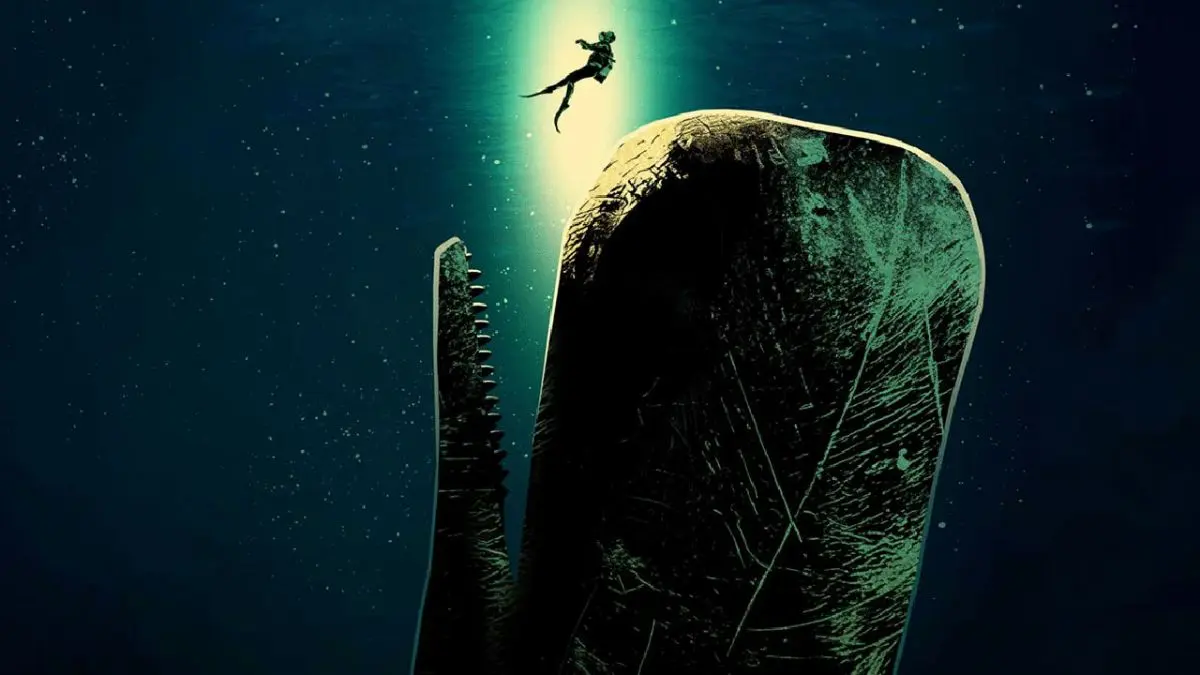

Modern cinematic survival thrillers frequently challenge audiences to endure white-knuckle tension, but recent releases across major studios have also conditioned moviegoers to sit patiently as the names roll. In an era dominated by cinematic universes and franchise teases, viewers routinely scrutinize the final minutes of every theatrical release to see if a hidden epilogue awaits. As 20th Century Studios unleashes ‘Whalefall‘ on the big screen, fans are naturally eager to know whether an extra sequence or bonus stinger lurks after the credits.
Adapted from the acclaimed 2023 novel by Daniel Kraus, the harrowing thriller plunges deep into the treacherous waters off California’s central coast. The narrative centers on a grieving scuba diver named Jay Gardiner, who embarks on a desperate mission to recover the remains of his late, domineering father off Monastery Beach. His routine dive rapidly spirals into an unimaginable nightmare when a feeding 60-ton sperm whale accidentally swallows him alive, trapping him with only one hour of breathable air.
Does ‘Whalefall’ Feature a Post-Credits Scene?
For moviegoers debating whether to stick around in the theater after the final shot cuts to black, the definitive answer is no: ‘Whalefall’ does not contain a post-credits or mid-credits scene. Once Jay’s intense aquatic ordeal reaches its dramatic resolution and the screen transitions into the end credits, the story is entirely finished. Audiences can comfortably collect their belongings and head for the exits without worrying about missing any surprise epilogues or secretive sequel teases.
Even without extra footage tucked into the roll, moviegoers who choose to stay through the 106-minute runtime’s credits will get to appreciate the dedicated crew who brought this claustrophobic vision to life. The crawl highlights the intricate contributions of visual effects supervisors, divers, and stunt performers who helped realize the biological nightmare inside the beast. Furthermore, staying in the auditorium allows viewers to decompress while listening to the final movements of composer Joseph Trapanese’s atmospheric orchestral score.
Crafting an Unflinching, Self-Contained Survival Story
The choice to avoid a post-credits stinger aligns completely with the focused narrative architecture established by director Brian Duffield and author Daniel Kraus. From its earliest days of development, the project was designed as a singular, closed-ended exploration of human resilience rather than the beginning of an ongoing cinematic saga. The film gained rapid industrial momentum after Deadline confirmed that rising star Austin Abrams had signed on to lead the high-concept project for 20th Century Studios and Imagine Entertainment.
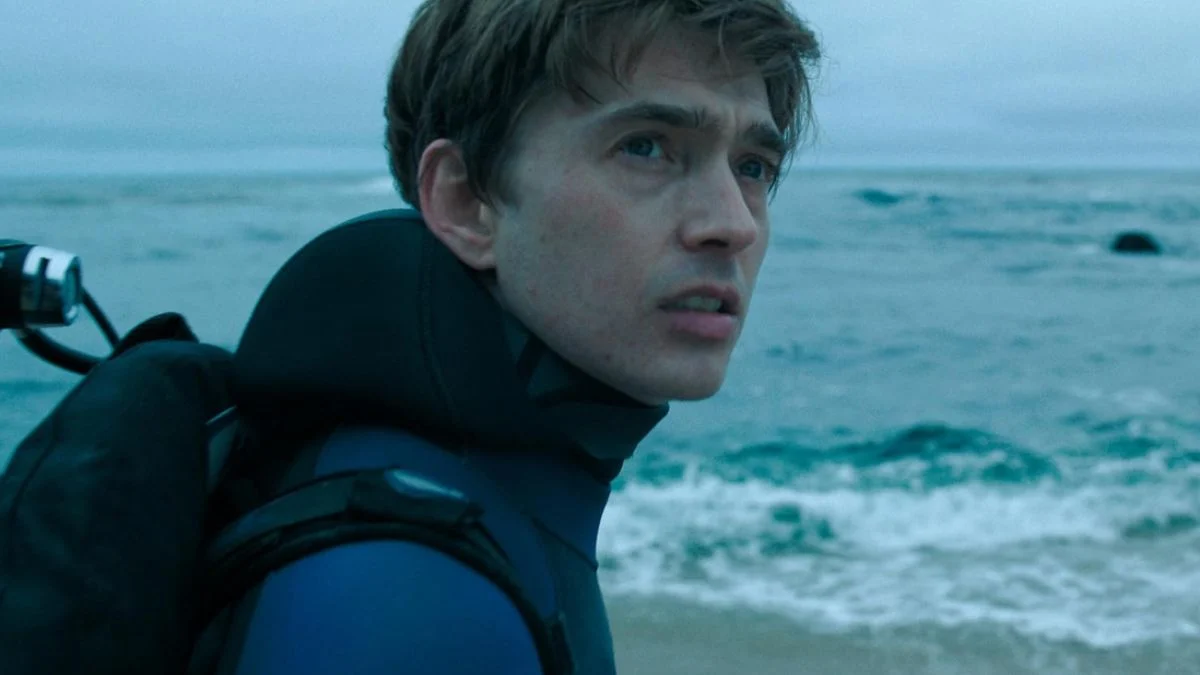
Abrams delivers a grueling, emotionally raw lead performance opposite veteran actor Josh Brolin, who portrays Jay’s volatile, legendary diver father, Mitt Gardiner. Supported by an impressive ensemble that includes Elisabeth Shue, Jane Levy, and Emily Rudd, the production grounds its wild biological premise in genuine family grief. Through non-linear flashbacks that mirror Jay’s slipping consciousness, the narrative explores the complicated emotional wreckage left in the wake of Mitt’s tragic suicide.
To simulate the oppressive, acidic environment within the mammal’s belly, the crew constructed a massive, 12-foot-tall practical whale interior on a Los Angeles soundstage. Abrams endured weeks submerged in viscous fluids and claustrophobic spaces, requiring extreme physical endurance for sequences where his character navigates the creature’s digestive chambers. Austin Abrams reflected on the solitary physical demands, jokingly admitting that “the stomach is its own kind of diva,” in an interview with 8Days.
Why the Ending Demands Finality Over Franchise Teases
The decision to conclude without a mid-credits hook honors the thematic heart of Daniel Kraus’s original story. In marine biology, the term whalefall refers to the natural phenomenon where a deceased whale sinks to the ocean floor, creating a rich, self-sustaining ecosystem that nurtures deep-sea life for decades. Throughout the film, Jay’s battle to survive the belly of the beast directly mirrors that ecological rebirth, transforming his paralyzing survivor’s guilt into a desperate desire to live.
As Jay’s oxygen steadily dwindles toward zero, his father’s gruff voice echoes through the rhythmic thrum of the whale’s internal organs. Whether interpreted as hypoxia-induced hallucinations or an eerie spiritual communion, those remembered lessons provide the mechanical and mental clarity Jay requires to engineer an impossible escape. By confronting his trauma directly in the beast’s belly, the young diver repairs his fractured memories of his father before fighting his way toward the surface.
Adding an end-credits scene or sequel hook would have drastically diminished the hard-won emotional closure achieved during the movie’s triumphant climax. Duffield lets the final imagery linger with narrative clarity, giving moviegoers the space to process Jay’s harrowing journey of reconciliation. ‘Whalefall’ stands out precisely because it embraces its identity as a complete, singular theatrical experience that delivers visceral thrills and genuine catharsis before the auditorium lights turn back on.
Did the claustrophobic climax of ‘Whalefall’ keep you on the edge of your seat, and do you appreciate films that tell complete stories without post-credits teasers? Let us know your thoughts in the comments below!