Heathcliff’s Full Story in ‘Wuthering Heights’ Explained — From Orphaned Foundling to One of Fiction’s Greatest Anti-Heroes


Few characters in the history of English literature have lingered in the cultural imagination quite like Heathcliff. The brooding, tormented figure at the center of Emily Brontë’s ‘Wuthering Heights’ is not simply a romantic lead or a straightforward villain. He is something far stranger and more compelling than either label allows.
Owing to the novel’s enduring fame and popularity, Heathcliff is often regarded as an archetype of the Byronic hero, or the tortured anti-hero, whose all-consuming rage, jealousy, and anger destroy both him and those around him. Now, with a major new film adaptation reigniting the conversation around Brontë’s classic, understanding exactly what happens to Heathcliff across the span of the story has never felt more relevant.
The Making of a Gothic Outsider
Heathcliff is an ethnically uncertain foundling from Liverpool, taken by Mr. Earnshaw to Wuthering Heights, where he is reluctantly cared for by the family and spoiled by his adoptive father. His origins are left deliberately, maddeningly vague by Brontë, and that mystery is part of what makes him so unsettling and endlessly fascinating to readers and scholars alike.
Heathcliff is described as a dark-visaged, violently passionate, black-natured man, subjected to cruel emotional sufferings during his formative years. His chief tormentor is Hindley Earnshaw, who is jealous of his father’s obvious partiality toward Heathcliff. When Mr. Earnshaw dies and Hindley takes over the household, Heathcliff is swiftly demoted from favored son to little more than a farmhand.
His determination to gain control of both Wuthering Heights and the Grange is driven by his desire to become master in spite of being so much an outsider — economically, familially, and physically. This hunger for dominance is not simply cruelty for its own sake. It is the logical outcome of a child who was denied belonging from the moment he was brought through the door.
The reader may easily sympathize with him when he is powerless, as a child tyrannized by Hindley Earnshaw, but he becomes a villain when he acquires power and returns to Wuthering Heights with money and the trappings of a gentleman. That transformation — from victim to oppressor — is what makes Heathcliff one of the most morally complicated creations in all of Victorian fiction.
The Heathcliff and Catherine Relationship That Defines Everything
Mr. Earnshaw finds Heathcliff on the street and brings him home to Wuthering Heights, where he and Catherine become soul mates. He is the ultimate outsider, with his dark looks and mysterious background. Their bond forms during childhood and roots itself so deeply that neither character is ever truly free of the other, even after years of separation, betrayal, and marriage to other people.
Three years after his departure, with Edgar and Catherine now married, Heathcliff returns unexpectedly, now mysteriously wealthy. His return sets the entire second half of the novel’s first volume into catastrophic motion, destabilizing every relationship around him.
Heathcliff visits the gravely ill and pregnant Catherine in secret. She dies shortly after giving birth to a daughter, Cathy. Heathcliff rages, calling on Catherine’s ghost to haunt him. It is one of the most dramatically charged deaths in English literature, and it marks the point at which Heathcliff’s grief cracks open into something uncontrollable and lasting.
Catherine considers Heathcliff to be a part of her, and she does not see her marriage to Edgar as a separation from Heathcliff. For Heathcliff, though, soulmates should be together. Her death only increases his obsession, and he goes so far as to have the sexton dig up her grave so he can catch one last glimpse of her. The act is grotesque and heartbreaking in equal measure, which is precisely the tonal register Brontë sustains throughout.
Heathcliff’s Revenge Plot and His Grip on Two Estates
At Wuthering Heights, Heathcliff exploits Hindley’s gambling addiction and becomes mortgagee of the estate. Heathcliff tricks Isabella into eloping, but they soon return. His manipulation of Isabella Linton — Edgar’s sister — is calculated not from desire but from strategy, a way to wound Catherine and insert himself permanently into the Linton world.
At the midpoint of the novel, the focus shifts from the older characters — Catherine, Hindley, Edgar, and Isabella — to the younger ones — Hareton, Cathy, and Linton — with the one constant being Heathcliff. The older characters wronged Heathcliff, and he in turn intends to avenge himself on the younger ones. His revenge is nothing less than generational, designed to poison the futures of those he could not directly punish.
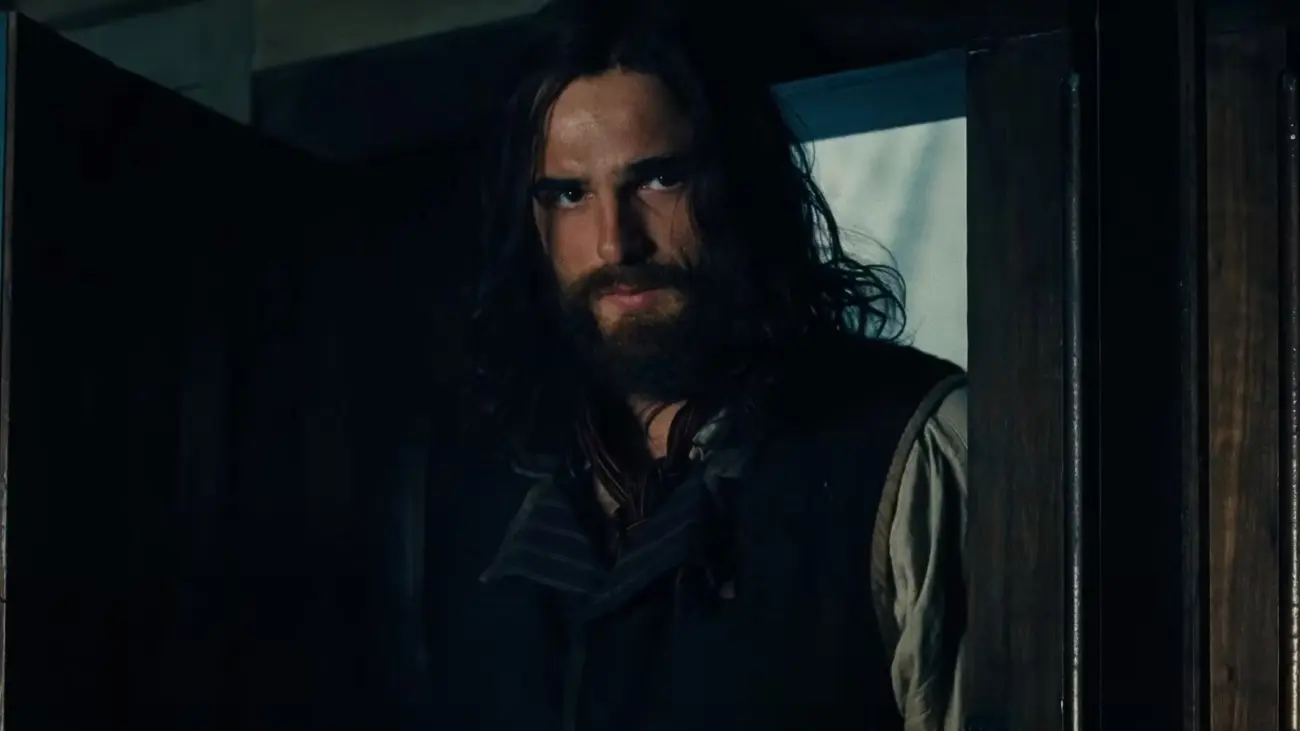
Heathcliff wants Linton to marry Cathy so he can get ownership of the Grange. After Edgar’s death, Linton and Cathy get married, and with that Heathcliff’s revenge is complete. He is now the owner of both Wuthering Heights and Thrushcross Manor. He has achieved everything he set out to achieve and yet it means nothing.
The man who should feel like the king of the world feels hollow and grows increasingly erratic in Catherine’s memory. Power, property, and revenge have delivered not satisfaction but an echoing absence, and that absence becomes his final undoing.
Heathcliff’s Death Explained — Haunting, Starvation, and a Smile
As time passes, Heathcliff becomes more and more solitary and begins to eat less and less, eventually taking only one meal a day. A few days after the incident at breakfast, he spends the entire night out walking, and he returns in a strange, wildly ebullient mood. He tells Nelly that last night he stood on the threshold of hell but now has reached sight of heaven. He refuses all food. Something has shifted in him, and Brontë frames it less as a breakdown than a crossing over.
His body and spirit are consumed by an intense longing for Catherine that leaves no space for worldly concerns. He eats little, sleeps poorly, and wanders aimlessly, as though he is half in this world and half in the next. The Gothic logic of the novel has always insisted that death and life exist on a permeable boundary, and Heathcliff’s final days make that theme literal.
The novel ends with the death of Heathcliff, who has become a broken, tormented man, haunted by the ghost of the elder Catherine, next to whom he demands to be buried. His corpse is initially found by Nelly Dean, who, peeping into his room, spots him. He dies as he lived, on his own terms and outside the ordinary social order.
He dies intestate, his revenge incomplete, so that Hareton and Catherine at the end of the novel are exercising undisputed ownership of the two estates respectively and of the property they contain. At the very close of the novel, a servant boy tells Nelly that he has seen the ghosts of Heathcliff and Catherine walking the moors together. His failure to complete his revenge is, paradoxically, the novel’s moral release valve — and perhaps his own.
Why Heathcliff Still Haunts Us in Emerald Fennell’s Adaptation
In September 2024, Margot Robbie and Jacob Elordi were cast as Catherine Earnshaw and Heathcliff, respectively, with Robbie also producing under her label LuckyChap Entertainment alongside financer MRC. The pairing generated enormous anticipation, given that both actors previously worked with director Emerald Fennell on ‘Saltburn.’
For her approach to adapting Brontë’s novel, Fennell decided against a faithful retelling of its story, stating that her main intention was to “try and recreate the feeling of a teenage girl reading this book for the first time.” That framing set the tone for a version of Heathcliff that is more viscerally felt than carefully constructed.
Released by Warner Bros. in February, ‘Wuthering Heights’ stars Robbie as Cathy and Elordi as Heathcliff, whose forbidden passion for one another turns from romantic to intoxicating in an epic tale of lust, love, and madness. The film surpassed $240 million at the global box office. Critical reception was more divided, with the film landing a 57% on Rotten Tomatoes, but audiences responded with genuine enthusiasm.
Actors who have portrayed Heathcliff on screen include Laurence Olivier, Richard Burton, Timothy Dalton, Ralph Fiennes, Tom Hardy, and Jacob Elordi. The character’s continued magnetism across nearly two centuries of adaptations says everything about what Brontë actually created — not simply a love story, but a furious, unresolved question about whether passion and destruction can ever be separated from each other. Now that ‘Wuthering Heights’ has landed on HBO Max and reignited the debate all over again, we want to know — does Elordi’s Heathcliff capture the doomed, consuming obsession at the heart of the character, or does the novel’s anguish remain something that simply cannot be tamed by any adaptation?