‘House of the Dragon’ Just Delivered Its Most Brutal Punishment Yet and Fans Want to Know What ‘Gelded’ Actually Means

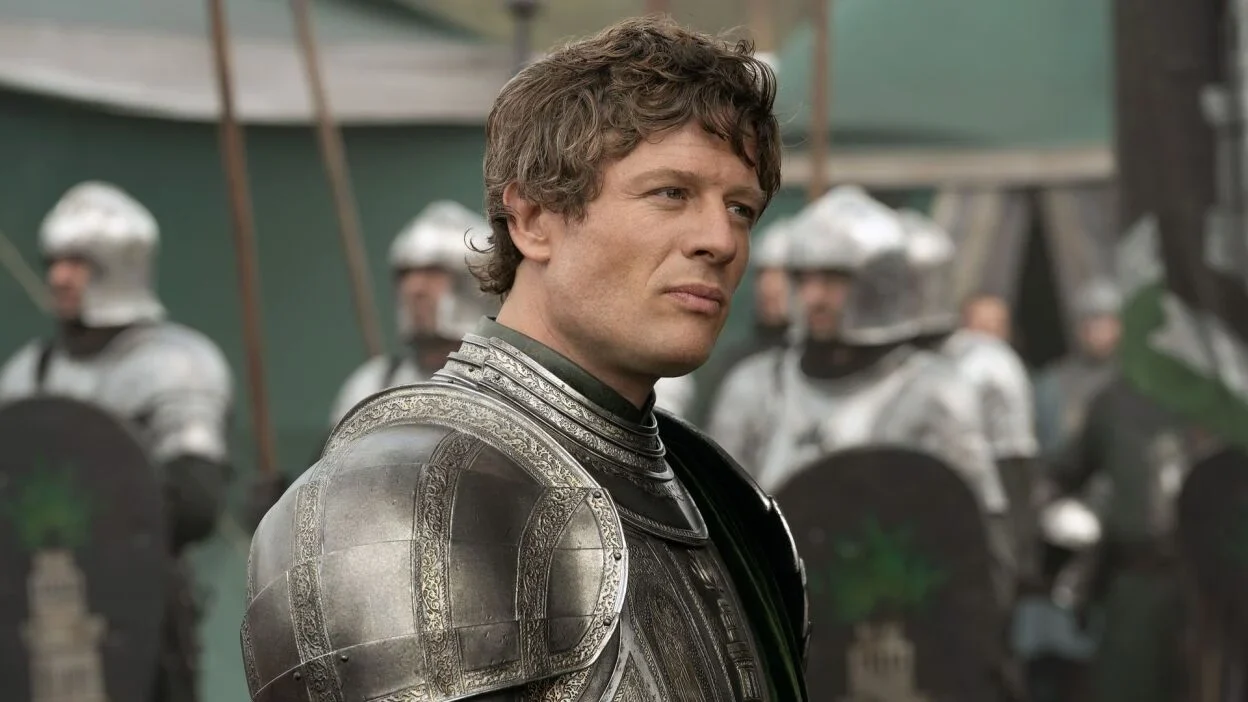

Sunday’s episode of ‘House of the Dragon‘ gave viewers a lot to process, but one word sent people straight to their search bars. When Lord Ormund Hightower hands down a punishment for a soldier’s assault, he orders the man ‘gelded,’ and the sentence lands with a thud that’s left fans scrambling for a definition.
The scene in question is quietly one of the most talked about moments of the season so far, wrapped inside a larger episode about power, performance, and the quiet horror of watching someone learn to be cruel. If you’re still wondering exactly what the punishment entails and why it matters so much to the plot, here’s the breakdown.
What “Gelded” Actually Means in Ormund’s Ruling
To geld someone is to castrate them, and that’s precisely the punishment Lord Ormund Hightower orders for the Hightower soldier who assaults Hugh Hammer’s wife, Kat, in Tumbleton. After one of Ormund’s men attacks Hugh’s wife and her brother and sister-in-law come to her defense, the other soldiers beat them, and the entire group is brought before Ormund, who sentences the offending soldier to be gelded with his arm broken as punishment.
The moment is treated as a display of justice on the surface. Ormund orders the soldier gelded for the attack, which initially reads as a surprisingly honorable move, and he tells Daeron that maintaining order matters, leaving Daeron visibly inspired by what looks like an honorable ruling from his lord.
That reading doesn’t hold up for long, though. The soldier is sentenced to gelding, the victimized family is sent home with a healer, and the occupying lord dispenses judgment with such measured grace that both the audience and young Daeron start to believe Ormund might not be so bad after all. That perception gets dismantled almost immediately once the episode reveals what the ruling was really setting up.
Ormund Hightower’s Punishment Was Never About Justice
The gelding sentence turns out to be the first half of a much darker lesson. Ormund later forces Daeron to execute an innocent man, the very brother who had defended his sister, reframing that earlier act of mercy as pure theater, with the gelding serving as a lesson for the town and the murder serving as a lesson for the boy.

Other outlets picked up on the same manipulation. Ormund’s decision to have his soldier Garrick gelded and his arm broken is described as fair enough on paper but mostly posturing, since he goes on to force Daeron to execute the man who had justifiably fought back against Garrick in order to teach a twisted lesson about kingly duty. The entire sequence exists to bind Daeron to Ormund through complicity, not compassion.
Critics have also flagged how thin the punishment actually is as a fix. Even after Ormund tells Daeron that dealing with those beneath him requires being fair but firm, gelding a single soldier does little to resolve the larger tensions simmering in occupied Tumbleton, since the soldiers remain quartered among a population that stays vulnerable. It’s less resolution and more a pressure valve Ormund controls entirely on his own terms.
Why the Tumbleton Scene in ‘House of the Dragon’ Has Fans Divided
The assault itself is part of a pattern some viewers are growing uneasy with. This marks the third time in four episodes that ‘House of the Dragon’ has leaned on some form of non consensual assault as a plot device, which one reviewer called a worrying pattern for the show, noting that similar attacks do occur in Tumbleton in George R.R. Martin’s source material but under very different circumstances during an actual siege of the city.
Ormund himself has become a lightning rod for discussion this week, largely thanks to James Norton’s performance. He’s introduced rising naked and dripping from a bathtub he’s had placed in someone else’s great hall, lecturing the lord and lady of the house on how to deal with those beneath them, in a scene where the nudity reads less as eroticism and more as another room he’s simply requisitioned. That entrance sets the tone for everything that follows, including the gelding ruling.
The bigger picture reveals why Ormund staged the whole sequence in the first place. Ormund deliberately quartered roughly fifteen thousand soldiers inside civilian homes in a town that had already declared for Rhaenyra, effectively turning the population into a human shield against dragonfire, which is why Grand Maester Orwyle proposes sending a ground army to retake Tumbleton instead of burning it. The gelded soldier becomes a small, controlled sacrifice inside a much larger, colder strategy.
What Happens After Daeron Is Forced to Kill
The fallout from Ormund’s ruling arrives fast. Ormund tells Daeron that he must now be king, then brings Hugh’s brother in law before him and orders Daeron to kill the man as punishment for striking a Hightower soldier, with Daeron ultimately following through despite visibly blanching at the order.
The framing of that killing is what makes the earlier gelding scene so unsettling in hindsight. Ormund considers his real project launched once Daeron has executed the innocent man, viewing the moment as the true starting point of half a season’s worth of war still to come. Everything about the courtroom scene, the gelding included, was staged for an audience of one.
Elsewhere in the episode, the show checks in on several other corners of Westeros while this drama plays out in Tumbleton. Ser Criston Cole’s host arrives at Harrenhal to find it empty aside from Alys Rivers, who claims Aemond has fled with Vhagar, leaving Criston to abandon his planned reunion and instead go harry the rivermen. Meanwhile back in King’s Landing, Rhaenyra continues weighing her own response to Ormund’s occupation, aware that burning Tumbleton would cost her the very people she’s trying to rule.
With Daeron now bound to Ormund by blood on his hands and a gelded soldier serving as a warning to everyone watching, Tumbleton has become the season’s most quietly menacing setting. Do you think Ormund’s punishment of his own soldier was ever really about justice, or was Daeron the only person that scene was designed for?