How ‘VisionQuest’ Finally Paid Off a 15-Year-Old ‘Captain America: The First Avenger’ Easter Egg

Ever since the dawn of the Marvel Cinematic Universe, interconnected storytelling has served as the franchise’s primary lifeblood. Longtime viewers have grown accustomed to spotting subtle background details, comic references, and narrative clues planted years before bearing fruit. These deliberate creative choices keep dedicated audiences scouring every frame across theatrical blockbusters and streaming series alike.
As the studio expanded onto Disney+, long-form series created fresh room to explore supporting figures in richer psychological depth. Following the poignant conclusion of ‘WandaVision’, the mysterious departure of White Vision remained one of the most compelling unresolved threads. That lingering identity crisis demanded a measured examination of what it truly means to possess artificial consciousness.
That profound journey finally arrived with the premiere of ‘VisionQuest‘, taking audiences on a nuanced voyage through memory, synthetic evolution, and machine grief. Rather than merely pressing forward, the production stunned longtime viewers by unearthing a forgotten relic from 2011’s ‘Captain America: The First Avenger‘. In the seventh episode, the series reached back across 15 years of franchise lore to incorporate Marvel’s foundational android, Jim Hammond.
A Forgotten Relic at the 1943 Stark World Exposition
The roots of this unexpected revelation stretch back to Steve Rogers in World War II. While attending the futuristic 1943 Stark World Exposition alongside Bucky Barnes, the young recruit walked past an illuminated glass cylinder containing an artificial man. A display sign mounted above the chamber proudly presented the figure as “The Synthetic Man,” credited to inventor Dr. Phineas Horton.
Avid comic readers instantly identified the background tribute as Jim Hammond, the original Human Torch who debuted in 1939’s ‘Marvel Comics’ issue one as the company’s first superhero. Despite the historical magnitude of the character, the fleeting shot lingered as dormant franchise decoration for well over a decade. Most observers naturally assumed the prop was merely a nostalgic visual tribute to Howard Stark’s technological showcase.
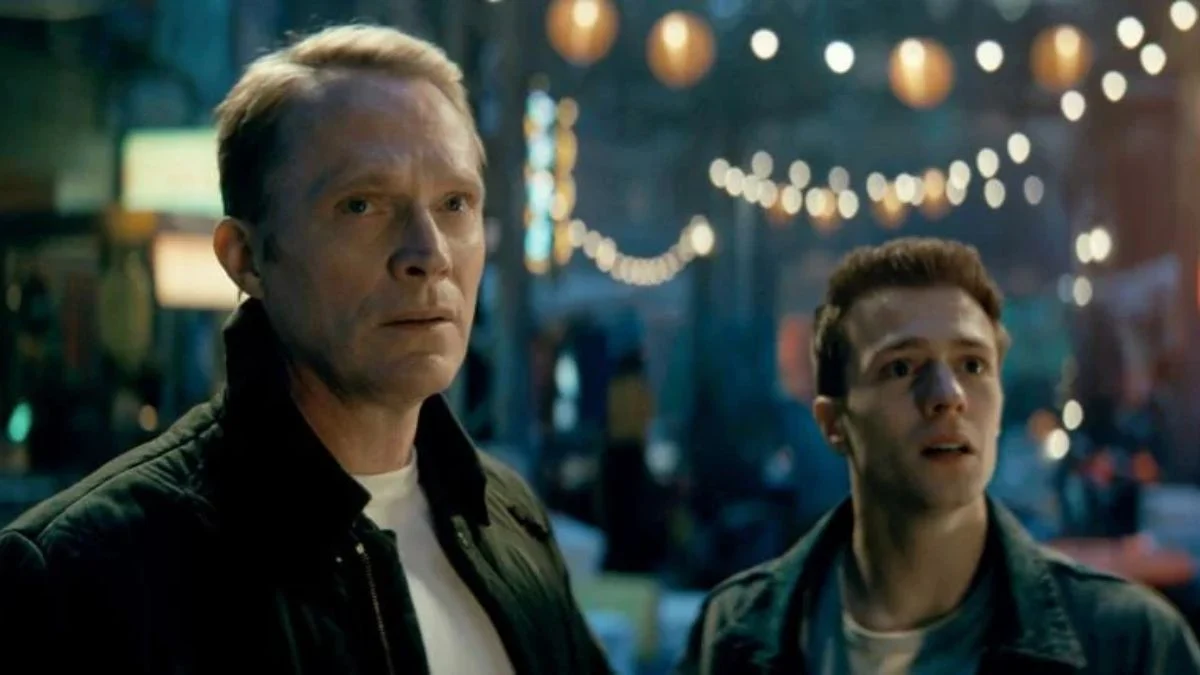
That lingering assumption shattered when ‘VisionQuest’ integrated the Synthetic Man directly into White Vision’s evolving self-discovery. Lead star Paul Bettany delivered multiple performances across the pivotal episode, taking on the roles of the searching Vision, Horton, and Hammond himself. By linking the first synthetic person directly to Bettany’s modern synthezoid, the series transformed a throwaway visual gag into the foundational bedrock of MCU robotics.
Building a Generational Tree for Marvel’s Artificial Intelligence
In traditional print lore, the villainous Ultron constructed Vision by modifying the deactivated physical frame of Jim Hammond. While the cinematic timeline initially bypassed that specific mechanical origin in ‘Avengers: Age of Ultron’, the streaming series found a brilliant workaround through digital architecture. Instead of sharing physical components, the MCU synthezoids share a deeply troubled lineage of foundational source code.

Showrunner Terry Matalas revealed that this callback was born organically in the writers’ room in an interview with Screen Rant. “I knew from lore that Vision was created from parts and components of Jim Hammond in the comic books,” he explained. Exploring that rich history inspired the team to examine how foundational programming could ripple forward across robotic generations.
The creative discovery quickly provided a resonant framework for the show’s exploration of artificial family dynamics. Matalas noted, “That shone a beacon on another kind of family story; a generational story where you have the grandfather of AI and his missteps as a father, not being able to connect to his creation, and that being passed down to Ultron and Vision through this code that Josephine Carrington wrote”.
How Creative Freedom Shaped the Trajectory of ‘VisionQuest’
The decision to embrace deep-cut lore reflects a broader structural evolution behind the scenes at Marvel Studios. When assembling the streaming project, Variety reported that executives were returning to experienced television showrunners to oversee complete production pipelines. This traditional model gave writers the freedom to pursue character-first storytelling without bowing to rigid cinematic obligations.
With the series racing toward its conclusion, the showrunner expressed immense passion for continuing to explore these complex artificial minds. “I would love nothing more than to keep playing in the sandbox,” Matalas confessed when asked about future franchise installments. “Vision and Ultron and the Maximoff family are part of my DNA now. They’re part of my beating heart”.
By paying off a 15-year-old detail from ‘Captain America: The First Avenger’, the show demonstrates how rewarding patient world-building can be. What began as a brief homage in 2011 has now blossomed into a moving exploration of existence, legacy, and synthetic humanity. Marvel Television has demonstrated once again that honoring the distant past remains an inspired creative triumph.
What did you think of the Jim Hammond reveal in ‘VisionQuest’, and where do you hope to see the Synthetic Man appear next in the MCU?