On This Day: The Film That Led to the Creation of the PG-13 Rating Was Released



On June 8, 1984, the film Gremlins was released in U.S. cinemas. According to historical box office records and film industry reporting, the movie quickly became one of the biggest and most talked-about releases of the decade. It was produced by Steven Spielberg and directed by Joe Dante, and it mixed comedy, horror, and fantasy in a way that was not common at the time.
The story starts when a young man named Billy receives a strange Christmas gift from his father. The gift is a small creature called a mogwai, later named Gizmo. At first, Gizmo looks cute and harmless. But the film makes it clear that there are strict rules for taking care of him.
Those rules are simple but very important. He must not be exposed to bright light. He must not get wet. And he must never be fed after midnight. These rules are repeated early in the film, but they are quickly broken.
When the rules are broken, things go wrong fast. Gizmo produces new creatures that turn into violent and destructive monsters known as gremlins. These gremlins take over the small town of Kingston Falls and cause chaos everywhere they go. Billy, along with his girlfriend Kate, tries to stop the disaster and save the town.
The film is often described as a mix of family-friendly holiday setting and darker horror elements. That combination made it unusual for audiences in 1984. Many people expected a light Christmas-style movie, but instead they saw scenes that were intense and sometimes frightening.
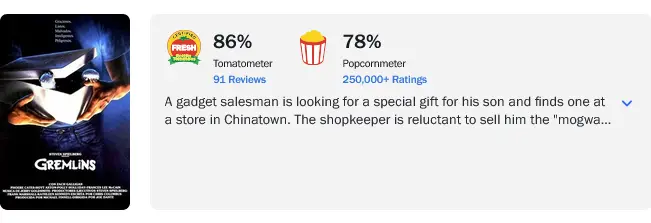
Despite this, Gremlins became a major box office success. According to film industry data, it earned over 153 million dollars in the United States, while its production budget was around 11 million dollars. This made it one of the most profitable films of the year.
The film was released on the same day as another major hit, Ghostbusters. Both movies became huge successes at the box office, and together they helped define the summer movie season of 1984.
Critical reaction was mostly positive. Reviewers praised the creativity, special effects, and humor. Film critic Roger Ebert gave it three out of four stars. He described it as entertaining but also warned that it might not be suitable for young children. That concern became a major topic of discussion after the film’s release.
Audience scores over time have remained strong. The film is still highly rated on review platforms, and it continues to be discussed as a classic example of genre blending. It mixes comedy and horror in a way that still feels fresh for many viewers today.
One of the most important long-term impacts of the film was its role in changing movie rating systems. Because parents and critics were concerned about the intensity of some scenes, Gremlins helped push the Motion Picture Association of America to introduce a new rating category later that year. This led to the creation of PG-13, which sits between PG and R ratings and is meant for films that may not be suitable for younger children without parental guidance.
Over time, the movie became a cult classic. It is often rewatched during the holiday season, even though it is not a traditional Christmas film. A sequel titled Gremlins 2: The New Batch was released in 1990 with a more comedic and satirical tone.
Today, Gremlins is remembered not only as an entertaining film, but also as one that influenced Hollywood ratings and shaped how studios think about audience age guidelines.
Have something to add? Let us know in the comments!