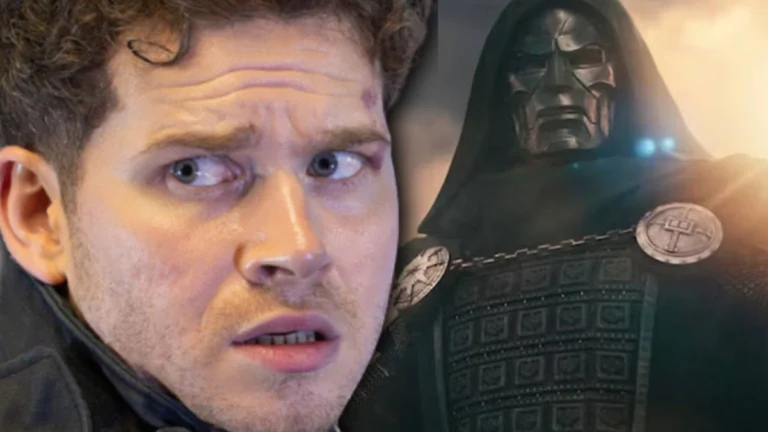
‘Passenger’ Ending Explained: What the Demon Really Wants and Why the Road Was Never Safe

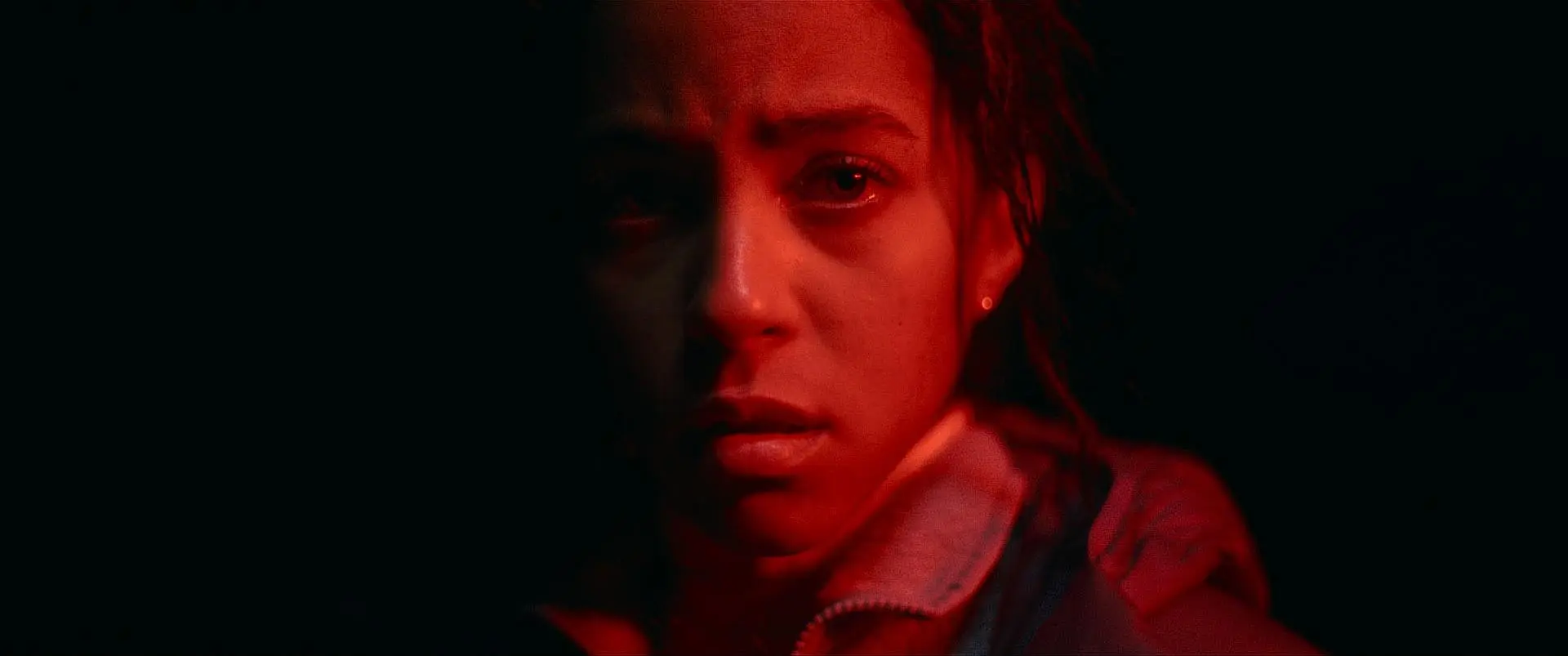

André Øvredal has built a career out of horror that travels, from haunted folklore archives to cursed ocean voyages, and his newest film proves the open road can be just as terrifying as any closed room. ‘Passenger’ arrives as one of the most anticipated supernatural horror releases of the year, and it does not disappoint those craving something with genuine mythological teeth. The film hits hard, moves fast, and closes on an ending loaded with meaning.
After a young couple witnesses a gruesome highway accident, they soon realize they did not leave the crash scene alone, as a demonic presence called the Passenger will not stop until it claims them both, turning their van life adventure into a nightmare. That is the setup, but the emotional weight buried inside the finale is what has audiences and horror fans talking long after the credits roll.
The Van Life Horror Setup That Sets Everything in Motion
Tyler and Maddie witness a horrific vehicular accident that leaves the victim dead, and even driving away from the scene, their horrors are just beginning. With a three-clawed scratch mark on their vehicle, the same one as the wrecked car they witnessed, they come to realize that their stalker is not of this Earth, and that it will pursue them no matter how far they go. The scratch mark functions as a kind of supernatural branding, a mark that cannot be outrun or ignored.
Some RV-related scenes were filmed in two locations in Washington State, at the Enumclaw Expo Center and in Grand Coulee, giving the film a genuinely desolate and expansive American landscape feel. That geography is intentional. Øvredal uses wide-open spaces not to reassure but to emphasize just how helpless Tyler and Maddie truly are.
The film warns viewers that 130 million people take road trips every year and 15,400 of them are never seen again. Whether that statistic is real or fabricated for effect, the implication is chilling. The horror is embedded in the mundane normalcy of van life, a lifestyle trend that has become deeply romanticized in recent years.
Who Is the Demonic Passenger and What Are the Rules
The Passenger is a demon with a particular enmity against St. Christopher, the patron of travelers. Years ago, it traveled with him in the guise of a monk until he saw it cringe from a cross at the side of the road. Since then, it has haunted the roads to claim victims, but it can only latch on to specific prey who give it an invite. That concept of an invite is crucial. The couple’s act of stopping to help is exactly what opens the door.
It has the power of illusion and telekinesis and is impossible to shake, while ground dedicated to St. Christopher will weaken it and allow it to be killed. The film establishes its internal logic carefully, giving the demon genuine rules that make every near-escape feel earned rather than arbitrary. This is where screenwriters Zachary Donohue and T.W. Burgess do their best work.
There is a code among those who travel the roads: do not stop for anything, especially wrecks, and never drive at night in the deserted areas. When these rules are broken, the Passenger latches on. This transforms the demon into something almost punitive, a creature that preys on compassion and good instincts, which makes it uniquely unsettling as a horror villain.
Melissa Leo’s Diana and What Her Death Really Means
Melissa Leo plays Diana as a mysterious woman who seems to know more about the unholy situation than she is letting on. She is a seasoned road traveler, someone who has survived long enough to understand the rules, and her reluctant guidance becomes the couple’s only lifeline as the situation spirals.
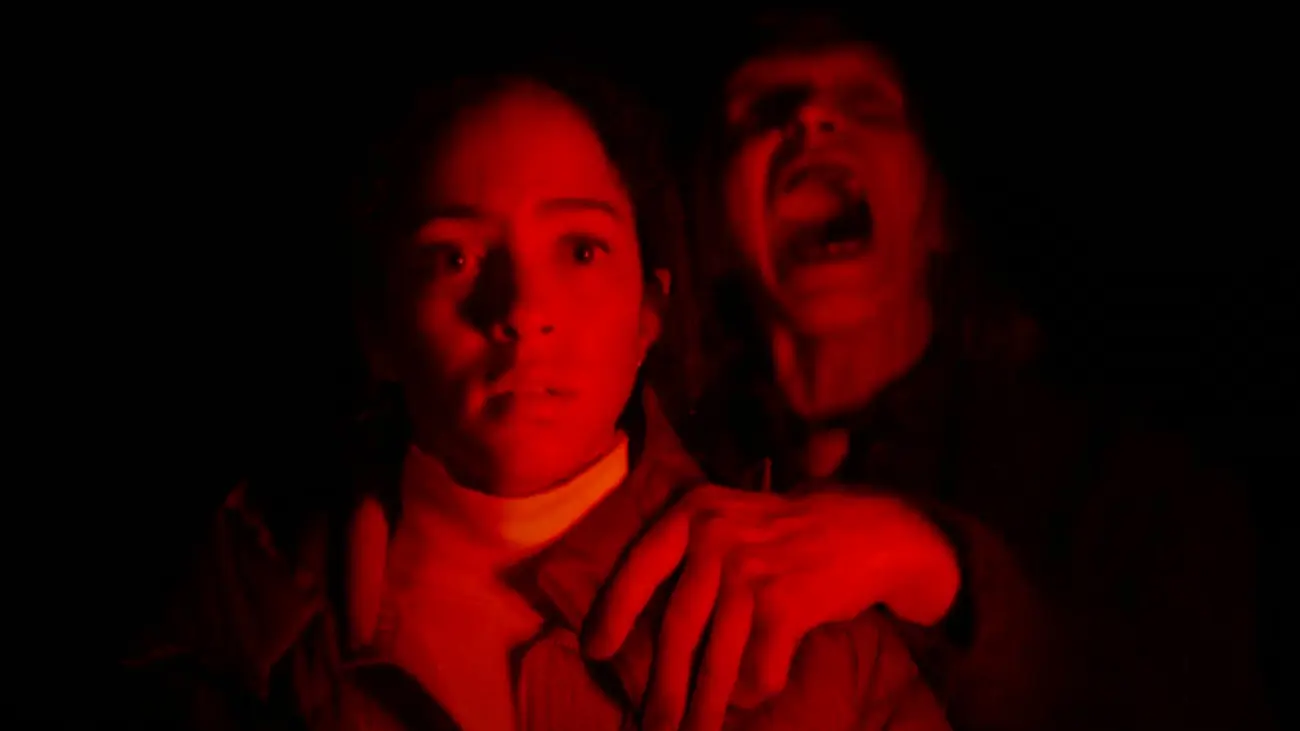
When veteran road traveler Diana reluctantly agrees to show Tyler and Maddie where the St. Christopher church is, the Passenger brutally murders her for assisting its victims. Her death is not random. It is the demon sending a message, punishing anyone who interferes with its chosen prey. Diana’s sacrifice directly enables the film’s climax by pointing the couple toward the one location that can hurt the entity.
Melissa Leo, who played in ‘The Equalizer’ with Denzel Washington, brings weight and credibility to Diana’s role. The antagonist, the Passenger or the highway stalker, is played by Joseph Lopez, who is probably the smallest name on the cast list. That casting choice works brilliantly. Lopez is an unknown quantity, and the film benefits from the sense that the demon is genuinely alien and unrecognizable.
The St. Christopher Showdown and the Ending Explained
The film’s climax is rooted entirely in the Catholic iconography of St. Christopher as protector of travelers, and it pays off every thread the screenplay has been carefully laying down. Maddie ultimately kills the Traveler by impaling it on a staff carried by St. Christopher. That weapon is no accident. It is the most direct possible reversal of the demon’s own origin story, defeated by the very saint whose roads it has haunted for centuries.
When Maddie is ambushed by the Passenger, she uses her van’s rear-view mirror as a weapon and hits it with the Saint Christopher medallion, which is enough to harm it and make it release her. It is later revealed that holy ground is deadly to the demon and both hurts it and weakens its power. The medallion on the rearview mirror was introduced early as almost throwaway visual detail, but the payoff transforms it into the most important object in the film.
Maddie and Tyler ultimately overcome and kill the Passenger, being rescued by emergency services. Despite losing most of their possessions, they decide to stay together and retire from the road with a house. There is something quietly moving about that resolution. The van life dream is gone, but the relationship survives. The horror has cost them their lifestyle, not their love.
What Øvredal’s Direction Brings to the Bigger Picture
Øvredal told Bloody Disgusting, “It’s a road movie, which is what I really fell in love with. It’s totally unique for me as a horror movie. Bridging the road movie with a haunting, essentially, on the road. I think it’s the scariest movie I’ve made.” That confidence is warranted. The film manages to feel like its own genre hybrid, part survival thriller, part folk horror, and part relationship drama.
Former Warner Bros production executive Walter Hamada, who steered the ‘Conjuring’ and ‘It’ franchises, is producing, with ‘It’ screenwriter Gary Dauberman also on board as producer. That horror pedigree shows. ‘Passenger’ has the structural discipline of a franchise-tested production without feeling like a franchise film. It is a standalone supernatural nightmare with real craft behind every scare.
The film is rated R for strong violent content, some gore, and language, which reflects Øvredal’s commitment to a genuinely uncompromising horror experience. ‘Passenger’ ultimately argues that the most dangerous thing on the road is not speed or weather or other drivers.
It is the act of caring enough to stop, and whether that is a warning or a tragedy is exactly what makes the ending linger. If you caught ‘Passenger’ this weekend, drop your take on whether Tyler and Maddie’s decision to leave the road behind felt like a real ending or just the calm before something worse finds them at their new front door.