Stephen King Reveals His Real Feelings About One of His Most Famous Movie Adaptations, and Not Everyone Will Like What He Said

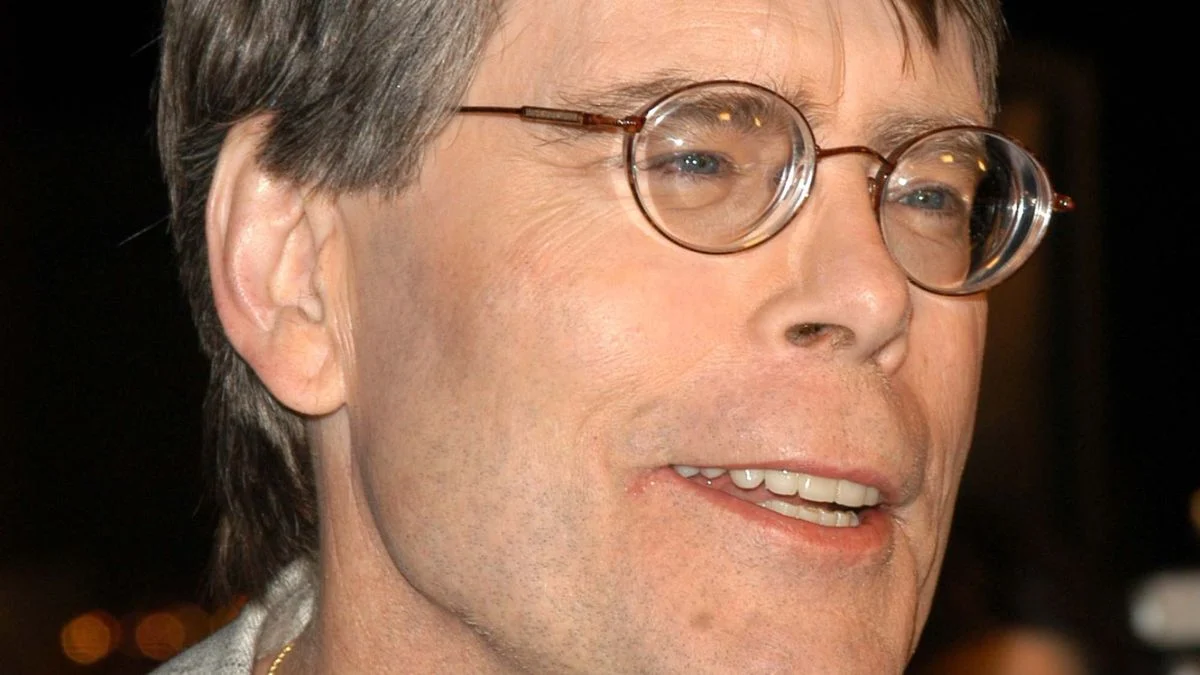

Few authors have had their work adapted as often, or as unevenly, as Stephen King. Across decades of film and television, he has watched his stories land in the hands of some of cinema’s greatest talents, and the results have ranged from career-defining classics to films he barely recognizes.
King’s relationship to those adaptations became personal in an unusual way in 1986, when he stepped behind the camera himself. He directed ‘Maximum Overdrive’, based on his short story ‘Trucks’, and the experience was so rough that he stayed out of the director’s chair for the following 4 decades. Little survives from the film in cultural memory beyond its soundtrack, recorded entirely by AC/DC.
King has been candid about why the movie failed. In the 2003 book ‘Hollywood’s Stephen King’, he admitted, “The problem with that film is that I was coked out of my mind all through its production, and I really didn’t know what I was doing.” Reviews were brutal, and the film currently sits at a dismal 15% on Rotten Tomatoes.
After ‘Maximum Overdrive’, King wisely stepped back and let professional directors handle his stories. Even then, some acclaimed filmmakers struggled to translate his work to the screen the way he envisioned it, and King has never been shy about saying so publicly.
His most famous critique is aimed at Stanley Kubrick’s ‘The Shining’. Speaking to American Film in 1986, King said Kubrick “set out to make a horror picture with no apparent understanding of the genre,” and offered his now-iconic verdict: the film was “a great big beautiful Cadillac with no motor inside. You can sit in it, you can enjoy the smell of the leather upholstery—the only thing you can’t do is drive it anywhere.”
That complaint has followed the film for decades, even as it became one of the most celebrated horror movies ever made. King later softened slightly, telling the BBC he found the film beautiful to look at, even while standing by his central criticism.
Not every experience left King frustrated. He has praised Frank Darabont’s ‘The Shawshank Redemption’ and Rob Reiner’s ‘Stand by Me’, both of which stayed close to the source material. More recently, he called Mike Flanagan’s ‘Carrie’ miniseries “brilliant” on Threads, adding that “what it has to say about social media is shocking and true,” according to Deadline.
King has also long admired director Tobe Hooper, whose ‘The Texas Chain Saw Massacre’ he considers one of horror’s most influential films. So when Hooper signed on to direct the 1979 miniseries adaptation of ”Salem’s Lot’, King had every reason for optimism. The result held up: the miniseries currently holds an 87% approval rating on Rotten Tomatoes, and it has since become a cult classic, even though Quentin Tarantino was famously unimpressed, saying he turned it off after about 25 minutes.
Hooper and King reunited 15 years later, and this time the result missed the mark. ‘The Mangler’, released in 1995, was a box-office failure and a critical disappointment. King himself later summed it up bluntly: “The film version of The Mangler is energetic and colourful, but it’s also a mess.”
That verdict captures the pattern that has defined King’s relationship with adaptations for 40 years. Even the most talented directors, the ones he trusts most, can occasionally miss what made his stories work on the page.
What makes King’s story unusual is how much he has kept engaging with the process despite the misses. He eventually got his own do-over on ‘The Shining’ by writing a 1997 ABC miniseries for director Mick Garris, giving him more creative control the second time around.
Decades later, he is still weighing in on new projects, from praising Flanagan’s work to giving his blessing to directors like Edgar Wright on ‘The Running Man’. That willingness to keep collaborating, even after painful experiences, may be part of why his catalog keeps generating new films and shows.
Whether it is a directing failure he owns himself or a genius filmmaker whose vision clashed with his own, King’s history proves that even the best in the business can occasionally get a beloved story wrong.
Which Stephen King adaptation do you think got his story right?
Have something to add? Let us know in the comments.