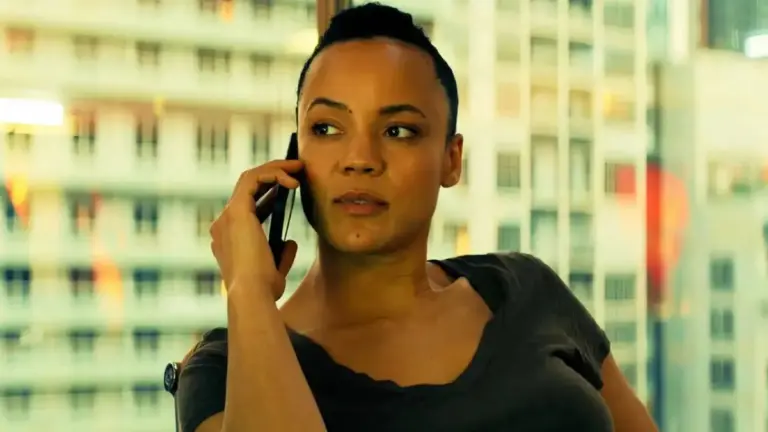
‘The Bombing of Pan Am 103’ Recap and Ending Explained: What Really Happened After Lockerbie


Netflix viewers diving into ‘The Bombing of Pan Am 103‘ are getting a gutting reminder that some tragedies never fully close, even when the credits roll. The six part limited series dramatizes one of the deadliest terrorist attacks in British history, and its finale leaves audiences with more than a few questions about what actually happened to the real investigation.
If you just finished streaming the show and immediately searched for answers, you are not alone. The ending of ‘The Bombing of Pan Am 103’ pulls from a real and painstaking decade long manhunt, and understanding the actual history makes the finale hit even harder.
The Lockerbie Bombing Investigation That Inspired the Series
On December 21, 1988, Pan Am Flight 103 left Heathrow Airport bound for New York City, and roughly 38 minutes after takeoff a bomb hidden in the cargo hold detonated, tearing a hole in the side of the Boeing 747. The structural damage caused the plane to break apart midair over the Scottish town of Lockerbie at 31,000 feet, killing all 259 people on board and 11 more on the ground.

The overwhelming majority of victims were American citizens, including 35 Syracuse University students who were flying home from a semester abroad. The scale of loss turned Lockerbie into a household name almost overnight, and it set off one of the largest criminal investigations in aviation history.
Investigators eventually determined the debris field covered 845 square miles, making it the largest crime scene ever assembled, according to the FBI. By reconstructing large portions of the wreckage, forensic teams traced the bomb to a cassette recorder packed inside a Samsonite suitcase that had been loaded onto a connecting flight with no accompanying passenger.
Pan Am Flight 103: The True Story Behind the Show’s Characters
‘The Bombing of Pan Am 103’ is not a loose fictionalization, it closely follows real investigators on both sides of the Atlantic. The series stars Connor Swindells, Merritt Wever, and Patrick J. Adams, with Adams playing FBI Special Agent Dick Marquise, one of the lead figures in the American side of the case.
Behind the camera, the show was written by Jonathan Lee and Gillian Roger Park and directed by Michael Keillor, with the project originally brought to MGM Television and Night Train Media by filmmaker Adam Morane-Griffiths and Sara Curran back in 2020. That long development timeline shows in the level of procedural detail packed into every episode.
The series first aired on BBC One and BBC iPlayer in the United Kingdom on May 18, 2025, months before making its way to a global Netflix audience on July 30, 2026. For UK viewers who already knew the ending, the international rollout has reignited conversation about the case all over again.
The investigative trail did not stay confined to Lockerbie either. Forensics traced a bomb timer fragment discovered in a scrap of shirt back to a Swiss manufacturer, and that same shirt was linked to a specific shop in Malta, which ultimately pointed authorities toward two Libyan intelligence operatives.
The Finale Explained and What the Real Verdict Means
So how does ‘The Bombing of Pan Am 103’ actually end. By November 1991, investigators had identified Abdelbaset al-Megrahi and Lamin Fhimah as the suspects behind the bombing, kicking off a years long diplomatic standoff before either man ever saw a courtroom.
According to a plot breakdown of the finale, the series concludes with al-Megrahi’s conviction for murder, a verdict that brings some closure while still leaving room for controversy and debate over whether the full truth was ever uncovered. That ambiguity is intentional, and it mirrors how the real case has lingered in the public consciousness for decades.
The Netflix retelling ends with that first and only conviction in 2001, closing out the dramatized manhunt on the same note history did. The closing scenes widen the lens, framing the bombing as an act of war that exposed serious cracks in international security cooperation.
Rather than wrapping things up with a tidy bow, the finale leans into unresolved tension, emphasizing the lasting toll on the victims’ families and the Lockerbie community itself. It is a deliberately restrained choice, and one that critics have noted keeps the show grounded rather than sensationalized.
Critics and Fans React to the Abdelbaset Al Megrahi Conviction
Early reviews suggest the finale lands exactly where it is supposed to. One review described the sixth episode as delivering a comprehensively satisfying wrap up of the criminal investigation, while still acknowledging the messy realities of pursuing justice for a tragedy of this magnitude.
That same review noted the series rarely functions as a traditional thriller, instead building quietly toward the truth in a way that proves profoundly affecting by the end. Viewers looking for an emotionally cathartic bow might come away feeling the finale holds back, but that restraint appears to be the point.
The show also spends real time on the human cost the investigation itself took on the people chasing answers, not just the families left behind. That dual focus is part of why the series ultimately reads as a respectful, forensic piece of storytelling rather than a dramatized thrill ride.
It is worth noting the real world case never fully settled the debate over what happened, and ‘The Bombing of Pan Am 103’ seems to know that. Conspiracy theories about the bombing have circulated for years, and the show’s choice to end on tension rather than triumph feels like an acknowledgment that some grief simply does not get a clean final act.
Now that the finale has made its way to a global Netflix audience, do you think ‘The Bombing of Pan Am 103’ handled the al-Megrahi verdict fairly, or does the real Lockerbie case still deserve a deeper reckoning on screen?