The 10 Greatest TV Series Fights of All Time, Ranked


Television has delivered showdowns that combine story stakes with precise stunt work and smart camera choices. The best of them tell you who the characters are through movement and timing, and they do it with a level of technical control that rewards a second look. This list counts down memorable clashes that defined episodes and sometimes entire seasons.
Each entry notes where and when the fight happens, who faces off, and how the scene is built on set and in the edit. You will also see a quiet nod to the home network or platform for each series, kept brief and out of the way.
Buffy Summers vs Faith Lehane in ‘Buffy the Vampire Slayer’ (1997–2003)
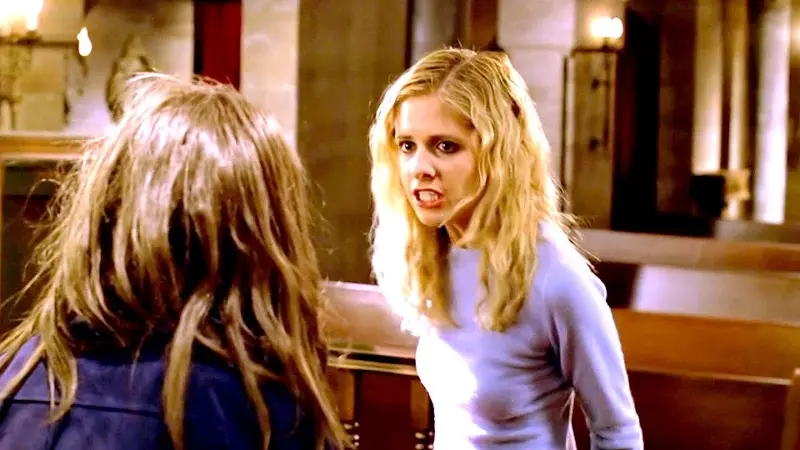
Buffy and Faith collide in a late season three confrontation that moves from tight interiors to a rooftop escape. The scene tracks their mirrored training and weapons familiarity as they trade knives, strikes, and grapples, and it ends with Faith’s fall that drives the final arc of the season. Stunt beats are staged to let both characters use the same techniques with different intent, which is why the blocking mirrors rather than contrasts.
The production uses breakaway glass, thin set walls, and a controlled exterior for the rooftop leap, with wire assists kept out of frame to preserve continuity. The episode’s cut pattern slows just before the injury to emphasize cause and effect over speed. It aired on The WB.
Oliver Queen vs Ra’s al Ghul in ‘Arrow’ (2012–2020)
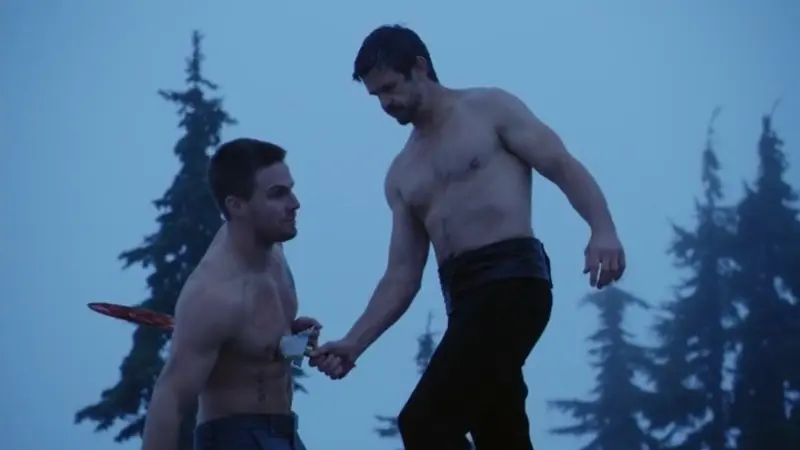
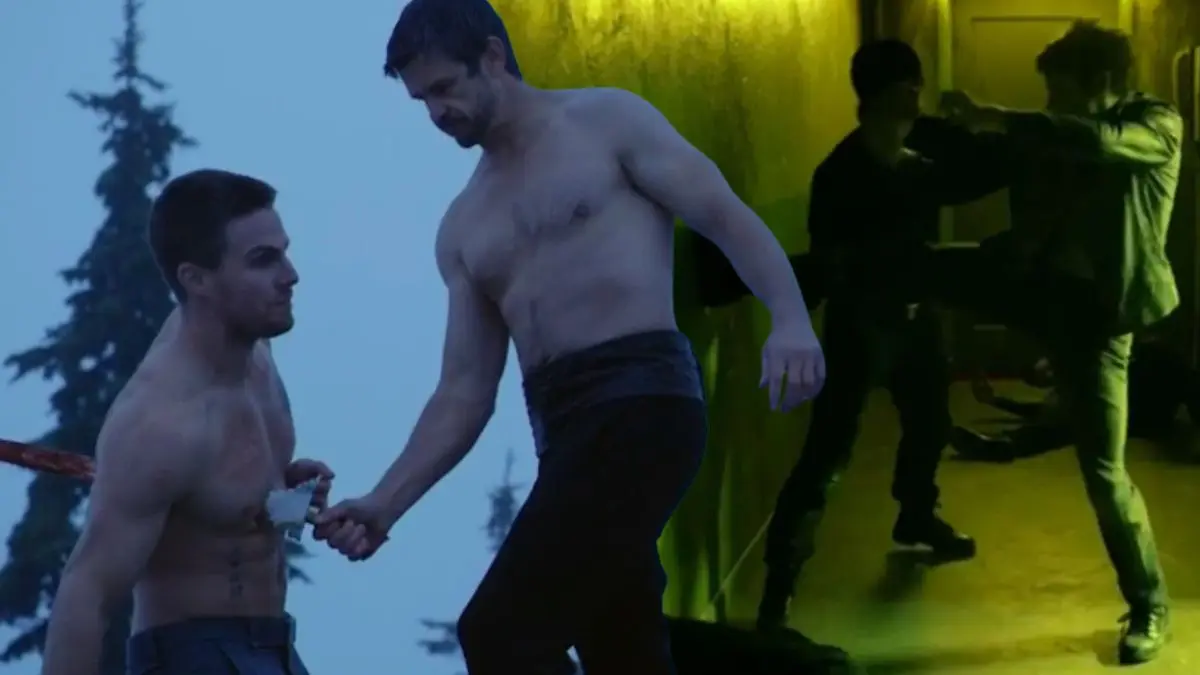
The mid season duel on a snowy peak places two fighters inside a circle of onlookers with no music, letting breath and footwork carry the rhythm. Swords clash with deliberate slow beats, parries are allowed to land, and the choreography favors long exchanges that drift toward the cliff edge. The result is a clean defeat that resets the season’s power balance.
Crew set up a wind and snow rig on an exposed ridge with safety lines painted out later, and wardrobe prepared duplicate costumes to manage moisture and continuity across takes. The fight’s wide frames were planned to hold for several beats before cutting closer for the finishing sequence. The series aired on The CW.
Ragnar Lothbrok vs Earl Haraldson in ‘Vikings’ (2013–2020)
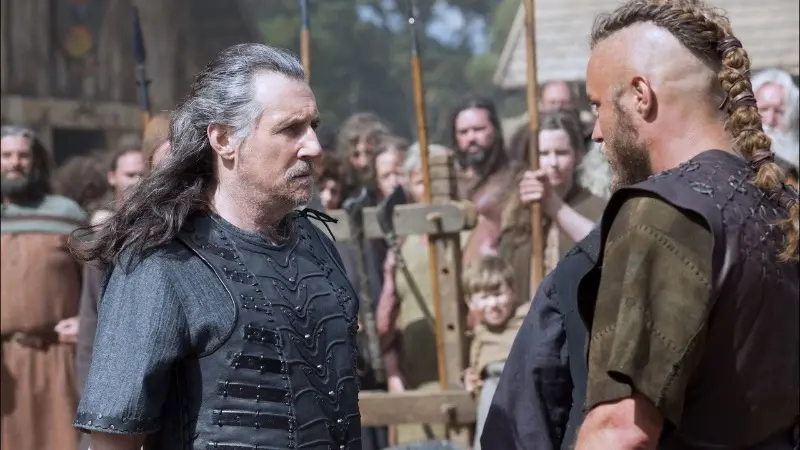
This holmgang duel follows the traditional rules of a shield and weapon inside a marked ground, and the choreography respects those limits. Ragnar’s shield work breaks timing to create an opening on the opponent’s weapon side, then the finish honors ritual requirements before the execution that changes leadership in Kattegat.
The scene was staged on a rain soaked set with a raked mud surface to slow footwork and keep the center of the ring intact for continuity. Multiple shields were built with different cores so stunt hits could split on cue while hero shields held shape for close shots. The series aired on History.
Sunny vs The Widow in ‘Into the Badlands’ (2015–2019)
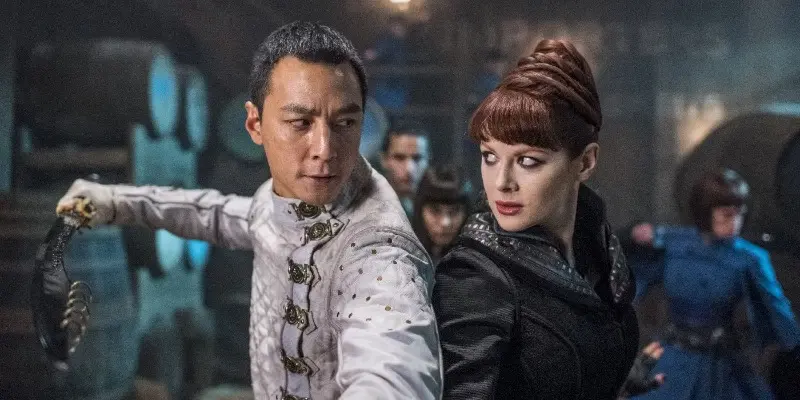
An early season duel places Sunny and The Widow in a candlelit mansion with stairs, railings, and furniture built to break at pre marked points. The fight maps each fighter’s style through weapon choice and angle of attack, with wushu influenced long lines for Sunny and sharp directional changes for The Widow. The choreography uses the entire vertical space so beats can climb and drop within the same exchange.
Cameras are kept moving on a gimbal to float through rooms while keeping strikes in frame, and the edit preserves full combos rather than single impact cuts. Wire assists are minimal, and sound design adds blade draw and foot skids to anchor contact. It aired on AMC.
Spartacus and Crixus vs Theokoles in ‘Spartacus’ (2010–2013)
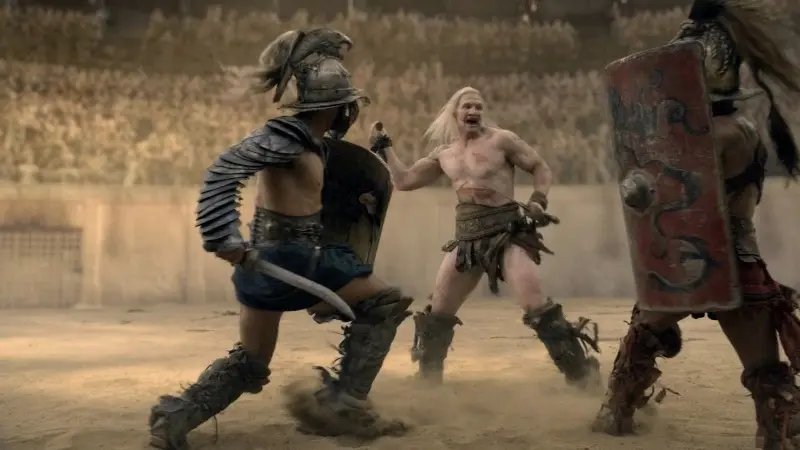
The Shadow of Death bout brings two gladiators against a giant opponent inside the arena with clear geography and stagecraft. Spartacus and Crixus alternate attacks to draw the bigger fighter off balance, and the sequence is built around near misses that set up a final coordinated finish. The fight uses the arena’s pillars and sand for tactical choices like blinding and cover.
Production relies on a large greenscreen set extension for the crowd while the fighting platform remains practical, and blood effects combine squibs, air cannons, and digital augmentation for timing. Weapon props include heavy and light versions so actors could swing safely at speed. The series aired on Starz.
Jack Crawford vs Hannibal Lecter in ‘Hannibal’ (2013–2015)
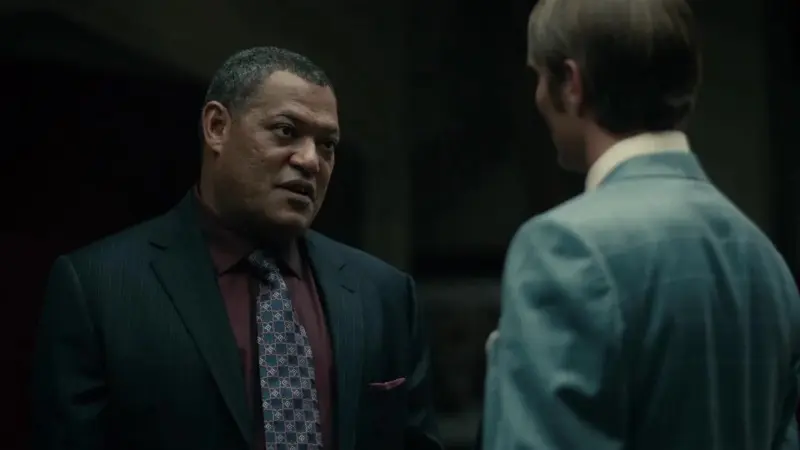
The season two kitchen fight opens the premiere with a flash forward that will be reached later, and it establishes stakes with silent blade work and close quarters movement. Jack uses environment tools like cabinet doors and a broken bottle while Hannibal edges him toward a sink and counter where leverage is harder to hold. The combat shifts between stand up strikes and short clinches to underline the room’s limits.
Glass gags were pre scored and swapped between takes, and the sink basin was reinforced so weight could hit safely without flex. The edit returns to a wider frame after each impact to keep orientation inside the kitchen consistent until the interruption that ends the scene. The show aired on NBC.
Ah Sahm and Young Jun vs hatchet men in ‘Warrior’ (2019–2023)
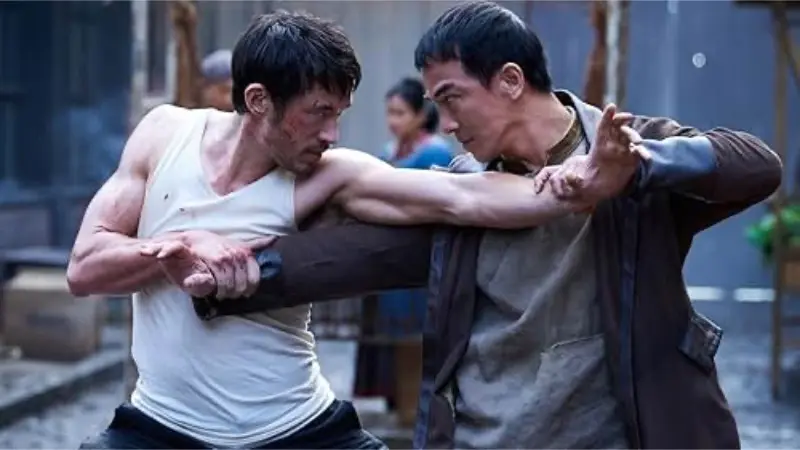
An early season alley sequence runs a gauntlet of attackers with short blades and clubs, and it highlights teamwork through handoffs and shared space. Ah Sahm uses straight line entries that end with rapid hand strikes before a leg sweep, and Young Jun pivots into tight circles to manage multiple angles. The fight makes use of crates, walls, and ground rolls to reset positions without breaking momentum.
The alley was built with wet down cobbles and hidden pads under dirt so throws could land safely, and blades were a mix of rubber and aluminum depending on proximity to camera. The stunt team planned traffic patterns so background fighters passed through frame on timed beats rather than filling the space at random. The series aired on Cinemax.
Ahsoka Tano vs Morgan Elsbeth in ‘The Mandalorian’ (2019–2023)
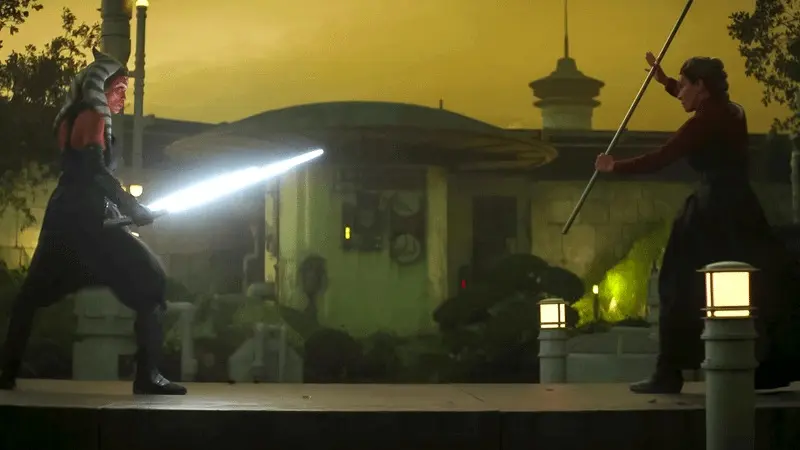
The duel in Calodan sets white lightsabers against a beskar spear inside a walled garden with fog and water features. The choreography draws on classic sword schools with measured steps, pauses at guard, and sudden cut line changes that are easy to read in wide shots. Intercutting with a blaster engagement outside the gate creates a calm interior rhythm against a faster exterior track.
The team used StageCraft volume backgrounds for the town while the garden courtyard remained practical, which allowed controlled lighting on the reflective spear and blades. Sound takes out the score for most of the exchange so footfalls and fabric carry the scene before the final decision. The series streams on Disney+.
Oberyn Martell vs Gregor Clegane in ‘Game of Thrones’ (2011–2019)
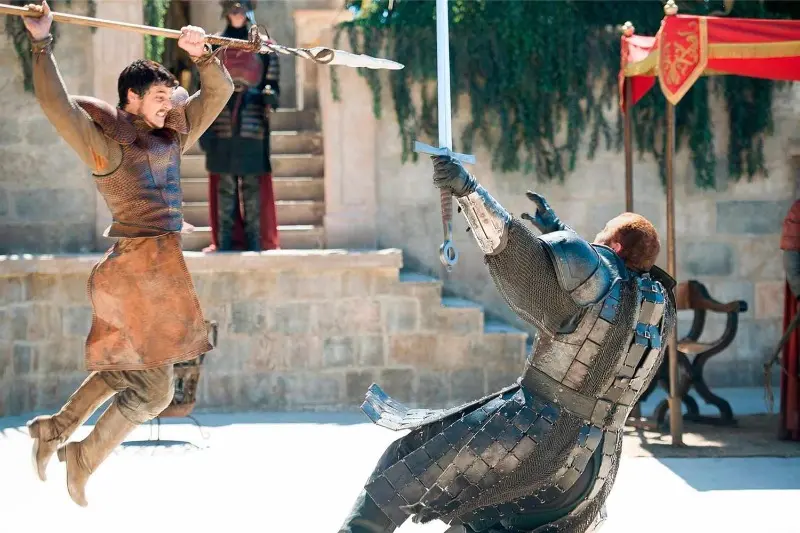
The trial by combat sets a spear against a greatsword in a ring surrounded by soldiers and nobles. Oberyn moves around the perimeter to manage distance and attack the lower body, and the weapon is tipped with poison that turns a wound into a clock on the outcome. The objective is not only victory but a confession, which keeps the fight in dialogue even while weapons clash.
Filming used a sunlit stone set with a raised platform so the camera could track around the fighters without showing crew, and practical spear shafts were swapped for flexible versions when needed for snaps and spins. Makeup and prosthetics handled the aftermath with staged progression across angles to preserve continuity. The episode aired on HBO.
The Hallway Fight in ‘Daredevil’ (2015–2018)
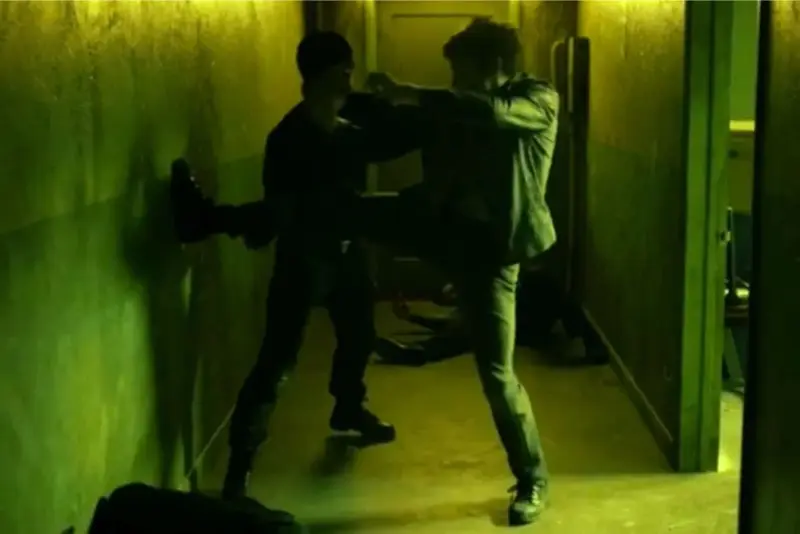
The rescue in a narrow corridor presents as a single unbroken shot with hidden transitions, and it stages exhaustion as part of the choreography. Matt Murdock enters and exits rooms along the hall so impacts can reset off camera, then returns with labored strikes that slow as the sequence continues. The layout lets bodies fall and stay in frame so the viewer can track who is still a threat without confusion.
The scene was shot on a built set with a ceiling designed to lift for lighting changes between passes, and stunt doubles were used sparingly because the camera held faces during several exchanges. The camera tracks laterally for most of the run, then pushes in only at the recovery beat near the room where the captive is held. The series streams on Netflix.
Share the TV fights you would add to the countdown in the comments.