What Is ‘Whalefall’ Based On? The Gripping Origin Behind the Survival Thriller


Survival cinema has long fascinated audiences by stripping human endurance down to the most harrowing physical extremes imaginable on the silver screen. When director Brian Duffield announced his ambitious survival project ‘Whalefall‘, moviegoers braced for an aquatic nightmare unlike anything seen in contemporary Hollywood. The cinematic landscape rarely explores tales where the environment itself breathes, swallows, and digests its protagonist whole.
Modern high-concept survival thrillers often pit solitary individuals against unrelenting wilderness, drawing natural comparisons to claustrophobic cinematic touchstones like ‘127 Hours’ and ‘The Martian’. Yet rather than facing scorching desert canyons or empty space, this narrative plunges deep into the pitch-black abyss of the Pacific Ocean. Curious film enthusiasts following the project’s journey to the big screen immediately began wondering what real-world concepts or narrative source material anchored such an outlandish scenario.
The Acclaimed Novel That Inspired ‘Whalefall’
The cinematic thriller ‘Whalefall’ is directly based on the acclaimed 2023 survival novel of the same name written by bestselling author Daniel Kraus. The gripping book follows Jay Gardiner, a grief-stricken young scuba diver who ventures into Monterey Bay to locate the sunken remains of his recently deceased father. During the perilous solitary dive, Jay is accidentally swallowed whole by an 80-foot, 60-ton sperm whale, leaving him trapped inside the creature’s stomach with roughly one hour of oxygen remaining.
Before reaching movie theaters courtesy of 20th Century Studios and Imagine Entertainment, the original book captured widespread literary acclaim and won a prestigious 2024 Alex Award. Kraus constructed the intense narrative around a ticking clock, masterfully pairing physiological terror with a poignant psychological journey of reconciliation. As Jay crawls through the creature’s digestive system, he must lean on memories of his estranged father to find an escape route before his air supply runs completely dry.
Real-World Encounters and Scientific Plausibility
The seemingly impossible premise of ‘Whalefall’ actually originated from real-world marine encounters that circulated widely across modern media broadcasts. Kraus found his initial inspiration in viral news footage showing unsuspecting ocean kayakers briefly scooped into the gaping maws of feeding humpback whales before being spat out unharmed. The author wondered what would happen if a diver encountered an ocean animal physically capable of swallowing a human being entirely into its digestive system.
To maintain scientific credibility throughout the narrative, Kraus focused specifically on sperm whales, which are the only living cetaceans with throats large enough to swallow prey whole without chewing.
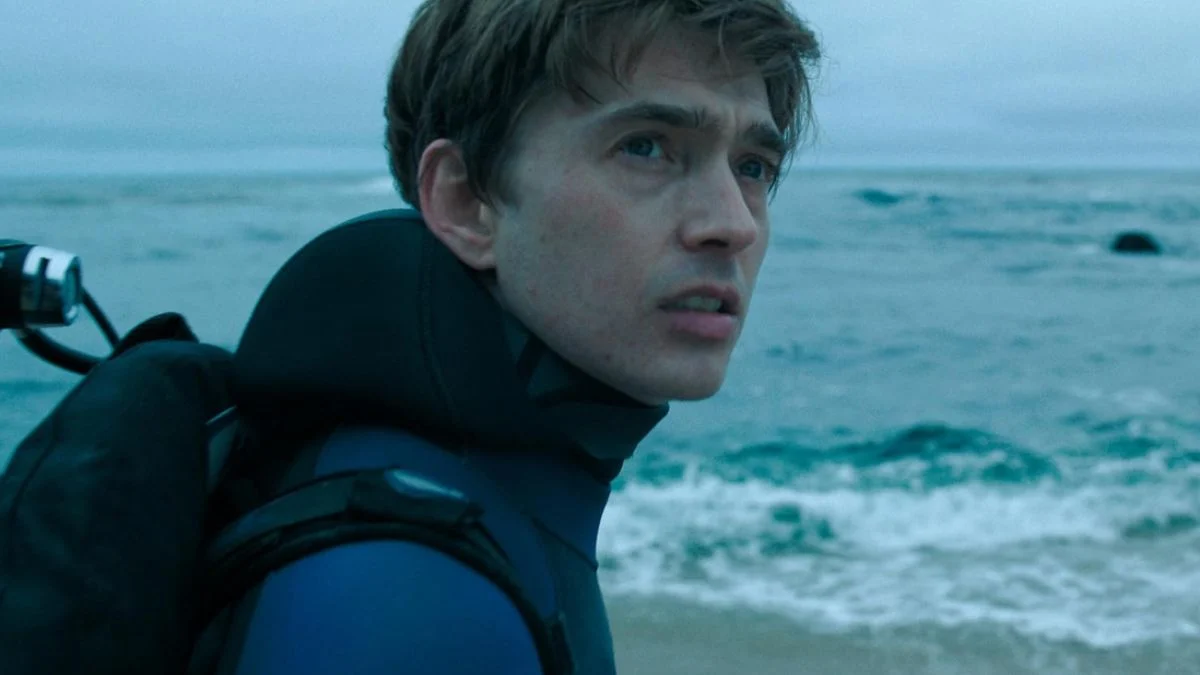
Filmmakers preserved that strict anatomical authenticity when adapting the tale, consulting multiple marine biologists to accurately depict the beast’s four complex stomach chambers. Co-writer and director Brian Duffield detailed in an interview highlighted by Gizmodo that “we really tried to be as accurate as possible by working with a lot of whale experts”.
The creative team recognized that treating the massive mammal as a mindless aquatic monster would undermine the integrity of the original source text. Rather than replicating the aggressive predatory villainy seen in classics like ‘Jaws’, the sperm whale serves as an indifferent, living setting caught in its own survival struggle against a giant squid. This conscious artistic commitment ensures the narrative functions as a scientifically grounded bio-thriller rather than an exaggerated creature feature.
Translating Emotional Depth From Page to Screen
Beyond the visceral horror of gastric acid and dwindling oxygen, ‘Whalefall’ relies heavily on a complex emotional dynamic between Jay and his late father, Mitt. In the novel, Jay’s dangerous dive is born out of overwhelming survivor’s guilt, forcing him to unpack years of unresolved family trauma while physically fighting to stay alive. The memories of his father’s demanding marine lessons gradually transform from painful emotional scars into essential tactical knowledge that keeps him breathing.
Condensing that rich psychological interiority for a feature film required Kraus and Duffield to rethink the novel’s intricate flashback architecture. Author Daniel Kraus reflected in an interview with The Talks on the translation, noting, “Adapting a book to screenplay, however, is an entirely different situation because we’re all aware of the necessities of a movie”. Streamlining dozens of literary memories allowed the creative team to deliver Jay’s revelations at the exact moments he needs them on screen.
Lead actors Austin Abrams and Josh Brolin bring that intense father-son relationship to the surface against a claustrophobic $60 million backdrop. By anchoring the impossible nautical premise in genuine human regret, the movie preserves the literary spirit that made the original book a breakout sensation. Ultimately, ‘Whalefall’ is based on a singular work of speculative fiction that transforms an unthinkable marine ordeal into a heartfelt meditation on grief, resilience, and reconciliation.
What do you think about the bizarre real-world science behind ‘Whalefall’, and will you be checking out the film adaptation in theaters?