‘I Love Boosters’ Ending Explained: What That Wild Sci-Fi Twist Is Really Saying About Capitalism


Boots Riley has done it again. His sophomore feature, ‘I Love Boosters,’ hit theaters on May 22, arriving with the kind of disruptive energy that made his debut ‘Sorry to Bother You’ such a cultural lightning rod. The film has already earned a 93% approval rating on Rotten Tomatoes, with the site’s consensus calling it a raucous capitalist critique that careens through the carefully-controlled chaos of Riley’s imagination to deliver a comedy that is as funny as it is thought-provoking.
What starts as a heist comedy quickly morphs into something far stranger, and by the time the credits roll, audiences are left untangling a dense web of surrealism, political allegory, and genre-bending ambition.
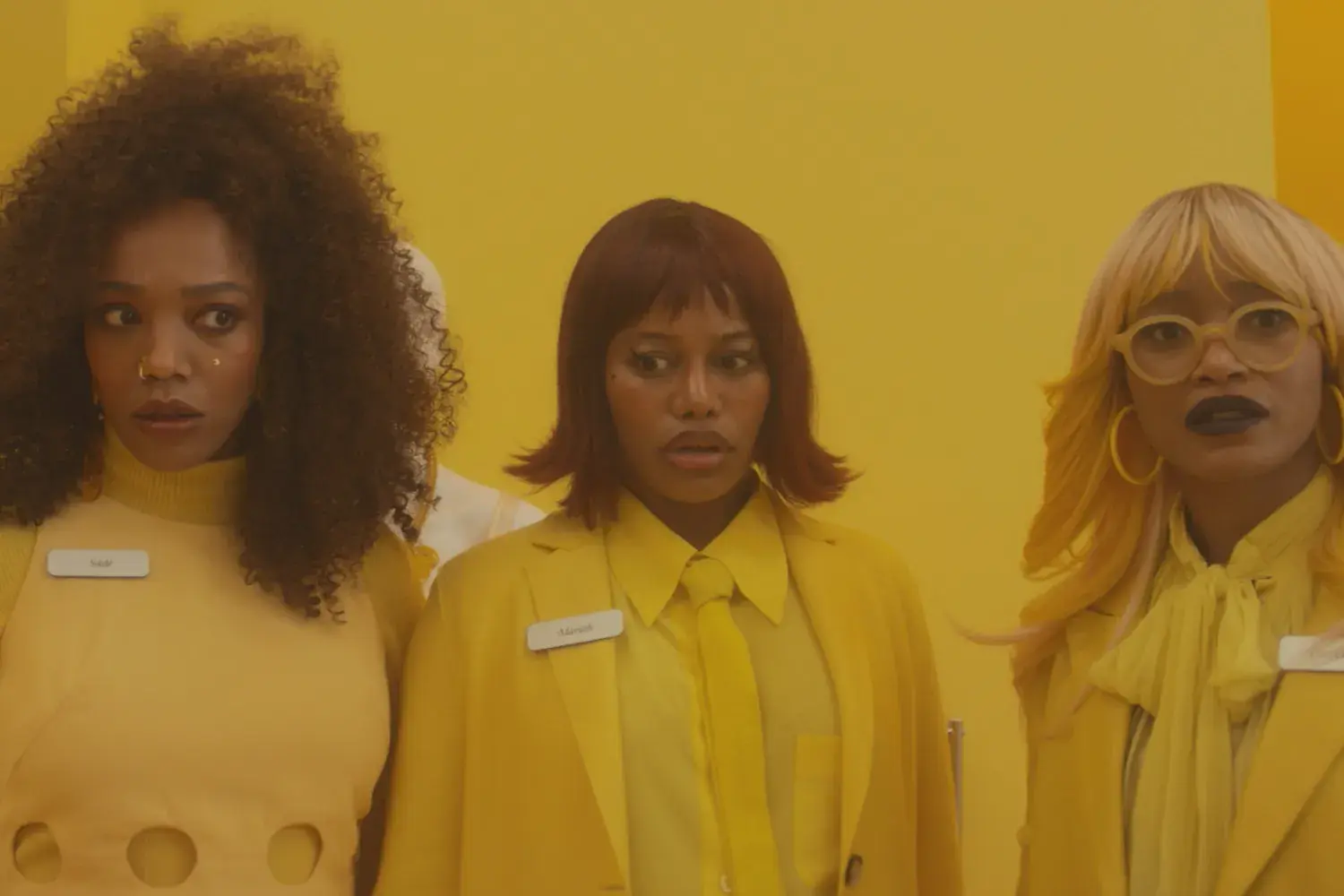
At its core, the story follows Corvette (Keke Palmer), Sade (Naomi Ackie), and Mariah (Taylour Paige), collectively known as the Velvet Gang, professional shoplifters who steal luxury goods and resell them in their community at prices real people can actually afford, thinking of themselves as fashion’s Robin Hoods.
The Velvet Gang’s Mission and the Christie Smith Conflict
Keke Palmer plays Corvette as an aspiring fashion designer living in a former Bay Area chicken joint, running an underground team of shoplifters who infiltrate high-end fashion stores, steal expensive apparel, and sell it to people who could not otherwise afford it for one-third of the shop’s price tag. The mission feels personal and righteous from the jump.
Their primary target is Christie Smith (a wonderfully icy Demi Moore), a fashion mogul whose monochromatic retail empire represents everything soulless and extractive about the industry. When Christie steals one of Corvette’s original designs without credit or compensation, the Velvet Gang’s mission shifts from hustle to righteous revenge.
Christie believes she is giving the world something profound with her wearable art designs, and in her mind, that justifies her exploitative labor practices, ridiculous wealth, and generally inflated ego. Her assistant Jamie explains that people do not want to be mere living mannequins displaying someone else’s artwork, saying plainly that they want to be the artist.
There is also Poppy Liu’s Jianpu, who arrives intent on ruining Christie’s business in retaliation for ignoring dangerous sandblasting conditions at a China-based factory, which is proving life-threatening to everyone working there, including her own family. Her presence grounds the film’s abstract politics in something uncomfortably real.
The Boots Riley Sci-Fi Twist That Changes Everything
Around the film’s midpoint, ‘I Love Boosters’ pivots in the way that only a Boots Riley film can. The discursive plot introduces a high-minded sci-fi device that both transports its users and dissects existence itself, alongside a secret cabal of corrupt influencers whose grotesque arrival in the third act deepens the movie’s absurdist energy and amps up its scathing indictment of modern-day materialism.
Riley’s bonkers spinning of plates does eventually make sense, thanks in part to a twist that tips the concept of selling out to the Man into a stop-motion-animated, body-swapping farce. The co-worker Violeta (Eiza González) is roped into the insanity, surprisingly equipped with a staggering amount of scientific knowledge relating to the gadgets at the centre of the chaos.
Unlike ‘Sorry to Bother You,’ the absurdist twist in ‘I Love Boosters’ is not a completely out-of-left-field human-animal hybrid situation but a far more mundane science fiction tool, and despite its relatively conventional sci-fi trappings in the back half, the film feels satisfyingly anarchic and bizarre all the way through. Conventional is, of course, a very generous word here.
What the Ending Actually Means
Riley’s film declares that moviegoers fed up with exploitation and feeling unrepresented in art should take control of their stories and break the patterns that perpetuate inequality, making ‘I Love Boosters’ a film about a revolution in which underpaid workers finally develop a cohesive class consciousness and overthrow the designer who reaps the benefits.
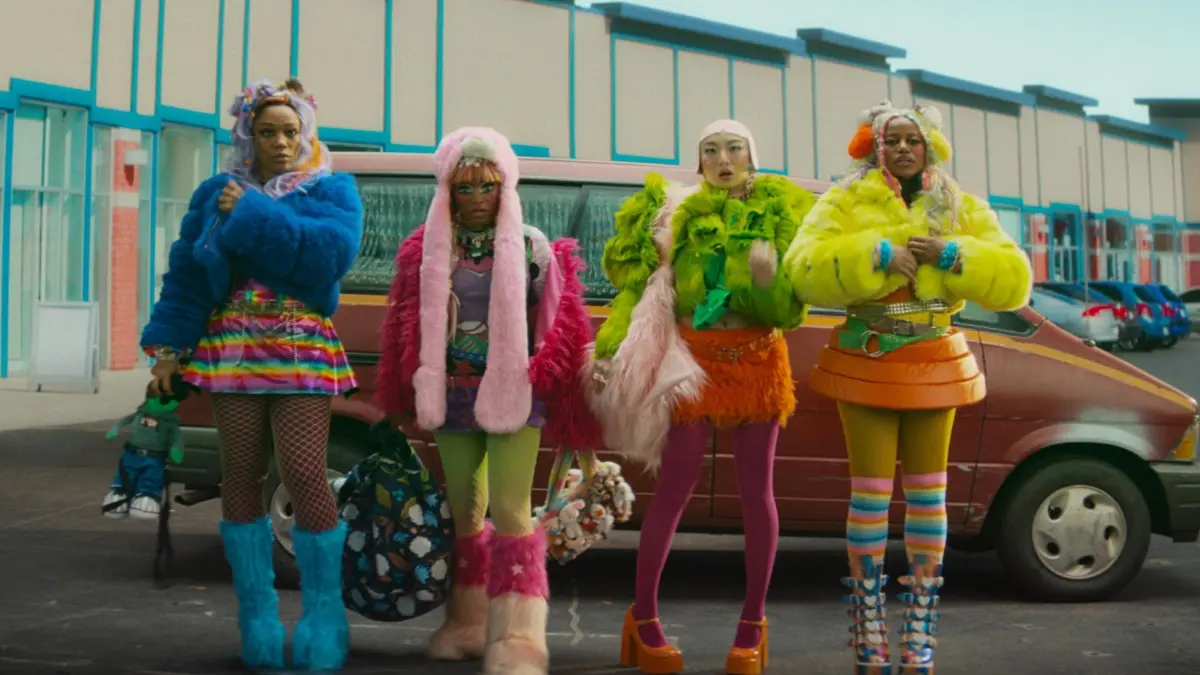
The film follows the Velvet Gang as they eventually spark an unexpected movement for retail and factory workers around the world, a scope that starts local and quietly expands into something genuinely radical by the final act. The ending does not offer a tidy resolution so much as an open declaration.
If there is a criticism to be made, it arrives in the third act, where Riley’s ambitions begin to slightly outpace his execution, as the teleportation device proves both under-explained and overworked as a plot mechanism, starting to pull the film in too many directions at once. But the momentum finds its footing again for a satisfying close. For most viewers, that satisfying close will feel like enough.
Keke Palmer, Demi Moore, and the Weight of the Performances
The ending lands as hard as it does because of who is carrying it. Corvette is lonely and withdrawn from society, eager to create art through fashion, and gradually stepping into a rivalry with wealthy and ruthless fashion titan Christie Smith, with Demi Moore letting loose with a notably nasty side that defines the film’s antagonistic energy.
LaKeith Stanfield is introduced as a local lothario with powers of seduction so extreme that he literally sucks the soul out of his partners, without anybody batting an eye, and Palmer’s deadpan performance makes these reveals all the funnier. The chemistry between the two is unmistakable and worth the price of admission alone.
The film works because it finds a strange harmony between its rousing commentary and its infectious sense of play, taking overstimulation to euphoric heights, and it is the kind of film that viewers will want to see again and again. Riley has been telling stories through music for more than 30 years, and music fuels his movies in ways that make them feel rhythmically alive rather than simply scored.
‘I Love Boosters’ is a film that rewards patience, repeat viewings, and a willingness to let the chaos wash over you before the meaning clicks into place. Whether you found the ending triumphant, confusing, or both, it is hard to deny that Boots Riley is doing something no one else in mainstream cinema is attempting right now, so tell us in the comments: did the final act of ‘I Love Boosters’ land for you, or did the sci-fi device leave Corvette’s revolution feeling incomplete?