‘Cape Fear’ TV Series vs. the Movies: How the TV Series Reinvents a Twice-Told Thriller and Makes Max Cady More Dangerous Than Ever

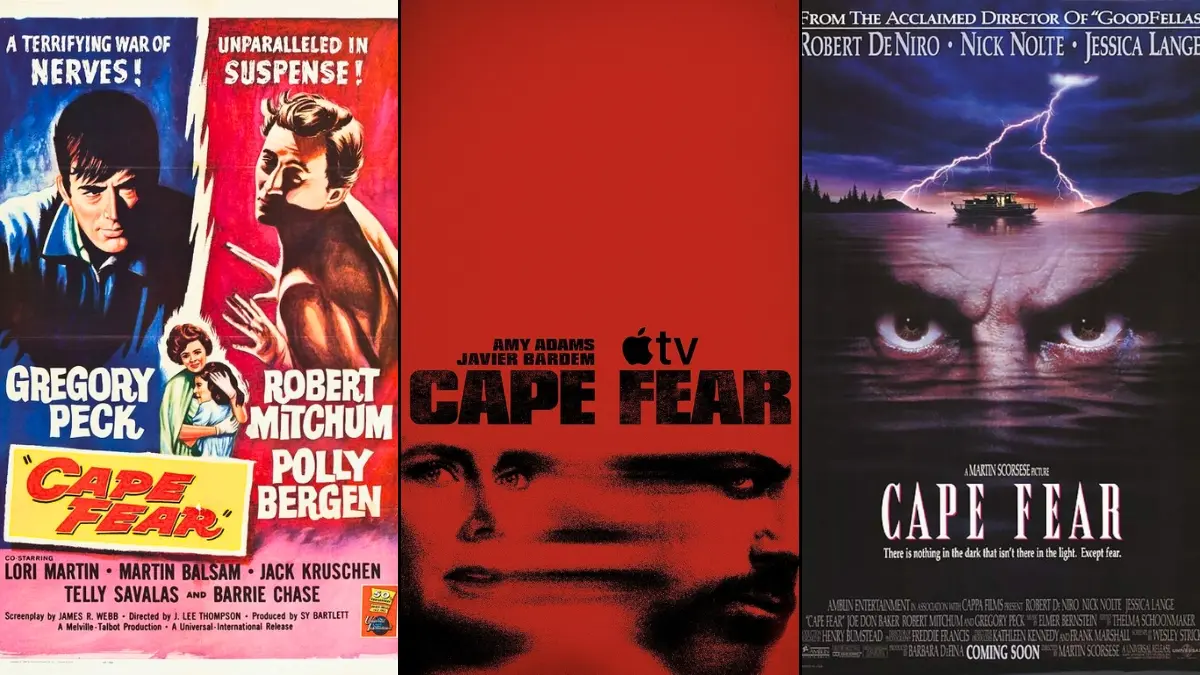

There are few stories in Hollywood more thoroughly haunted by their own legacy than ‘Cape Fear‘. The name alone conjures images of a shadowy figure in a Hawaiian shirt, slowly dismantling a family from the outside in. That particular American nightmare has now been reborn a third time, and this version is arriving in your living room for ten consecutive weeks rather than disappearing after a single two-hour sitting.
Apple TV’s ‘Cape Fear’ is a 10-episode limited series premiering June 5, starring Amy Adams, Javier Bardem, and Patrick Wilson. The series adapts the novel ‘The Executioners’ by John D. MacDonald and draws primary inspiration from the 1991 film directed by Martin Scorsese. With both Scorsese and Steven Spielberg returning as executive producers, the pedigree is undeniable, but the real question buzzing through the entertainment world is whether the jump from cinema to streaming does the story justice, or simply stretches it past its breaking point.
Max Cady Through the Decades: Three Actors, Three Eras
The character of Max Cady has been shaped by the cultural temperature of the decade that produced him. In the 1962 film directed by J. Lee Thompson, Gregory Peck plays Sam Bowden as an upstanding, ethical family man, while Robert Mitchum’s Cady is still a sadist but is played in a more low-key and cool register. The moral landscape of that film was largely black and white, mirroring the actual celluloid it was shot on.
The biggest difference between the two film adaptations is how the characters are portrayed. Critics noted that Scorsese did not let anyone be the hero in his version: Bowden, played by Nick Nolte, is weak and unfaithful to his wife, all the lawyers and private investigators he encounters are crooked and corrupt, and his daughter, played by a remarkable Juliette Lewis, is attracted to danger and violence.
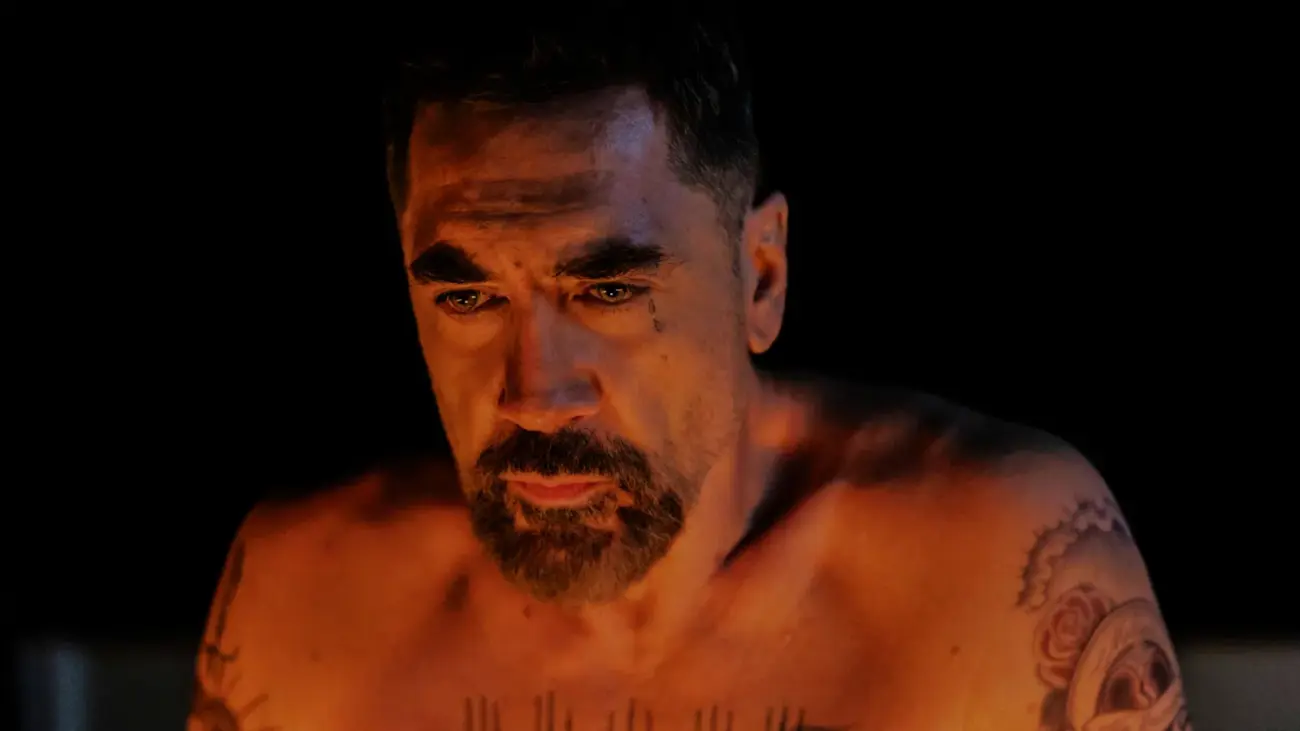
Nobody in that 1991 world is simply good or simply bad, and that moral ambiguity is what made it so unsettling and so modern.
Now it is time for Javier Bardem to slip into the menacing shoes of the cold-blooded murderer. Robert Mitchum played Cady in 1962 and Robert De Niro portrayed him in the chilling 1991 remake, each version reflecting the era that produced it. Bardem’s turn in the Apple TV series is already generating serious awards conversation before the season has even finished airing.
The TV Format and How It Changes the Story
The most fundamental shift between the films and the series is not casting or setting but duration. Showrunner Nick Antosca noted that ten hours of plot runway gave him a chance to slowly increase the tension on the family, as opposed to the movies, which are like two-hour runaway trains of terror. He wanted to pull back on some of the brute force aspect of it and explore the creeping paranoia and sense of devastation of a family being picked apart.
The main spine of the original story is intact, with Max seeking vengeance against the lawyer he blames for putting him in jail, but there is a gender flip in the series, with Amy Adams playing defense attorney Anna Bowden.
Max gets released after 17 years when new evidence exonerates him, and he becomes a true-crime celebrity. That last detail is pure 2026, and it changes the power dynamics of the story in fascinating ways.
Creator Nick Antosca adds character details and nods to contemporary phenomena like true crime obsession and Innocence Project-style criminal justice reform initiatives. Social media, voyeurism, and modern paranoia all became part of the DNA of this adaptation, and Antosca has noted there are a lot more ways to terrorize a family in 2026 than there have ever been before. It is a timeless story in a distinctly timely skin.
A Nightmare Remix: What the Series Borrows and What It Invents
Antosca described the show as a nightmare remix, saying that when he does an adaptation, he wants it to feel like you watched the original and then went to sleep and had a nightmare about it, with new unexpected elements emerging from that familiar foundation. That philosophy is evident across the production choices.
The series incorporates those eerie X-ray shots and plenty of extreme, red-tinted close-ups of human eyeballs as nods to Scorsese’s visual language, while also being a much slower burn compared to the rapidly paced 1991 film, investing far more time in character development.
The production leans on the instantly recognizable theme music from the 1962 movie by Bernard Herrmann and the 1991 version by Elmer Bernstein, and features a cameo or two from one cast member of the 1991 film.
Returning to the world of ‘Cape Fear’ are Academy Award-winning executive producers Martin Scorsese and Steven Spielberg, who were the director and producer of the 1991 movie adaptation respectively, a version that earned Oscar nominations for Robert De Niro and Juliette Lewis. Their involvement signals something beyond nostalgia; it signals a genuine commitment to the material.
Javier Bardem, Amy Adams, and the Cast Raising the Stakes
Alongside Bardem, ‘Cape Fear’ stars Patrick Wilson, Amy Adams, CCH Pounder, Ted Levine, and Ron Perlman. That is an ensemble capable of elevating almost any material, and early reviews suggest they are doing exactly that, even when the writing pushes into implausibility.
Showrunner Nick Antosca lends his ‘Cape Fear’ a lurid, sweaty feel that matches the Scorsese film, with vivid cinematography and deep, saturated colors.
The Hollywood Reporter noted that the adaptation probably stretches the revenge and counter-revenge narrative at least four hours further than viewer sympathies and suspension of disbelief can sustain, describing the result as excessive but sporadically entertaining. That tension between excess and craft is the defining argument of the series so far.
Each member of the Bowden family carries a deeply exploitative secret, and Antosca wanted to do a new version that honored the classics he loves but is also a nightmare for today. The show is not trying to replace what came before; it is in active conversation with it.
How All Three Versions Stack Up
Looking across all three iterations, what is remarkable is how consistently the story survives reinvention. Scorsese’s 1991 film is a prime example of a successful director-driven remake, honoring what made the original interesting while expanding and enriching it according to the instincts of one of the world’s greatest filmmakers.
The same argument could now be made for Antosca’s television version, with the caveat that streaming’s appetite for length remains its greatest liability.
In terms of sheer intensity, the 1991 film is more brutal than the 1962 version, with far more explicit depictions of violence onscreen. The Apple TV series appears to split the difference, borrowing Scorsese’s darkness while wrapping it in a longer, more character-driven format designed for the era of prestige television.
The new adaptation draws primarily from the 1991 film and explores psychological tension and America’s fixation on true crime in the twenty-first century. That focus gives the series a cultural hook that neither film could have had, and it may ultimately be what makes Antosca’s version feel essential rather than redundant.
Whether Bardem’s Max Cady joins Mitchum and De Niro in the pantheon of screen villainy is something only the full season can answer, and readers who have already started watching would do the comments a real favor by weighing in on whose version of Cady has gotten under their skin the most.