‘Cape Fear’ Was Never Real, But the True Story Hidden Inside It Is Genuinely Disturbing


Most people assume that because something feels this viscerally real, it must have roots in actual events. ‘Cape Fear,’ the iconic psychological thriller that has haunted audiences across two acclaimed film versions and now a brand new Apple TV+ miniseries, carries that exact kind of weight. The truth, however, is stranger and more fascinating than a simple yes or no.
So to answer the question directly: no, ‘Cape Fear’ is not based on a true story. But the origin of the story, and some of the creative choices made during its most celebrated adaptation, pull from reality in ways that genuinely complicate that answer.
The $50 Bet That Started It All
The entire ‘Cape Fear‘ universe traces back to a psychological thriller novel called ‘The Executioners,’ written by John D. MacDonald and published in 1957. The novel’s creation has become something of a literary legend, and for good reason.
MacDonald was being needled by fellow author and drinking buddy MacKinlay Kantor, who bet him $50 he couldn’t write a real book. Kantor, who had won a Pulitzer Prize for fiction, used to needle MacDonald about all the paperback trash he wrote, and one day asked him directly when he was going to write a real book. MacDonald took the challenge seriously.
According to MacDonald, ‘The Executioners’ was the result of that $50 bet, and MacDonald claimed he could write a novel in thirty days, have it serialized in magazines, published as a book club selection, and adapted into a movie. He won on every count, and the character of Max Cady was born from that defiant creative sprint.
The story concerns JAG Lieutenant Sam Bowden, who stopped a rape and helped convict one Sergeant Max Cady, sending him to Leavenworth. When Cady’s sentence is commuted, he begins the slow and deliberate hunt of Bowden’s wife and children while the legal system is paralyzed by its own sense of fairness.
How the Films Transformed the Fiction
The first film adaptation arrived in 1962, directed by J. Lee Thompson, with Gregory Peck as Sam Bowden and Robert Mitchum as Max Cady. It became a genuine thriller landmark. Then came the remake that most audiences know best.
Martin Scorsese’s 1991 version starred Robert De Niro, Nick Nolte, Jessica Lange, and Juliette Lewis, carried a budget of $35 million, and went on to gross $182.3 million at the worldwide box office. It was a massive commercial and critical success, but getting there involved some unusual deal-making.
In a deal to help finance ‘The Last Temptation of Christ,’ Scorsese agreed to a two-picture deal with Universal, resulting in ‘Cape Fear’ in 1991 and ‘Casino’ in 1995. Rather than simply recreating the original, Scorsese wanted to add more layers to the story and present the dysfunctionality of the family being threatened alongside the inner workings of Cady’s mind. For Scorsese, it was ultimately all about fear, anxiety, and edginess.
The Real Crime Hidden in the Remake
This is where the story gets genuinely unsettling, and where the line between fiction and reality begins to blur. The 1991 film may not be based on a true story, but one of its most disturbing sequences was directly shaped by an actual crime.
In an interview with The AV Club in 2009, Illeana Douglas explained that after Scorsese got ‘Cape Fear’ from Steven Spielberg, she suggested changes to her role, which originally didn’t even have a name, and she based the character Lori on Jennifer Levin.
On August 26, 1986, the body of 18-year-old Jennifer Levin was found, and the autopsy revealed she had been strangled. Levin had briefly dated her murderer, Robert Chambers, who after lying to the police about the events of their last night together, ended up claiming that Levin’s death was an accident.
Chambers’ defense claimed Levin was promiscuous and tried to use that as evidence for his benefit, similar to what happened in ‘Cape Fear’ during Cady’s trial, and Levin had injuries on her body and face mirroring those of Lori in the film. Douglas used this real tragedy to inform every choice she made on screen, lending the film a layer of documented horror that fiction alone could not have manufactured.
Max Cady Lives Again on Apple TV+
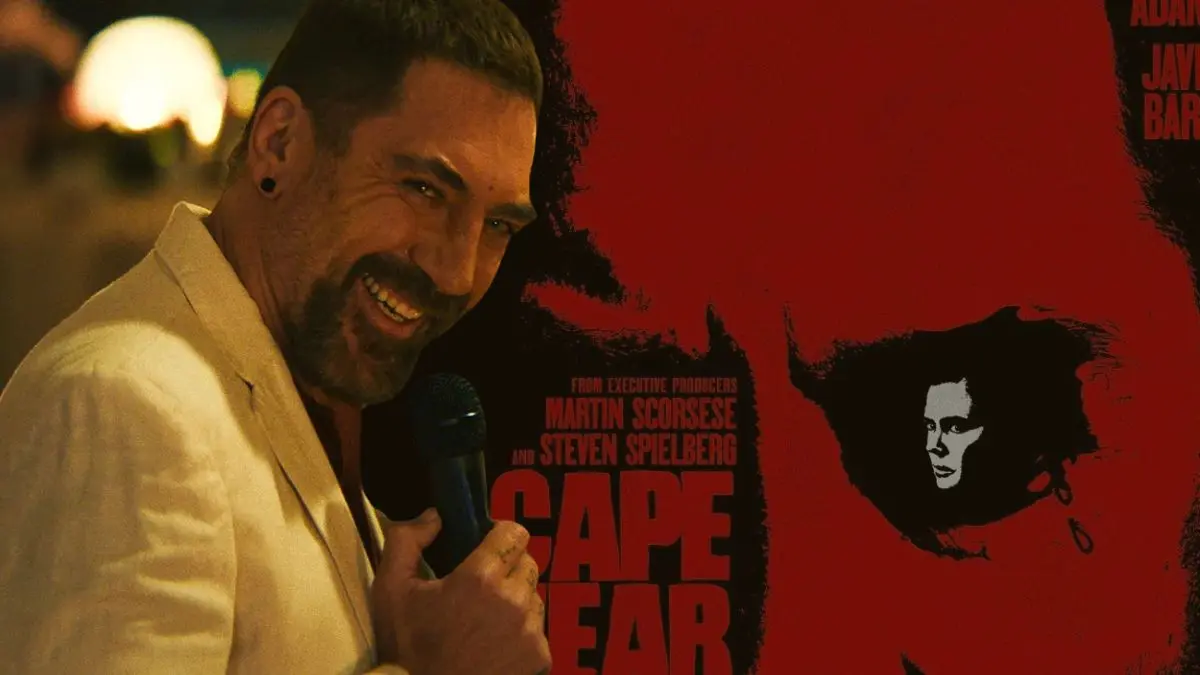
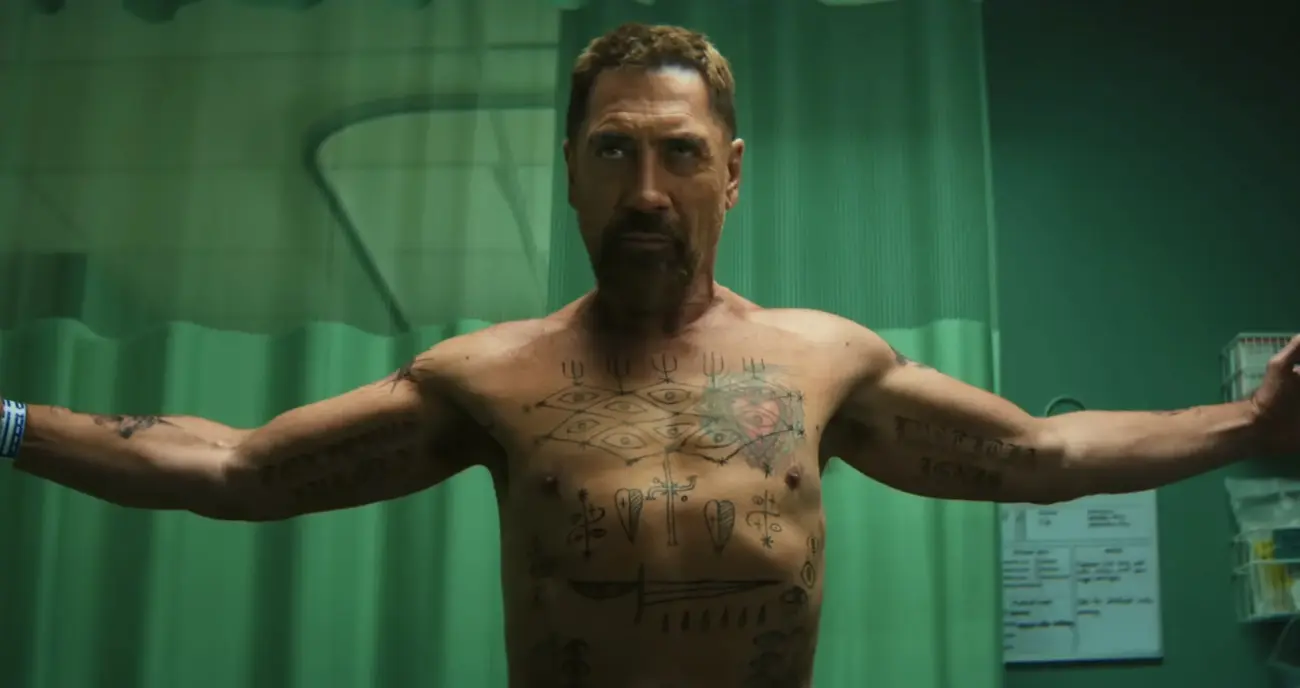
The story refuses to stay buried. A brand new psychological thriller miniseries titled ‘Cape Fear’ is set to premiere on Apple TV+ on June 5, 2026, created by Nick Antosca, with executive producers including Martin Scorsese, Steven Spielberg, and Javier Bardem, and starring Bardem alongside Amy Adams and Patrick Wilson.
Nick Antosca had been a fan of both movies and wanted to expand the world inhabited by Max Cady in a serialized format, knowing this take would have to offer something new not just in the story but also in the characters.
The new series follows Anna and Tom Bowden, whose lives are upturned after Max Cady, whom they put in prison years ago, is exonerated. Over the course of ten episodes, the story takes so many twists and turns that it becomes impossible to differentiate the good guys from the bad.
In the book and the movies, Sam Bowden takes charge of saving his family from Max Cady, but Antosca made key changes to the characters when he pitched the show. The shift to Amy Adams at the center of the story signals a meaningfully different power dynamic, one that feels distinctly modern.
Why This Story Has Never Really Gone Away
What makes ‘Cape Fear’ endure across decades and formats is not the genre mechanics, but the moral rot it exposes beneath the surface of respectable life. The Bowden family is never entirely innocent, and Max Cady is never entirely wrong about that. That ambiguity keeps the story alive.
In Scorsese’s version, Cady is dangerously charismatic, manipulating both Bowden’s teenage daughter Danielle and his lover Lori Davis, using them as instruments of psychological warfare against a man who abused the legal system to destroy him. The film forces its audience to feel uncomfortable sympathy in two directions at once, which is a much harder trick to pull off than pure villainy.
The 1962 original scored 88% on Rotten Tomatoes, and the material has demonstrated remarkable staying power from that first film through Scorsese’s neo-noir remake and now into a prestige streaming miniseries with one of the most exciting casts of the year. ‘Cape Fear’ began as a bet between two writers arguing about what counts as serious literature, and it has somehow become one of the most persistently relevant thrillers in American popular culture.
Now that Javier Bardem is stepping into the role that Robert Mitchum and Robert De Niro made iconic, it’s worth asking: which version of Max Cady do you think will prove the most terrifying, and does Bardem have a chance of topping what De Niro built in 1991?