‘Disclosure Day’ Asks If Spielberg’s Aliens Are Evil — and the Truth Is Far More Unsettling



Steven Spielberg has spent the better part of five decades asking audiences to look up at the sky with wonder. With ‘Disclosure Day‘, his first alien-centric feature in nearly twenty years, that upward gaze carries something heavier this time — dread, suspicion, and a quietly devastating question about who the real villains are.
The film, which opened theatrically in the United States on June 12 and has already grossed $98.2 million worldwide, has sparked serious conversation not just about its box office trajectory but about what it is actually saying. Because at the heart of all the conspiracy thrills and chase sequences is one genuinely unsettling debate: are the extraterrestrials in this story good, evil, or something humanity simply isn’t equipped to judge?
The Wardex Corporation and What Evil Actually Looks Like in ‘Disclosure Day’
The film’s most straightforward villain is not an alien at all. In ‘Disclosure Day’, Josh O’Connor plays Daniel Kellner, a tech-guy-turned-whistleblower at Wardex, a company that has kept the secret of alien life from the public for more than seventy years. Wardex is presented as a private organization operating beyond government oversight, using alien technology for its own ends while burying the truth.
Wardex’s primary goal is absolute secrecy while they exploit alien technology for financial gain. The videos Kellner steals include graphic scenes of Wardex agents interrogating and torturing captive aliens, or shoveling gory alien corpses without remorse. The cruelty is institutional, bureaucratic, and chillingly matter-of-fact.
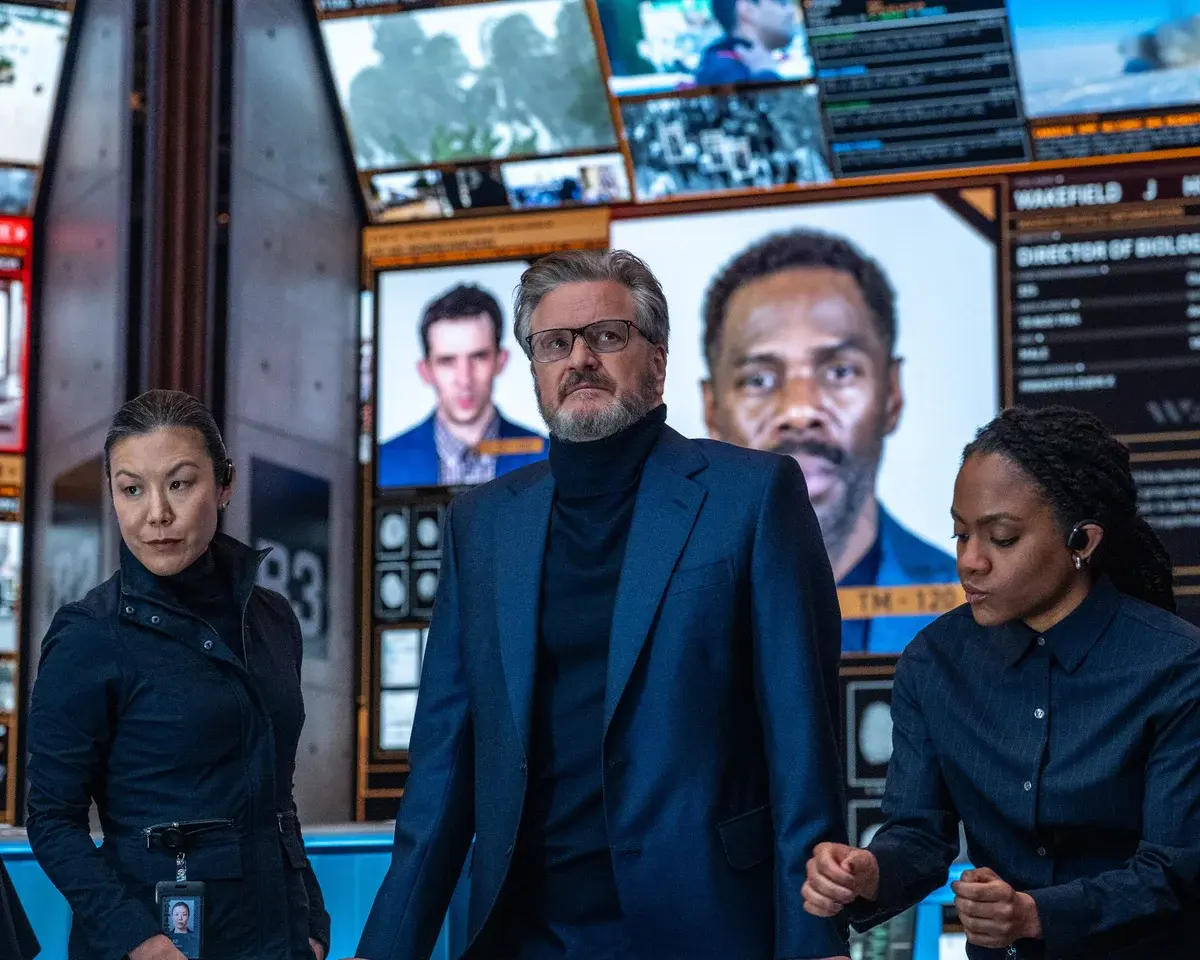
Colin Firth plays Noah Scanlon, who is not portrayed as a cackling villain but rather as a weary, menacing corporate stooge who genuinely believes that humanity cannot handle the truth. It is this ideological rigidity, not pure malice, that makes Scanlon so disturbing — he is certain he is doing the right thing, which makes the horror of what Wardex has done all the more pointed.
In an interview with Entertainment Weekly, Spielberg was explicit about the difference between ‘Close Encounters of the Third Kind’ and ‘Disclosure Day’: “I really don’t believe that governments can keep secrets,” he said. “But big tech companies can. And there are contracting companies that I believe hold all the knowledge and have the archives, not governments.”
Alien Morality and the Case for Benevolent Visitors
So if Wardex is the evil, where do the aliens themselves land? The film’s answer is deliberate and, to some viewers, almost provocatively optimistic. As the story reveals, Margaret and Daniel were both abducted by the same group of benevolent grey aliens, who implanted a latent talent in each of their brains that would help them carry out the visitors’ grand plan as adults.
Margaret is given extraordinary empathic abilities, and this is the ultimate purpose of the extraterrestrials’ grand plan: empathy is one of the building blocks of the universe, and humanity’s abandonment of this quality is rapidly leading us to our destruction.
To prevent the children’s developing minds from completely shattering upon perceiving a cosmic entity, the aliens projected themselves as familiar, non-threatening terrestrial creatures — a cardinal, a deer, a raccoon, and a fox. It is a strikingly gentle detail in an otherwise paranoid thriller, and it sits at the center of the film’s moral argument.
‘Disclosure Day’ is described by critics as one of Spielberg’s most moral, spiritual, and desperately hopeful films in years, with a clarity of feeling beneath the clutter of its genre mechanics. The emotional logic, even for viewers who find the plot strained, holds steady because Spielberg believes in what the aliens represent — not conquest, but correction.
The ‘Close Encounters’ Comparison and a Darker Worldview
Audiences and critics have drawn inevitable lines between ‘Disclosure Day’ and Spielberg’s earlier alien work, and those comparisons reveal exactly how much the filmmaker’s perspective has shifted. Spielberg’s alien films have moved from the organizational benevolence of ‘Close Encounters of the Third Kind’ toward a far greater sense of cynicism, with ‘Disclosure Day’ depicting shadowy conspiracies more darkly than anything the filmmaker has done before.
Screenwriter David Koepp captured the generational shift in attitude: “There was a sense that, ‘Hey, maybe our government might be lying to us.’ And now the sense is, ‘Hey, our government lies to us.” That evolution in public consciousness is precisely what gives ‘Disclosure Day’ its edge — it is not the aliens who have changed, but the world receiving them.
NPR’s review noted that the film harks back to Spielberg’s greatest alien-themed hits while also evoking the conspiracy-minded sci-fi of the nineties and early two-thousands, the era of ‘The X-Files’ and M. Night Shyamalan’s eerie crop-circle thriller ‘Signs’. It is a familiar template, but the anxieties powering it are entirely current.
Emily Blunt, a Four-Minute Take, and the Humanity at the Center
Whatever position audiences land on regarding the alien question, most critics agree that the film’s emotional power rests with Emily Blunt. Often a tough, sardonic screen presence, Blunt gets to flex her proven action and comedy muscles in a more earnest emotional register in ‘Disclosure Day’, grounding Margaret’s impossible transformation in fear and bewilderment rather than superhero wonder.
For the scene where Margaret speaks an alien language while on-camera, Blunt was told her dialogue would be enhanced using AI post-processing techniques. Instead, she used her vocal training to create a distinct set of vocalizations and performed them in a single four-minute long take. It is a remarkable piece of physical and vocal performance, and it became one of the most discussed production details surrounding the film.
Screenwriter David Koepp, who worked from an original story by Spielberg himself, revealed the film went through forty-two drafts, and the enigmatic ending was present throughout. “The mission of the movie is to get the word out and to get the truth out,” Koepp said. “So we wanted to do that and avoid mission creep.” The restraint is intentional, and it is what keeps the film from answering its central question too neatly.
What ‘Disclosure Day’ Really Thinks the Danger Is
Some critics have pointed out that the film’s script cleverly manipulates audience sympathy toward the aliens by showing graphic scenes of humans dissecting and torturing them, making the cover-up the ultimate evil and distracting viewers from any serious examination of what the aliens themselves might want. It is a fair critique of the film’s moral architecture, and it is unlikely to be accidental on Spielberg’s part.
The film’s finale returns to a Kansas City TV newsroom where the truth is revealed to humanity en masse through a local server and a global network of live television channels. While the story ends without definitively answering its big existential questions, it does point in a direction that is very Spielbergian: a universally shared feeling of astonishment and awe, rather than panic or division.
‘Disclosure Day’ does not ask viewers to look within so much as look more clearly at one another. Only when humanity is truly connected, the film suggests, can it be possible to hear what comes next.
The aliens are not evil in Spielberg’s telling — but his portrait of the humans who chose secrecy over truth is far harder to shake. Whether you leave the theater sharing Spielberg’s optimism or questioning it, ‘Disclosure Day’ earns its argument, so what does it tell you about our world right now that the corporation felt more believable than the benevolent visitors?