Does ‘Sense and Sensibility’ Have a Post-Credits Scene? What to Know Before Leaving the Theater


Over the past two decades, theatrical moviegoers have developed a habitual reflex whenever the house lights begin to rise. Hollywood franchise culture has conditioned viewers across the globe to remain glued to their seats through scrolling lists of visual effects artists and unit production managers. While audiences typically associate after-credit stingers with sprawling superhero universes, recent trends in prestige cinema have led theatergoers to scrutinize every release, from intimate indie dramas to grand literary romances.
That persistent curiosity now greets the theatrical arrival of ‘Sense and Sensibility‘, the latest big-screen reimagining of Jane Austen’s immortal 1811 novel. Arriving more than three decades after director Ang Lee brought the tale to the screen in 1995, this new iteration introduces Austen’s beloved Dashwood family to an entirely new generation of movie lovers. Backed by Focus Features and Working Title Films, the production arrives with considerable pedigree, helmed by BAFTA-nominated director Georgia Oakley and scripted by acclaimed Australian novelist Diana Reid.
Is There a Post-Credits Scene in ‘Sense and Sensibility’?
For filmgoers wondering whether to keep their seats as the final credits start rolling, the answer is definitive and straightforward. There is no mid-credits scene, nor is there a post-credits stinger attached to the end of ‘Sense and Sensibility’. Once the final frames fade to black, the narrative reaches its conclusive chapter, meaning patrons can gather their belongings and exit the theater without worrying about missing any bonus sequences or surprise cameos.
With a total runtime of 132 minutes, the film lets its credit crawl unspool over composer Roger Goula’s poignant instrumental score, accompanied by subtle recurring imagery of the Devonshire countryside. While lingering in your seat will not yield a comedic outtake or a sneak peek at a follow-up story, sitting through the roll remains a wonderful way to appreciate the artisans who built the period wardrobe and tactile production sets. If you are rushing for the parking garage or catching an evening train, however, you can leave immediately without regret.
A Grounded Take on Sisterhood and Society
The anticipation surrounding this theatrical release grew rapidly when the ensemble came together, as reported by Variety after George MacKay and Caitríona Balfe officially joined Daisy Edgar-Jones in the project. The finished production also stars Esmé Creed-Miles as Marianne Dashwood, Frank Dillane as the charming yet fickle John Willoughby, Herbert Nordrum as Colonel Brandon, and Fiona Shaw as the boisterous matchmaker Mrs. Jennings. Together, this talented lineup brings a vibrant, emotionally charged dynamic to Austen’s classic tale of class anxieties and romantic turbulence.

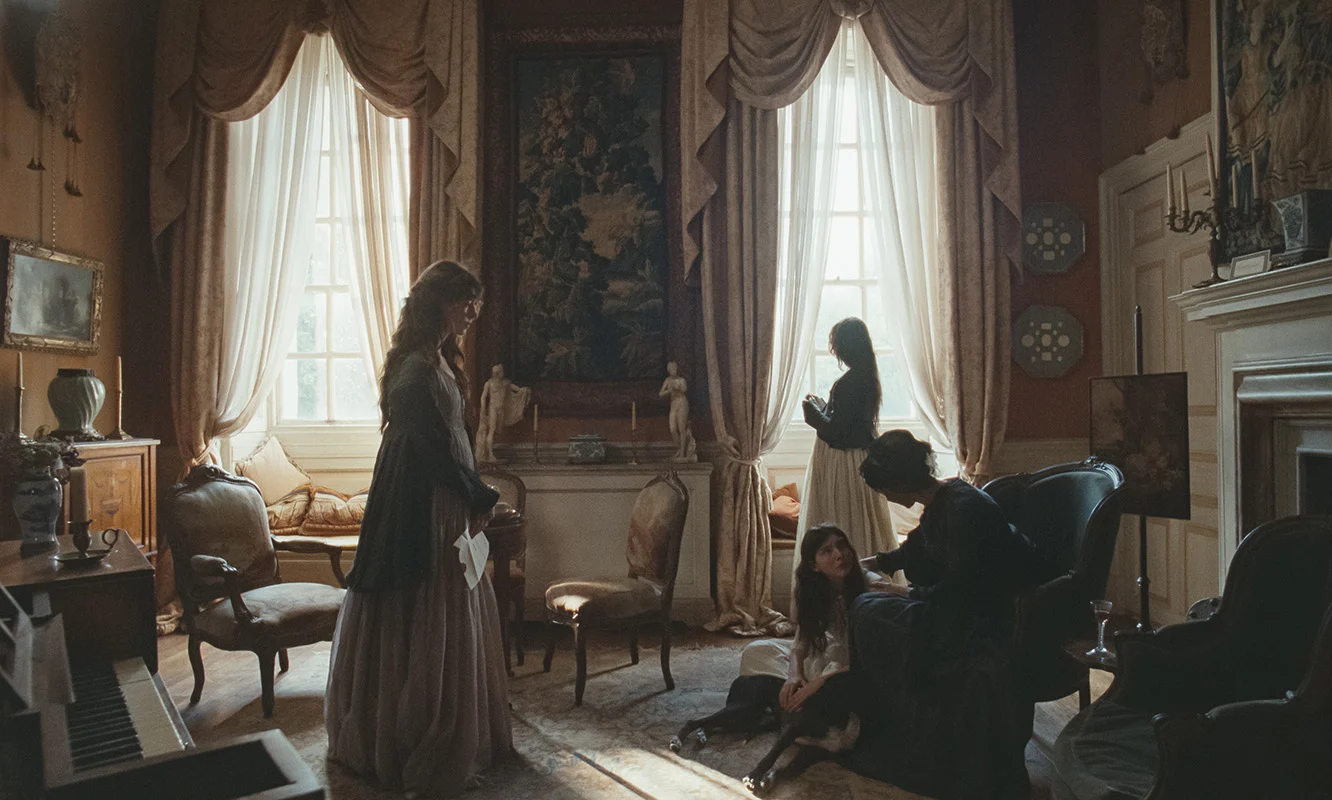
Rather than relying on glossy, postcard-perfect Regency tropes, Oakley opted for a far more earthy and immediate tone. The Dashwood sisters find their lives upended after their father’s untimely death leaves them disinherited, forcing them into modest rural living at Barton Cottage. Through hand-dyed fabrics, natural lighting, and weather-beaten coastal scenery, the drama exposes the genuine economic precarity women endured when navigating courtship in the late 18th century.
At the core of the drama sits the profound bond between Elinor and Marianne, who embody the thematic tension between cautious rationality and untamed feeling. Reflecting on that collaboration in an interview with The Spill, Creed-Miles noted that “having someone there who can hold space for all of that emotion is really magical.” Edgar-Jones warmly reinforced that sentiment, remarking, “I’ve always felt so safe with Esmé, and I felt that on the set it’s like a wordless knowledge that that person is there to support you.”
Why Oakley’s Ending Needs No Extra Stingers
The decision to forgo an end-credits sequence makes complete narrative sense given how Oakley and Reid chose to conclude the journey of the Dashwoods. Rather than orchestrating an elaborate, cinematic double wedding filled with triumphant carriage rides and sugar-rush spectacle, the adaptation deliberately centers its emotional climax on the sisters. The true resolution arrives not merely with marital security, but when Elinor and Marianne finally embrace, having gifted each other the balance of prudence and passion.
That artistic choice honors the realistic interiority that the cast and crew fought hard to protect throughout the filming process. As Creed-Miles observed, “just as there are rebellious women today there would have been rebellious women then.” By resisting the urge to tack on unnecessary post-credits gimmicks, ‘Sense and Sensibility’ delivers a satisfying, complete emotional catharsis that honors Jane Austen’s timeless literary genius.
What did you think of the new adaptation of ‘Sense and Sensibility’, and did the ending live up to your expectations?