‘Whalefall’ Ending Explained: Does Jay Survive the Belly of the Beast?


Contained survival thrillers have long captivated audiences by pushing the human body and spirit to the absolute brink of endurance. From isolated desert crevasses to suffocating deep-sea trenches, the subgenre thrives on transforming confined physical spaces into emotional pressure cookers. Whether navigating the psychological weight of isolation or the visceral terror of the elements, these stories peel back every protective layer of the human psyche.
Author Daniel Kraus tapped directly into that primal fascination with his harrowing 2023 novel ‘Whalefall‘, later brought to the big screen alongside director Brian Duffield. While the cinematic premise naturally invites comparisons to maritime classics, the creative team deliberately avoided conventional monster archetypes. Instead, the narrative uses the sheer vastness of the Pacific Ocean to frame an intensely claustrophobic reckoning between guilt and family grief.
The Claustrophobic Nightmare Inside the Leviathan
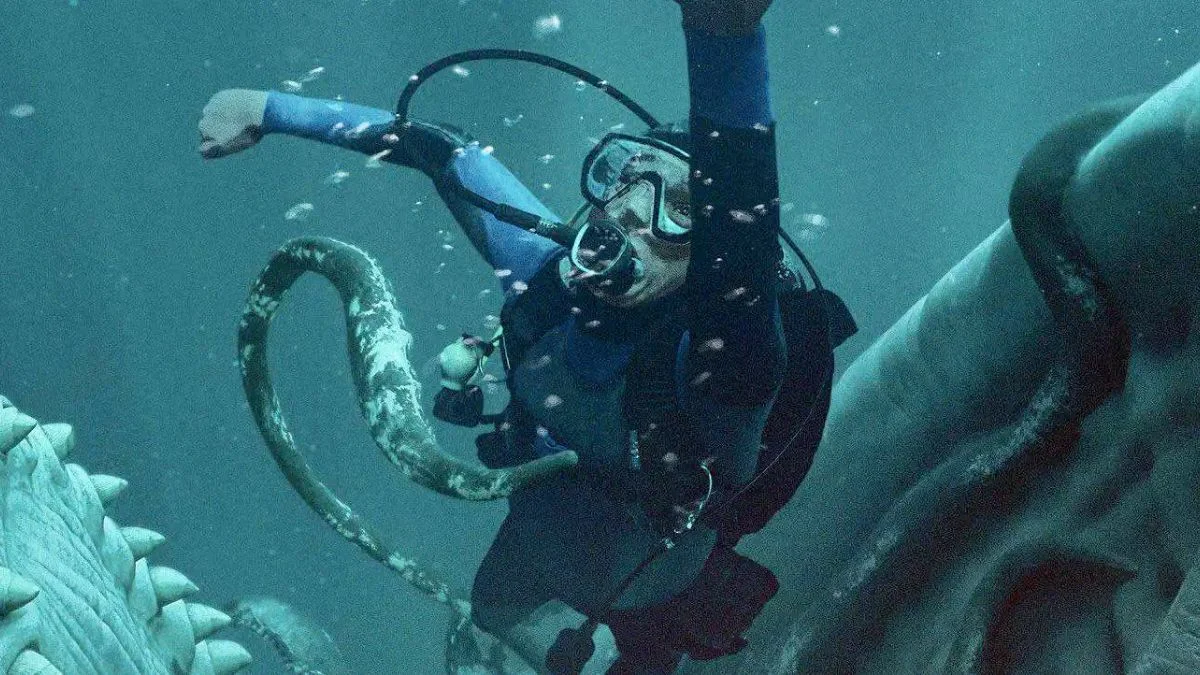
The story centers on Jay Gardiner, an emotionally battered diver portrayed by Austin Abrams in the cinematic adaptation. Consumed by lingering guilt over the suicide of his estranged father, Mitt, Jay ventures out on an unsanctioned solo dive off Monastery Beach to retrieve his father’s sunken remains. However, a catastrophic clash between a giant squid and an 80-foot sperm whale drags Jay deep underwater, where he is swallowed alive with only one hour of breathable oxygen.
Once trapped inside the whale’s cavernous digestive tract, Jay finds himself battling pitch-black darkness, corrosive acidic fluids, and rapidly depleting air supplies. To survive the harrowing ordeal, director Brian Duffield emphasized relentless, real-time isolation over glossy Hollywood spectacle. “The bulk of our movie takes place within the whale himself, and we go a really long time without cutting outside,” Duffield told TheWrap when detailing the punishing staging of Jay’s claustrophobic fight.
As Jay maneuvers through the beast’s complex multi-chambered stomach, the narrative continuously blurs the line between harsh biological reality and psychological unraveling. Hallucinating the presence of Mitt, played with gruff intensity by Josh Brolin, Jay begins reliving the brutal diving lessons his father forced upon him during his youth. Those agonizing memories gradually transform from deep emotional scars into the exact tactical blueprints required to withstand the creature’s crushing internal pressures.
Kraus went to extraordinary lengths to ensure the leviathan’s biology remained grounded in marine realism rather than sensational fantasy. “I still think it’s highly unlikely that anyone will get swallowed by a sperm whale,” Kraus admitted in an interview with Reuters while recounting his extensive research alongside whale biologists and diving experts. That rigorous attention to anatomical detail elevates the narrative tension, ensuring each stomach chamber functions as an authentic physical hazard.
Jay’s Desperate Gambit and the Gruesome Escape
With his dive tank running dangerously empty and the creature plunging deeper into the freezing abyss, Jay realizes an escape through the esophagus is physically impossible. In a desperate final gambit, he uses a dive light battery, steel wool, and his remaining tank oxygen to ignite flammable methane gas pockets within the belly. The resulting internal explosion severely mangles Jay’s hand, yet the shockwave tears open a vital pathway directly into the animal’s abdominal cavity.
Sensing catastrophic internal injuries, the wounded leviathan panics and rockets to the surface before beaching itself along the rocky coastline of Monastery Beach. Jay claws his way past the animal’s colossal pulsing heart, desperately slashing through thick layers of blubber and muscle tissue until reaching daylight. Alerted by violent thrashing beneath the skin, marine scientists and horrified beachgoers spot movement and frantically slice through the carcass to pull Jay free.
‘Whalefall’ Ending Explained: The True Meaning of the Sacrifice
While Jay survives against impossible anatomical odds, he leaves the water without the singular prize that drove him into the ocean: Mitt’s physical remains. His father’s bones remain undisturbed on the Pacific seafloor, forever out of reach of the son who spent a full year tormenting himself over unsaid apologies. Jay ultimately realizes that true closure cannot be fished from the depths, but must be chosen through the deliberate decision to keep living.
The conclusion reframes the biological title ‘Whalefall’ into an evocative metaphor for grief, legacy, and generational healing. In marine ecology, a whale fall occurs when a deceased leviathan sinks into the abyss, sustaining complex undersea ecosystems for decades to come. Mitt’s death similarly functions not as a downward pull meant to drown his son, but as the difficult nutrient that gives Jay the strength to endure and mature.
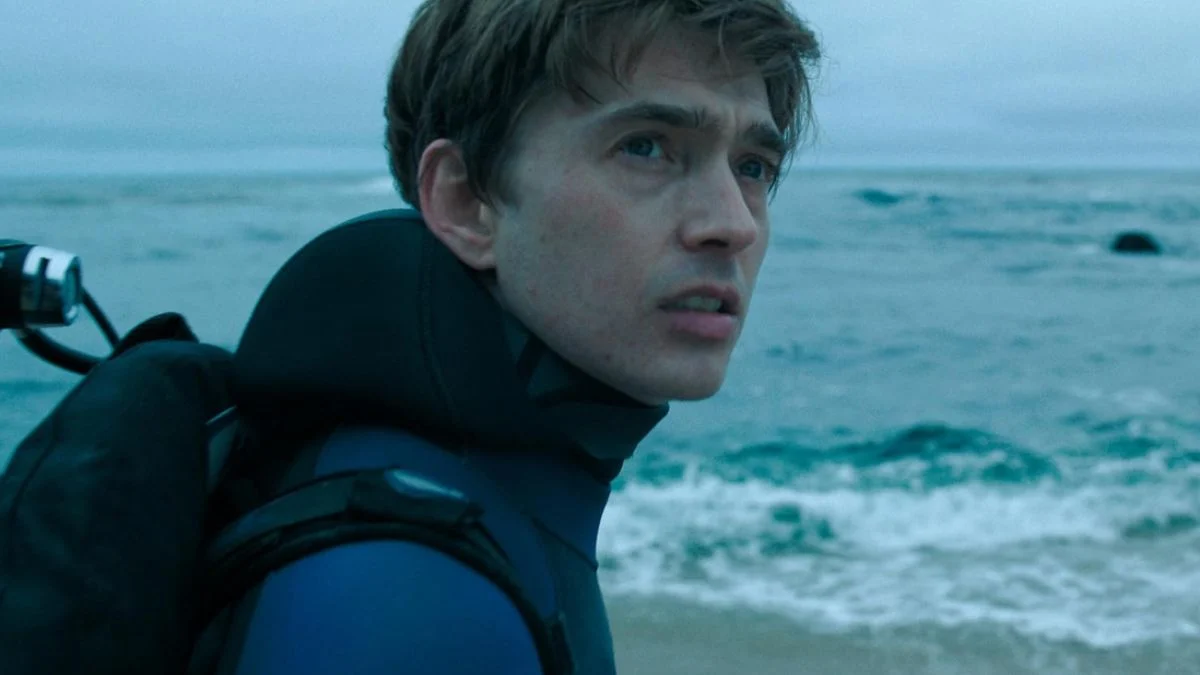
Jay’s emergence from the belly of the beast represents a violent, bloody rebirth that breaks him out of his cycle of self-punishment. Though permanently injured and physically altered, he finally releases his burning resentment and reclaims his place among his surviving mother and sisters. By carrying his father’s lessons without surrendering to his father’s tragedy, Jay transforms a horrific aquatic tomb into a sanctuary of renewed purpose.
Share your thoughts on the harrowing ending and emotional metaphors of ‘Whalefall’ in the comments below!