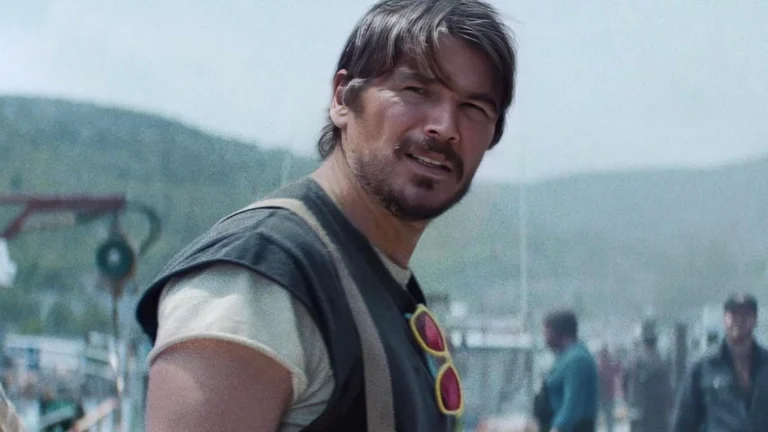
Christopher Nolan Built a Real 60-Foot Cyclops Machine for ‘The Odyssey’ Set

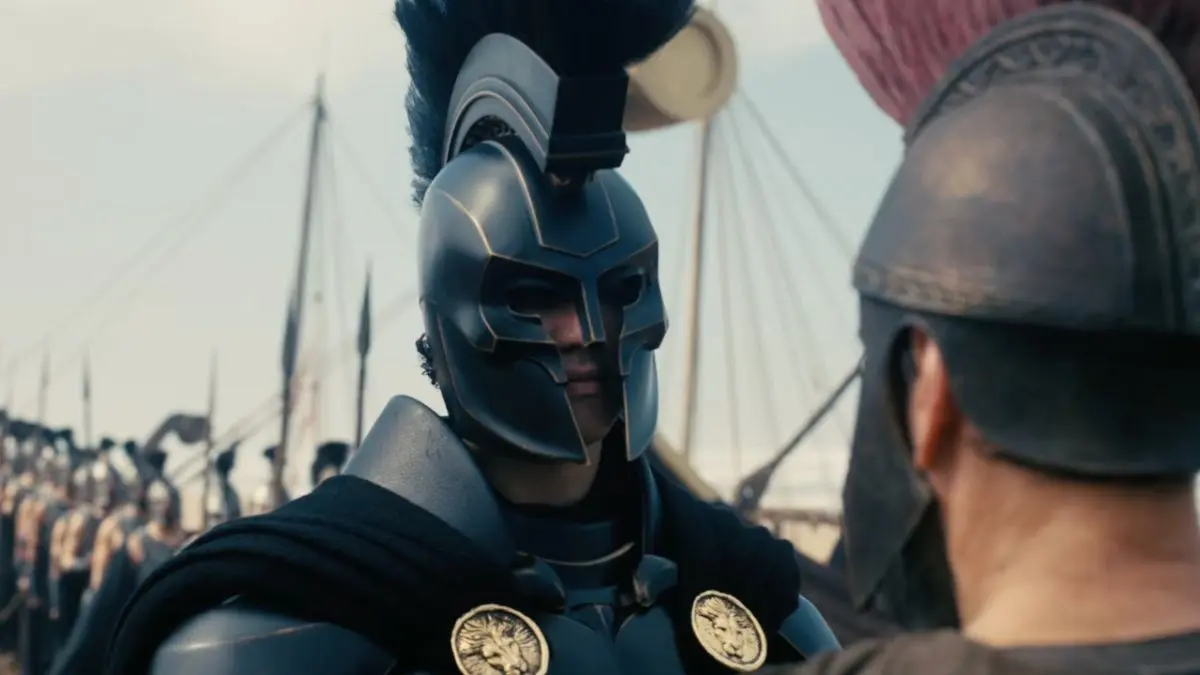

Christopher Nolan used a real 60-foot Cyclops build for ‘The Odyssey’ set, aiming to make myth feel grounded and physically real.
Christopher Nolan is taking a very hands-on approach to his upcoming film The Odyssey, a project that retells one of the most famous mythological journeys in history. Instead of relying only on digital effects, he is blending practical filmmaking techniques with large-scale physical builds to create a sense of realism inside a story filled with monsters and gods.
One of the biggest examples of this approach is the Cyclops sequence featuring Polyphemus, the one-eyed giant who confronts Odysseus and his men. Actor Matt Damon, who plays Odysseus, is part of a scene that includes an enormous physical setup designed to make the creature feel present in the space rather than added later in post-production.
According to Empire, Nolan revealed that the production used a towering 60-foot contraption as part of the Cyclops build. The goal was not to create something cartoon-like or purely fantasy-driven, but to make the encounter feel like it could exist in a real world. Nolan explained, “Everything about the Cyclops sequence is aimed at trying to imagine: what would this be like in real life? Not approaching it from a storybook or cartoony point of view, but really trying to be in there with Odysseus and his men. It’s a horrifying situation.”
The production combined several practical techniques, including animatronics and puppetry, to bring Polyphemus to life. Actor Bill Irwin, who previously worked with Nolan on Interstellar, played a key role in operating and performing elements of the creature. Damon described how this added to the realism on set, saying that Irwin was actively involved throughout filming, even providing vocal sounds and physical presence to enhance the interaction.
The sequence was filmed in Nestor’s Cave in Messenia, Greece, a real location that added both authenticity and difficulty to the shoot. The environment itself became part of the challenge. Damon recalled that the entrance of the cave was filled with thousands of bees, creating a literal barrier the crew had to pass through. He said, “At the cave mouth, there was a buzzing… You had to walk through this curtain of bees to get in.”
Inside the cave, conditions were far from comfortable. Nolan noted that the presence of livestock used for the scene contributed to strong smells and a harsh working environment. He explained, “It got very, very dank and smelly after a time.” Despite this, he emphasized that filming in an actual cave created an atmosphere that could not be replicated on a soundstage or with digital sets.
Nolan also pointed out that the physical space itself helped shape the tone of the scene. The darkness, the enclosed rock walls, and the natural pressure of the location all contributed to a sense of danger and confinement. According to him, this was essential for capturing the emotional weight of the moment, where Odysseus and his men are trapped and threatened by a massive, unnatural force.
The production approach reflects Nolan’s broader filmmaking style, which often favors practical effects and real-world environments even in large-scale genre stories. With The Odyssey, that philosophy is being pushed into mythological territory, using real construction, real locations, and physical performance to bring ancient legends closer to something tangible and immediate.
Have something to add? Let us know in the comments!