Christopher Nolan Reveals the One Technical Limit That Kept ‘The Odyssey’ Under Three Hours

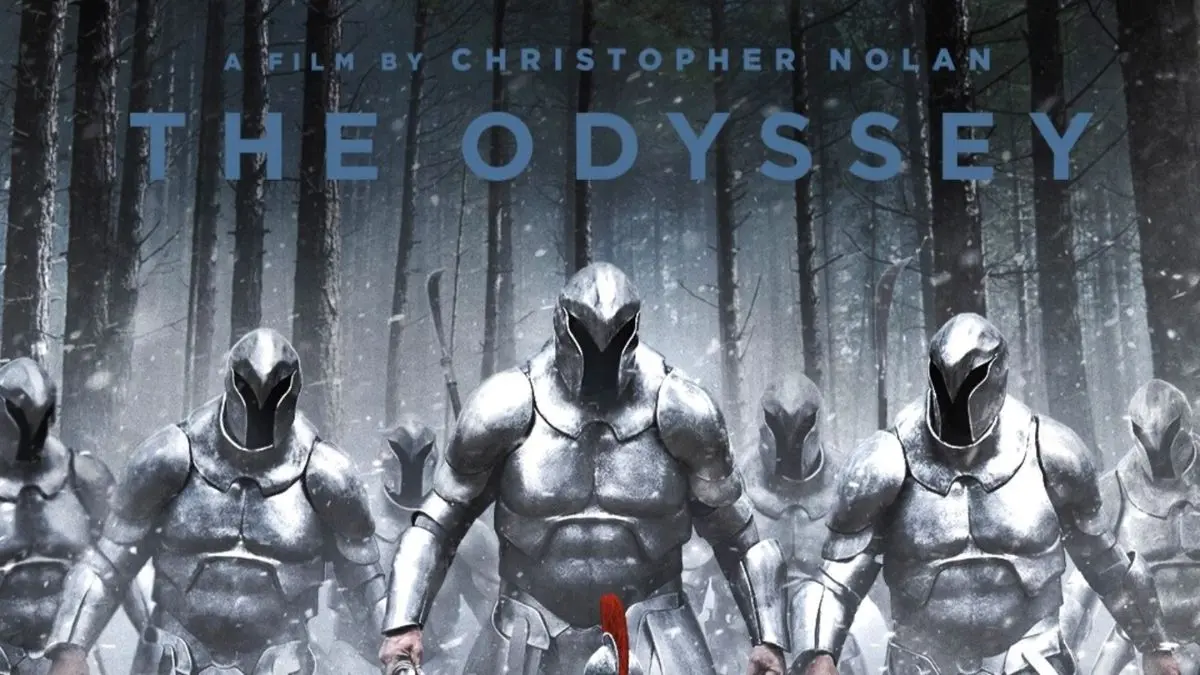

Christopher Nolan has built his entire reputation on refusing to compromise, whether that means demanding practical explosions over CGI or convincing entire film industries to keep celluloid alive. So it comes as something of a shock to learn that even Nolan, one of the most powerful directors working today, recently ran into a wall he simply could not push through.
That wall arrived in the form of a technical limitation tied to the very format Nolan has championed for years. With ‘The Odyssey‘ shaping up to be his most ambitious project yet, the director found himself facing a genuine constraint on how much of his sprawling adaptation could actually make it to the screen.
Speaking with Letterboxd ahead of the film’s release, Nolan revealed that the movie had to stay under three hours because of a hard limit built into IMAX film projection itself. He explained that his longtime IMAX collaborator David Keighley once pulled him into a projection booth during an audience screening specifically to demonstrate that three hour ceiling on film prints, and that despite years of pushing Keighley to find a workaround, the only real solution would have required an entire rebuild of the projection system, he told Letterboxd, ultimately leading him to accept the limit rather than fight it further.
That constraint forced a genuinely difficult editing process, especially given how much material Nolan actually captured during production. He shot roughly two million feet of IMAX film for the project, translating to somewhere around 90 hours of footage once accounting for every take, a staggering amount of material that needed to be whittled down into a single coherent film.
Much of that responsibility fell to editor Jennifer Lame, who Nolan credited with taking a genuinely ruthless approach to the cutting process. He recalled telling her plainly that if a scene did not serve the story, it had to go, regardless of how difficult or expensive it had been to shoot, he explained in the same Letterboxd interview, adding that the format and camera used never mattered as much as the story being told.
That approach ultimately resulted in a final runtime of two hours and 52 minutes, just under the three-hour IMAX ceiling Nolan had been working against. Interestingly, Nolan did find a workaround that let the film stretch slightly beyond that limit, since roughly seven additional minutes of non-IMAX post-credits content is not bound by the same projection restrictions that apply to the main feature.
That runtime places ‘The Odyssey’ just behind some of Nolan’s longest previous films, including ‘Interstellar’ at two hours and 49 minutes and ‘The Dark Knight Rises’ at two hours and 44 minutes. Notably, Nolan has only crossed the three-hour mark once in his career with ‘Oppenheimer,’ a film that was only shot about 75 percent on IMAX cameras and managed to hit that milestone through specialized projection solutions not available for a fully IMAX shot production like this one.
Given that Nolan does not typically release extended cuts or deleted scenes for his films, it seems unlikely that audiences will ever get to see the substantial amount of footage that ended up on the cutting room floor. That makes Lame’s editing decisions all the more consequential, since whatever material she and Nolan chose to prioritize is effectively the only version of this story fans will ever see.
Should Christopher Nolan’s ‘The Odyssey’ have been longer than three hours?
With ‘The Odyssey’ now opening in theaters and IMAX around the world, audiences will finally get to judge for themselves whether that ruthless approach to editing paid off. Between the technical ambition behind the shoot and the discipline required to bring it in under three hours, the film’s road to the screen has become almost as compelling a story as the epic itself.
Have something to add? Let us know in the comments!