Netflix’s ‘Human Vapor’ Recap and Ending Explained: What Really Happened to the Gas Man and Kyoko

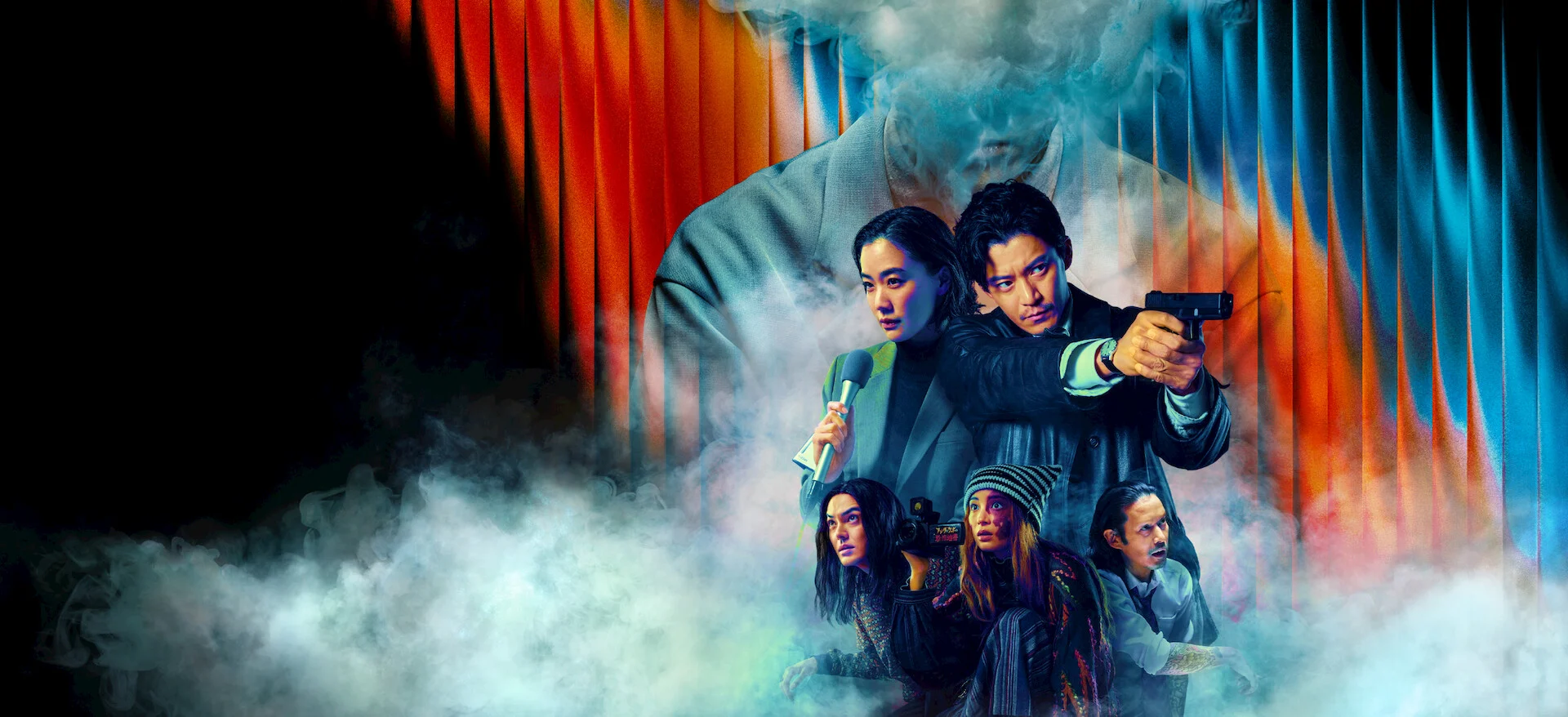

Netflix just dropped a new sci-fi thriller that has viewers buzzing, and it is unlike anything else on the platform right now. ‘Human Vapor‘ is a Japanese-South Korean reimagining of a decades-old tokusatsu classic, and its eight episode run wastes no time throwing audiences into chaos. The series is directed by Shinzo Katayama, stepping into the chair once held by Ishiro Honda, the filmmaker behind the original Godzilla who directed the 1960 source material over sixty four years ago.
All eight episodes landed on Netflix as part of a story built around a death on live television, a culprit who turns to gas, a secret project that used and discarded the vulnerable, and one detective who refuses to let the case go cold. With the season already streaming in full, fans are searching for a clear breakdown of what actually happens and how it all wraps up.
The Central Mystery
The story kicks off when environmental energy expert Professor Sano, played by Morley Robertson, suddenly swells and violently explodes during a live television interview. The person responsible is the so called Human Vapor, a mysterious young man who can transform his body into gas and slip through any barrier, and he announces his killings in advance before carrying them out, almost mocking the authorities chasing him.
Reporter Kyoko and Kenji, a detective returning from suspension, are the two people pulling the thread of this case in the premiere. As each bizarre killing escalates a wave of formless, pervasive fear and curiosity across Japan, the suspended detective and the relentless reporter race to stop the seemingly unstoppable force.
That investigation eventually drags them toward a much darker institutional secret than either of them expected.
Along the way, a former White Center director named Obata realizes he has become the next target, which signals early on that this is not a random string of attacks. The show frames its antagonist less as a monster and more as the product of a system that failed him, a choice that shapes everything that happens once the full picture comes into focus.
The Ending and the White Center Reveal
The back half of the season pulls back the curtain on White Center itself, showing a young Kyoko twenty seven years earlier witnessing her dead peers piled into a truck before she stows away to Tokyo, where a man named Ren saves her at a ramen shop. That flashback becomes the emotional key to the entire season, tying Kyoko’s own trauma directly to the same program that created the Human Vapor.
As the finale approaches, Ren’s tragic past resurfaces, and Kenji’s father’s notes link his own death and the Fujishiro Syndicate back to White Center, while Kyoko uncovers the full scope of a project referred to as Mufu.

A local governor named Miura is shown stoking public fear of the Human Vapor for his own political gain, and Kyoko eventually opens up to Kenji about her harrowing past and Ren’s fatal ties to a former Fujishiro member named Mori.
In the closing episode, the Human Vapor raids Miura’s office, only for a darker plot to surface underneath it, and Kenji risks his life to help Kyoko and her colleague Kaho escape the fallout. The season closes with Kyoko heading to broadcaster JNT with a firm new resolve, suggesting her fight against the institutions behind White Center is far from finished even after the immediate threat is contained.
The Cast and the Talent Behind the Camera
‘Human Vapor’ stars Shun Oguri, Yu Aoi, Suzu Hirose, Kento Hayashi, Uta, and Yutaka Takenouchi, with production handled jointly by Toho Studios and Wow Point. Oguri plays Kenji Okamoto, the suspended detective pulled back in to hunt the vaporous killer, and he previously starred in Netflix’s Romantics Anonymous along with Japanese dramas like Ouroboros and Rich Man, Poor Woman.
Yu Aoi takes on the role of Kyoko Kono, the JNT chief reporter who happened to be interviewing Professor Sano at the exact moment of the first explosive murder. Suzu Hirose and Kento Hayashi round out the main cast as video content creators, with Hirose known for the Netflix series Asura and Hayashi for Vivant.
The series was written by Yeon Sang-ho and Ryu Yong-jae, with Yeon serving as showrunner after selecting the original film from Toho’s Transforming Human Series for its blend of speculative science and human drama. Yeon is best known internationally for writing and directing ‘Train to Busan’, though this new series has no narrative connection to that film and stands as a fully original story.
Plot Origins and Visual Effects
Rendering a gaseous human being across eight episodes of prestige television required Toho and Netflix to bring in Shirogumi, the Academy Award winning visual effects studio behind the widely praised work on Godzilla Minus One. Masaki Takahashi, one of the Oscar recipients for that film, served as VFX supervisor on ‘Human Vapor’, blending modern CGI with practical effects rooted in the original tokusatsu tradition.
The 1960 original followed a librarian named Mizuno who became gaseous after a rogue experiment and used his new ability to rob banks and fund his girlfriend’s dancing career, with director Honda framing the film as a doomed love story rather than a straightforward monster tale. The 2026 series keeps character names like Okamoto and Kyoko along with the central transformation ability, but radically rewrites the origin and motivation behind it.
Critics have been largely receptive to the reboot’s ambition. One review called it a hugely entertaining romp that sublimates the atomic age paranoia and kitschy monster mayhem of the 1960s original into a thrilling cautionary tale for the modern era, complete with action, romance, and peril. Another outlet compared its visual highlights to the Sandman sequences in Sam Raimi’s ‘Spider-Man 2’, a comparison that speaks to just how far the effects team pushed the technology.
With White Center’s full history exposed and Kyoko walking into JNT with a new sense of purpose, ‘Human Vapor’ leaves plenty of room for its institutional conspiracy to keep unraveling if Netflix orders another season. Now that you know how Kyoko, Kenji, and the Human Vapor’s story actually ends, what do you think should happen to Miura and the remains of the Fujishiro Syndicate if the show comes back for round two?