Steven Spielberg Reveals Why He “Walked Away” from Directing ‘Harry Potter’

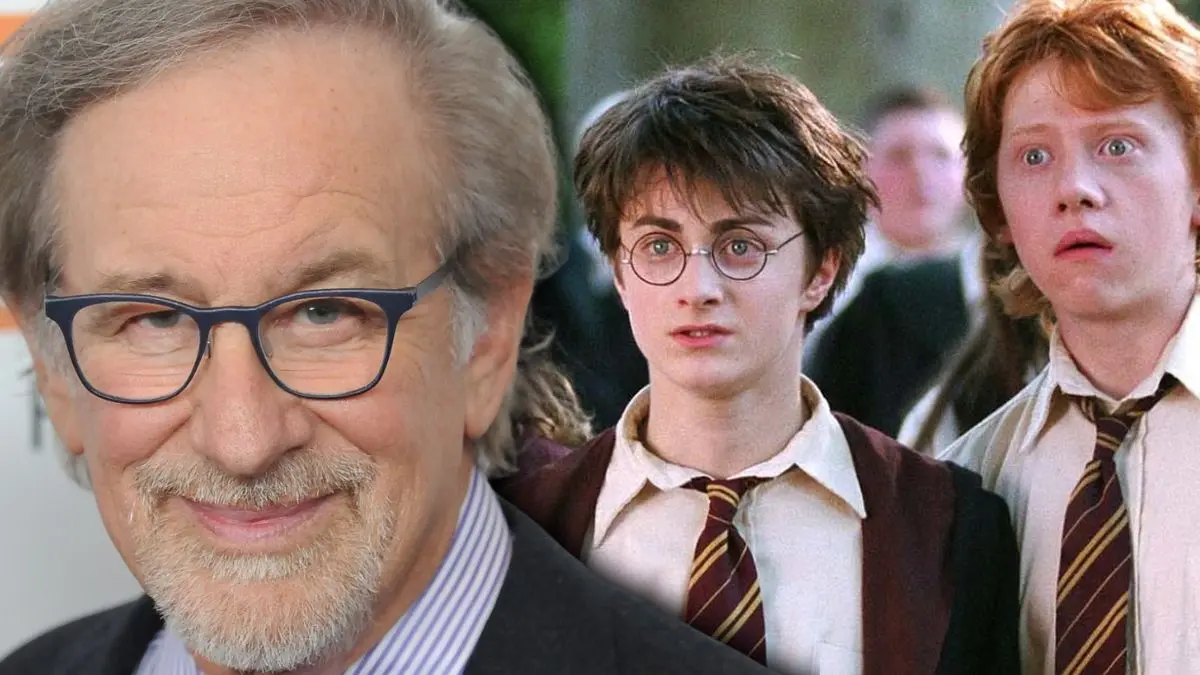

Steven Spielberg has shared new details about one of the biggest “what if” moments in modern film history. In an interview with TCM, the director explained why he stepped away from directing the first “Harry Potter” film, a project he was once deeply involved in during the late 1990s.
Spielberg said he had already been working with Warner Bros. and author J. K. Rowling and was even involved in early casting discussions. At one point, he was officially set to direct the film. However, everything changed after the death of filmmaker Stanley Kubrick in 1999.
According to Spielberg, Kubrick’s passing and a request from Kubrick’s family pushed him in a different direction. He explained, “After Stanley’s death, I was at the funeral at his home. Christiane Kubrick and Jan Harlan, her brother, approached me about taking over from Stanley, as Stanley had intended, and directing the movie.”
That film was “A.I. Artificial Intelligence,” a project Kubrick had developed for decades but never made. Spielberg continued, “I actually walked away from Harry Potter, which I was scheduled to direct as my next movie. I gave it up. It was going to be a huge movie because the book already was a runaway cultural phenomenon. I gave that up to essentially do ‘A.I.’”
At the time, “Harry Potter and the Sorcerer’s Stone” eventually went to Chris Columbus, who shaped the tone of the first two films and helped launch one of the biggest franchises in cinema history.
Spielberg’s decision changed his own career path as well. Instead of entering a long-running fantasy franchise, he moved into a different creative phase that included films like “A.I. Artificial Intelligence,” “Minority Report,” “Catch Me If You Can,” and “Munich” between 2001 and 2005.
While “Harry Potter” became a global phenomenon, “A.I. Artificial Intelligence” had a more complicated early reception. When it was released in 2001, the film divided critics and audiences. Some praised its ambition and emotional depth, while others felt uncertain about its blend of Kubrick’s darker ideas and Spielberg’s more emotional storytelling style.
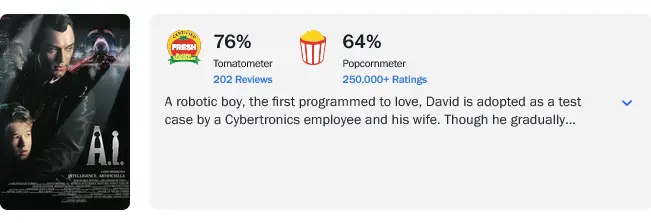
Over time, however, the film’s reputation has grown significantly. What was once seen as uneven is now often described as one of Spielberg’s most thoughtful and haunting works. Many critics now appreciate how it explores artificial intelligence, loneliness, and the idea of what it means to be human. It has been re-evaluated as one of the director’s most emotionally complex science fiction films.
In recent years, “A.I. Artificial Intelligence” has appeared much higher in retrospective rankings of Spielberg’s work, even being placed above some of his most famous films like “Jurassic Park” and “Saving Private Ryan” in certain critics’ polls. Its slow-burn emotional impact and unusual structure have helped it gain a new audience that sees it as ahead of its time.
Looking back, Spielberg’s decision to leave “Harry Potter” remains one of the most discussed “what could have been” moments in film history. But it also led him to a project that, while misunderstood at first, has become an important part of his legacy.
Have something to add? Let us know in the comments!