‘The Odyssey’ Movie Ending Explained: Why Odysseus Chooses Exile Over His Throne

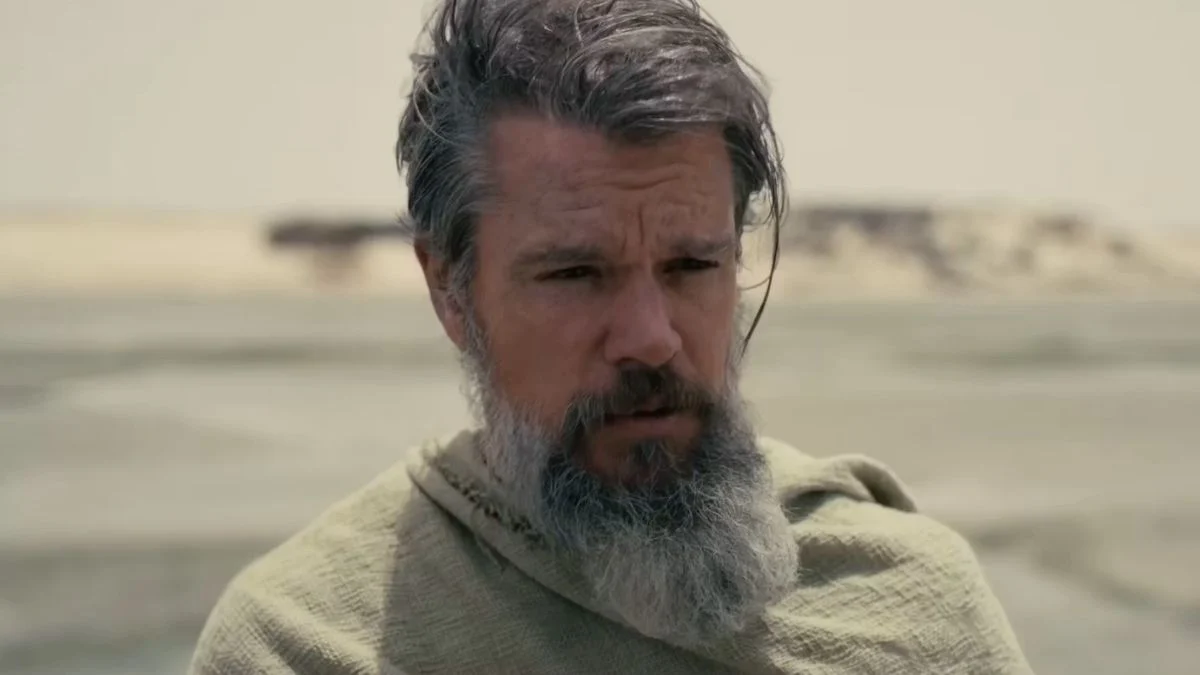

Christopher Nolan’s take on Homer’s epic has audiences leaving theaters with one big question on their minds. Why does Odysseus walk away from Ithaca after everything he fought to get back to it.
The answer is layered, and it says a lot about how this adaptation reshapes one of literature’s most famous homecomings into something darker and more introspective.
What ‘The Odyssey’ Prophecy Reveals About His Fate
In Homer’s original text, the seer Tiresias tells Odysseus during his trip to the underworld that his journey does not truly end when he reaches home. Tiresias tells him that after killing the suitors he must undertake an inland journey, carrying an oar, before he can finally settle into old age.
Tiresias explains that once home, Odysseus must travel until he finds people who have never heard of the sea and do not recognize an oar, where he is meant to make a sacrifice to Poseidon. That detail has fascinated classicists for centuries because it complicates the tidy, victorious ending readers expect.
Nolan’s film leans directly into that ambiguity rather than smoothing it over. While Homer’s Odyssey has him reclaim his throne, and the lost epic poem the Telegony has him eventually killed by his own son, the fate of Odysseus in Nolan’s version is markedly different, since here he chooses exile instead.
Odysseus’ Guilt Over Troy Drives Him Away from Ithaca
The film frames his self-exile as something rooted in psychology rather than pure obligation to fate. Odysseus is shown carrying deep guilt and trauma over the sacking of Troy, along with the weight of having broken Zeus’ Law by slaughtering the suitors inside his own home.
That guilt is not just implied through action either, it becomes an explicit plot point in a key emotional scene. In a conversation with Penelope, Odysseus reveals he believes his own return home is tied to a self fulfilling prophecy involving a mysterious group known as the Sea People, who are said to bring about the end of civilization as they know it.
He comes to see himself and his surviving crew as the very thing that prophecy warned about. In his eyes, sailing far away creates distance between his violent actions and his homeland, while also honoring the crew members he lost along the way in the unknown west.
‘The Odyssey’ Ending Sets Up Telemachus as the New King
Odysseus leaving is not framed as abandonment so much as a deliberate handoff of power. By exiling himself, he clears the path for Telemachus to take the throne in Ithaca, giving the kingdom a fresh start away from his own tarnished reputation.
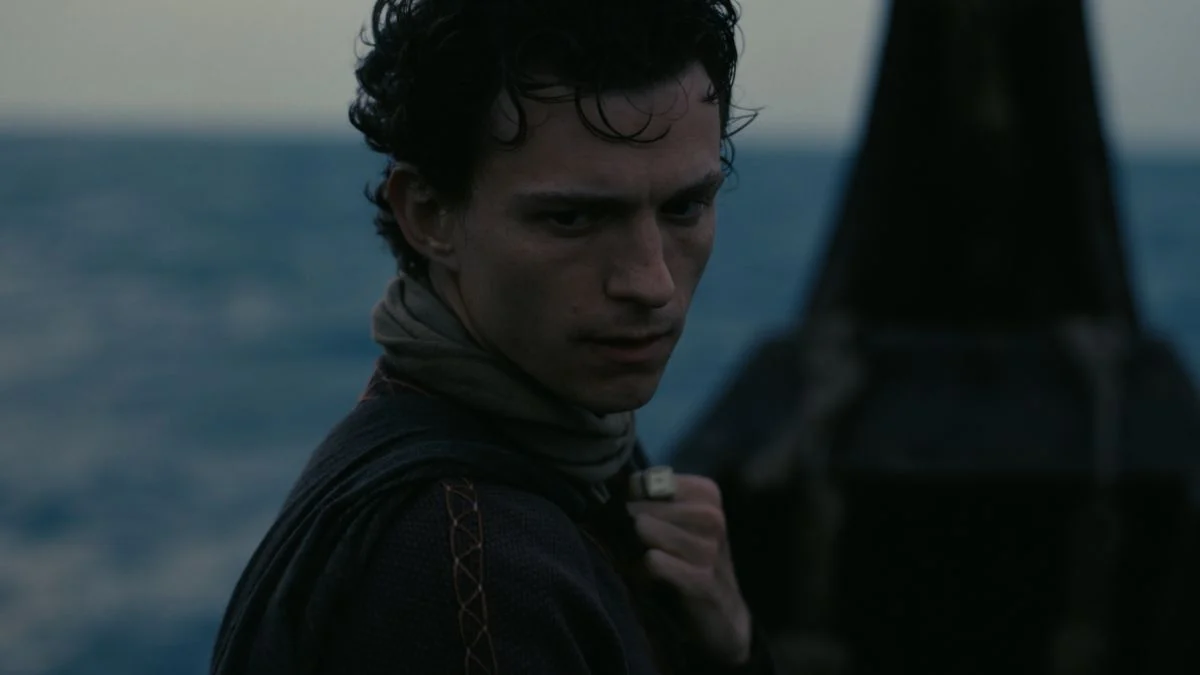
There is also a haunting supernatural wrinkle involving Athena that colors his decision. It is revealed that Athena has taken the form of a young woman who was killed by Odysseus’ own soldiers in a temple dedicated to her at Troy, which only deepens his sense of guilt. That reveal reframes the goddess who guided him through the entire war as a living reminder of what his campaign cost innocent people.
Even the film’s closing moments reinforce this theme of reckoning rather than triumph. The movie ends with Odysseus delivering a speech declaring that when he burned the walls of Troy, he effectively burned down the walls of the world. It is a bleak final note for a story that traditionally ends with a hero restored to his rightful place.
How This Compares to the Actual Myth of Odysseus
Ancient sources genuinely do wrestle with what happens to Odysseus after Ithaca, and scholars have long debated it. The years Odysseus reportedly spent in a place called Thesprotia may have actually originated from older stories about his exile following the murder of the suitors.
Interestingly, ancient audiences seem to have interpreted the Tiresias prophecy differently than Nolan does. The most natural reading is that Odysseus eventually dies peacefully in old age on Ithaca, safely away from the sea, which is the version Odysseus and Penelope themselves seem to accept as the outcome.
There is even a small, easy to miss detail in Homer’s text suggesting Odysseus anticipated needing space from his community almost immediately after the slaughter. In Book 24, Odysseus tells Penelope he plans to retreat to Laertes’ farm for a kind of mini exile, expecting that news of the killings will spread quickly through the islands.
So while Nolan invents a far more permanent and symbolic departure, the seeds of an Odysseus who cannot simply slot back into normal life were already there in the source material. The film just pulls that thread all the way to its most dramatic possible conclusion, turning ambiguity into an ending that has clearly stuck with audiences walking out of the theater.
What did you make of Odysseus choosing exile over the throne, and does it feel like a fitting send off for this version of the character?