The Real Norse Myth of Laufey: How Different is ‘God of War’s’ Faye From the Legends?

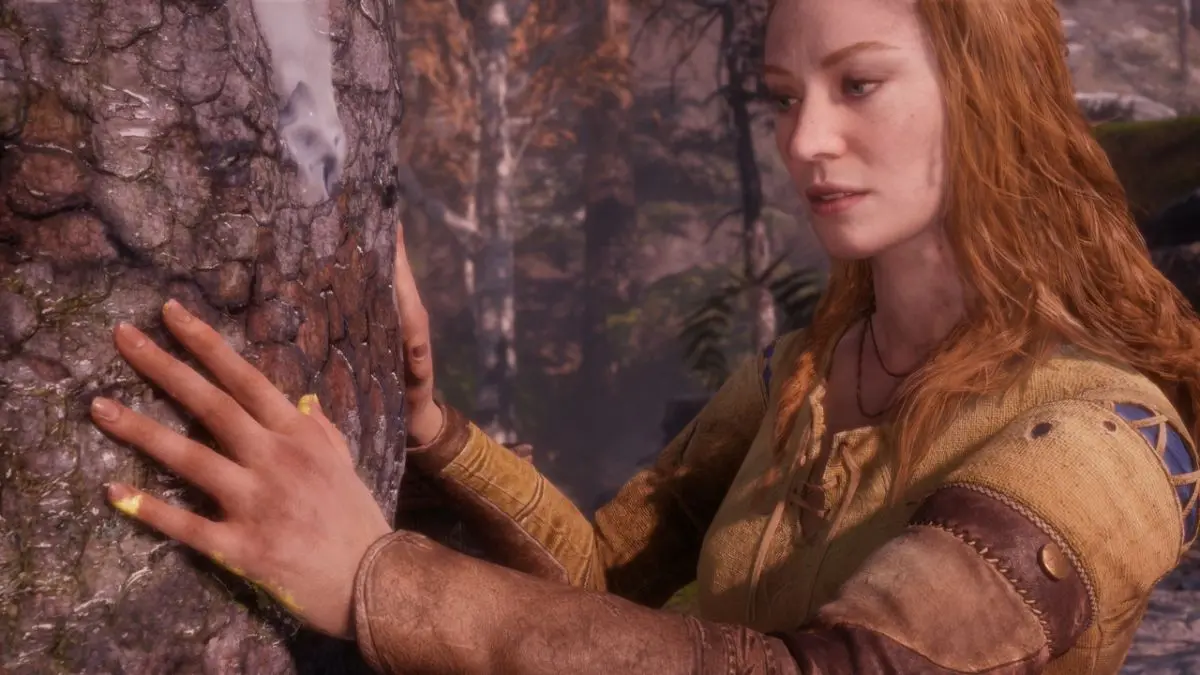

Few figures in the sprawling tapestry of Norse mythology have been as consistently overlooked as Laufey. Known primarily as the mother of Loki, the trickster god, she is one of those ancient characters who exists at the very edge of the surviving texts, appearing in fragments across the Prose Edda and Poetic Edda.
Yet her name carries enormous weight, and her influence on how we understand Loki’s origins remains quietly profound. With Santa Monica Studio’s newly announced ‘God of War: Laufey’, that shadow figure has finally stepped into the light as a full protagonist, and the creative leap between the mythological source material and the game’s reimagining is genuinely striking.
In the original Norse sources, Laufey is described in strikingly humble terms. She bears a second name, Nál, meaning “needle” in Old Norse, a name given to her because she was “slender and frail as a needle,” making this one of the very few physical descriptions given about a female figure in these ancient tales.
The Prose Edda, written by Snorri Sturluson around 1220, introduces her simply as Loki’s mother, without elaborating on her character, deeds, or personality. What scholars have found most remarkable about her, however, is not her appearance but her naming convention. Loki is frequently referred to as “Loki Laufeyjarson,” son of Laufey, rather than being identified through his father Farbauti, which is nearly unique among the gods in a patrilineal Norse society where children were almost always named after their fathers.
That mystery of maternal prominence is precisely where ‘God of War’ plants its flag. In the God of War universe, Laufey is reimagined as “Laufey the Just,” described as the Last Guardian of the Jötnar, and portrayed as a warrior who worked actively to prevent the Aesir’s cruel intentions toward the Nine Realms. The game preserves her identity as a Jötunn, but dramatically expands everything else. In Norse mythology, Laufey is classified as an Ásynjar, an Aesir goddess, but in ‘God of War’ she is instead a Jötunn, which allows Atreus to be portrayed as a half-god, half-giant offspring. This swap is deliberate and structurally clever, keeping the emotional logic of Loki’s hybrid heritage while engineering a different kind of family dynamic at the heart of Kratos’ story.
Now, with ‘God of War: Laufey’, Santa Monica is taking the character further than ever before. The game sees Faye awakening unexpectedly in a strange land after her funeral, discovering that the plans she put in place to protect Kratos and Atreus are now at risk, and she must fight through the Everywhen, the afterlife of the gods, where ruthless deities from across mythology compete for power in a land overflowing with dangerous magic. This is a direct continuation, not a prequel.
Franchise director Cory Barlog explicitly confirmed the game takes place after Faye’s death, making it a continuation of the established timeline rather than a look backward at her life before Kratos.
The choice to make Faye the protagonist was one the team had been building toward for years. In an interview with IGN, Barlog explained the idea was not about replacing Kratos, saying the studio saw it as “a chance to talk about somebody who was so pivotal to the beginning and get to know them and push beyond into this new world and give us some place to be surprised and see how things connect.” The game stars Deborah Ann Woll returning to voice Faye, with the story picking up at the moment shown briefly in the opening of ‘God of War’ (2018), when her body is burned on the funeral pyre.
What makes this contrast so rich is how little the ancient sources gave Santa Monica to work with in the first place. Laufey exists purely as a genealogical figure in Norse mythology, appearing only to define Loki’s origin, with no independent narrative role of her own according to scholars like John Lindow. Her importance in the ancient texts lies almost entirely in what she represents symbolically.
Her name means “leaf” or “tree island,” and her union with Farbauti, whose name translates to “dangerous striker” symbolizing lightning, gave birth to Loki as a metaphor for lightning igniting a tree. She is elemental in origin and maternal in function, with almost nothing else on record.
The game’s creative team has essentially written the character from scratch using that symbolic foundation as a launching pad. The PlayStation Blog described Faye as “a legendary warrior and leader whose impact was left on the Nine Realms long before she ever met Kratos,” with the game aiming to explore “the humanity, strengths, and flaws of the person whose legacy was beloved in the minds of many.”
The Everywhen itself serves as a brilliant device for expanding the mythology beyond Norse borders. Where previous ‘God of War’ entries largely focused on one mythology at a time, the Everywhen acts as a melting pot where gods from every tradition eventually converge, with figures like Sekhmet from Egyptian mythology and Begtse from Mongolian tradition already confirmed as antagonists.
The gap between Laufey of the Eddas and Faye of Santa Monica’s imagination is enormous, and that is arguably the most exciting thing about the new game. One version is a frail needle of a woman, barely named and never given a story of her own. The other is a giant warrior navigating the afterlife of all the gods. Both carry the same name and the same symbolic weight of a mother whose children define the world. Let us know in the comments whether you think Santa Monica has honored the spirit of the original myth or left it too far behind.
Have something to add? Let us know in the comments!