Where Was ‘Whalefall’ Filmed? Inside the Grueling California Coastal Locations and Sets

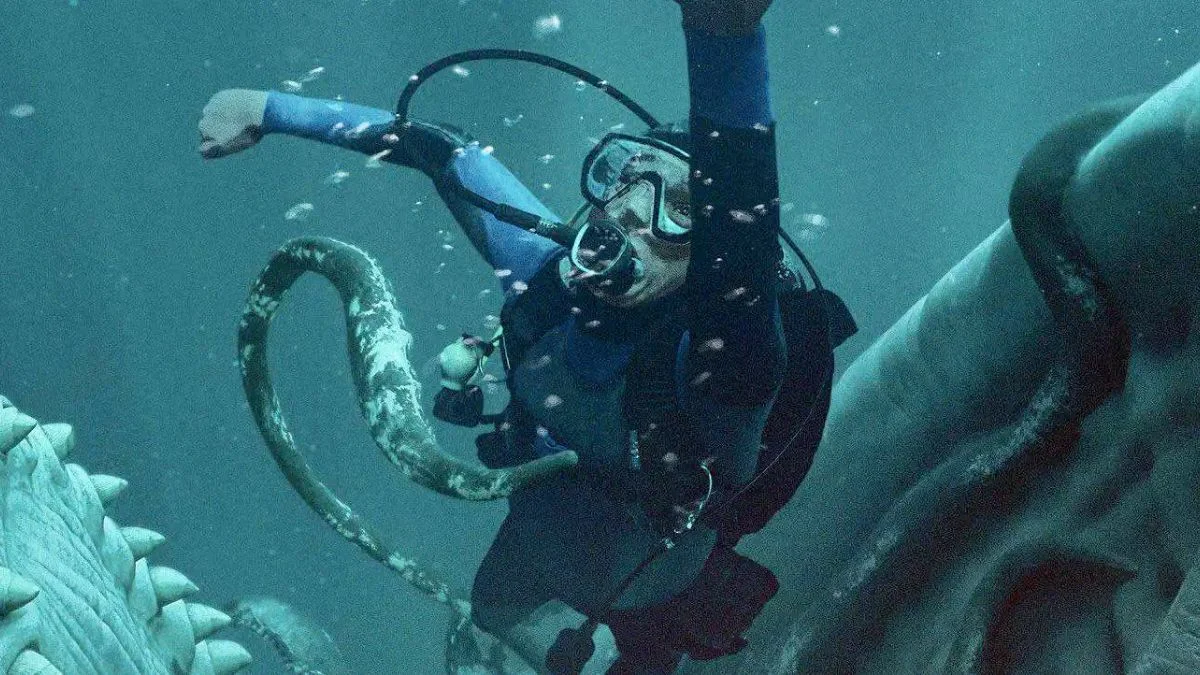

Historically, Hollywood productions grappling with deep-water dilemmas have frequently retreated to massive indoor water tanks or digital visual effects stages to avoid turbulent ocean tides. However, relying purely on artificial simulation often strips nautical stories of the genuine chill and tactile unpredictability that maritime settings naturally evoke. For director Brian Duffield and his creative team, capturing authentic atmospheric gravity required taking the cameras directly into the Pacific Ocean.
That uncompromising approach led the filmmakers to base principal photography entirely across coastal California, faithfully tracking the geographic roots of the source material. Rather than moving production out of state to higher-subsidy hubs like Louisiana, producers committed to local shores after the California Film Commission confirmed a $10.4 million tax credit allocation toward $48.7 million in local expenditures. This decision allowed ‘Whalefall‘ to shoot in the exact waters and neighborhoods author Daniel Kraus envisioned when writing his harrowing survival novel.
The Treacherous Waters of Monterey County and Monastery Beach
The central spine of the narrative unfolds along the scenic Monterey Peninsula, where lead character Jay Gardiner, played by Austin Abrams, embarks on a mission to recover his father’s remains. Production crews established major staging areas around Monastery Beach in Carmel-by-the-Sea, a location legendary among divers for its severe rip currents and sudden offshore shelf drop-offs. Known colloquially to locals as “Mortuary Beach,” the notoriously volatile shoreline provided the exact eerie tension required for Jay’s fateful descent.

Waterborne units spent extensive shoot days navigating Monterey Bay, deploying picture boats near the Monterey Coast Guard pier to stage open-water dives. Cinematographer Aaron Morton collaborated with specialized marine units to photograph the chilly grey chop and undulating kelp canopies that define Northern California diving. The natural weather patterns of Pacific Grove, complete with rolling morning marine layers and windswept bluffs, added a layer of gloom to the external maritime sequences.
Beyond the shoreline, the crew integrated inland community landmarks across Monterey to ground Jay’s domestic flashbacks with his father, played by Josh Brolin. Scenes depicting Jay’s younger years and athletic background were filmed on the campus grounds of Monterey High School. Additionally, atmospheric exterior sequences were captured among the dense pine ridges of Jacks Peak County Park, offering scenic vistas overlooking the rocky coastline.
Expanding Coastal Work to San Pedro and Catalina Island
While the central narrative remains firmly grounded in Monterey, logistics for a major studio production necessitated secondary coastal shooting across Southern California. Crews established base operations in San Pedro, taking advantage of industrial harbor infrastructure and maritime docks along Miner Street. A mid-century residence designed by architect Cliff May in the San Pedro area also served as a shooting location to depict the Gardiner family residence.
To execute intricate marine stunts without endangering performers in treacherous Monterey swells, the second unit journeyed toward Santa Catalina Island. The clear waters and manageable tidal currents surrounding Catalina provided ideal conditions for underwater photography of high-risk diving maneuvers. These offshore days allowed the production team to safely capture seamless transitions between ocean surfaces and deep-water descents.
Constructing the Belly of the Beast at Radford Studio Center
Shooting on the open sea accounted for the external journey, but portraying the interior of an 80-foot sperm whale required an immense soundstage triumph. The production set up shop inside Radford Studio Center in Studio City, California, where practical fabricators constructed a suffocating 12-foot-tall, 18-foot-wide whale anatomy set. Collaborating closely with scientific consultants and creature artists from Wētā Workshop, the team built textured chambers designed to simulate bile, muscle walls, and restrictive digestive passageways.
Working inside the compact, slime-slicked set pushed the cast and crew to their absolute physical limits across a grueling 62-day production schedule. Brian Duffield emphasized the dedication of his crew in capturing the harrowing ordeal, noting that “Every crew member said that it was the hardest thing they’ve ever done,” in an interview with The Hollywood Reporter. That painstaking mixture of practical stagecraft and genuine Pacific locations ultimately ensures ‘Whalefall’ feels like an unsparing, authentic battle for survival.
Do you think shooting ‘Whalefall’ in authentic California waters elevates the terror, or would digital sets have worked just as well?