Best Anime Villains of All Time, Ranked


Great antagonists give heroes something worth fighting for and audiences a reason to lean in. In anime, that often means layered backstories, distinctive abilities, and plans that reshape entire worlds. The figures below stand out for the way they drive plots forward, redefine stakes, and leave lasting fingerprints on their series’ themes, power systems, and iconography.
This lineup focuses on characters whose actions ripple through their stories—whether by masterminding conflicts, overturning political orders, or pushing protagonists to their limits. You’ll find a mix of battlefield tyrants, soft-spoken manipulators, and calculating masterminds, each defined by clear goals, signature techniques, and memorable confrontations that changed the course of their respective narratives.
10. Dio Brando

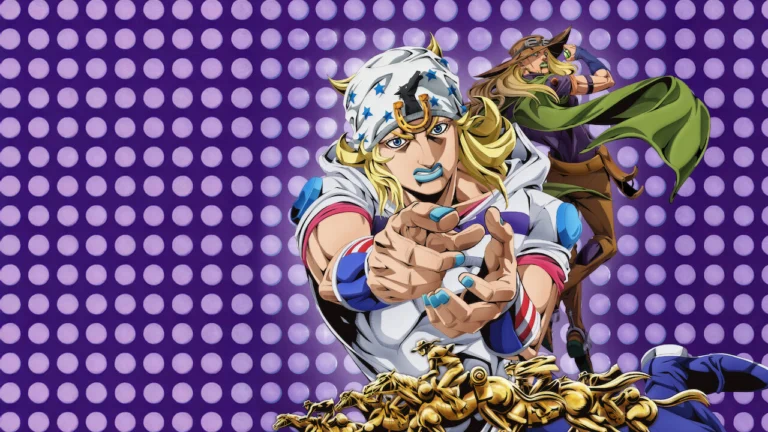
Dio Brando originates in ‘JoJo’s Bizarre Adventure’ as a ruthless usurper who uses the Stone Mask to become a vampire, setting the Joestar family feud in motion. His later return introduces Stand abilities, most notably The World, which can halt time and turn any encounter into a strategic puzzle where positioning and timing decide outcomes. His presence bridges story parts, linking multiple Joestar generations through inherited conflicts and shifting power systems.
Dio’s tactics hinge on recruiting Stand users and engineering deadly trials for the protagonists, which expands the series’ gallery of abilities and tests. The character’s methods—body theft, time-stop pressure, and layered subordinates—create multi-front threats that demand cooperation, adaptability, and specialized counters from the heroes across ‘JoJo’s Bizarre Adventure’.
9. Char Aznable

Char Aznable, from ‘Mobile Suit Gundam’, is an ace pilot and strategist whose masked persona conceals shifting loyalties within the Earth–Zeon conflict. His mastery of mobile suits and Newtype aptitude make him a persistent rival who can match technological advances with personal skill. Through duels, defections, and political maneuvers, he influences major battles and technological arms races that shape the franchise’s timeline.
As Char transitions from avenger to statesman, his actions drive ideological debates about space colonization, autonomy, and the balance between Earth and the colonies. His later leadership roles turn individual vendettas into policy decisions that affect entire populations, giving ‘Mobile Suit Gundam’ a framework for exploring warfare, nation-building, and reform.
8. Father

Father is the central antagonist of ‘Fullmetal Alchemist: Brotherhood’, originating from the Dwarf in the Flask and evolving into a being who seeks to transcend human limits through alchemy. His plan uses nationwide transmutation circles and homunculi agents to harvest souls, turning infrastructure, history, and warfare into components of a single, long-form ritual. The homunculi each embody a defined trait, creating a modular hierarchy of enforcers that execute targeted objectives.
By monopolizing knowledge, manipulating state institutions, and weaponizing alchemical rules, Father turns the series’ core science into a tool for mass control. His design forces the protagonists to re-examine the cost of equivalent exchange, the ethics of state power, and the vulnerabilities in a system where knowledge can be centralized and abused within ‘Fullmetal Alchemist: Brotherhood’.
7. Pain (Nagato)

Pain, operating through Nagato in ‘Naruto Shippuden’, deploys the Six Paths technique to distribute abilities across coordinated bodies, enabling simultaneous battlefield roles such as absorption, summoning, and resurrection. This configuration allows complex pincer strategies and sustained assaults against entire villages, not just individual opponents. The Rinnegan’s suite of powers makes area denial, reconnaissance, and rapid escalation part of his standard approach.
Beyond tactics, Pain pursues a doctrine that seeks enforced peace through overwhelming deterrence. By targeting shinobi power structures and demonstrating village-level vulnerability, he reframes security dynamics, alliance politics, and information control in the ninja world. His appearance compels ‘Naruto Shippuden’ to confront cycles of retaliation and the institutional roots of conflict.
6. Madara Uchiha

Madara Uchiha, from ‘Naruto Shippuden’, co-founded Konohagakure and later returns as the architect of a plan to place humanity under the Infinite Tsukuyomi. His Sharingan and Rinnegan techniques—Susanoo, space-time movement, and ocular-based genjutsu—combine siege capabilities with strategic deception. By mastering large-scale ninjutsu and battlefield control, he can shape engagements against entire coalitions.
Madara’s influence extends to clan politics, tailed-beast management, and the manipulation of historical narratives. His long-term contingencies—use of proxies, resurrection mechanisms, and layered failsafes—transform ‘Naruto Shippuden’ into a study of legacy warfare where decisions made in one era predetermine conflicts in the next.
5. Meruem

Meruem, the Chimera Ant King in ‘Hunter x Hunter’, begins as a biologically superior ruler whose Nen output, physical strength, and adaptability outclass elite hunters. As he engages with human culture—most notably the strategy game gungi—he iteratively refines decision-making and pattern recognition, turning personal growth into tactical evolution. His Royal Guards provide layered defense, counter-intelligence, and adaptive support that complicate direct assaults.
His arc reconfigures the power landscape by forcing hunters to adopt asymmetric strategies, including targeted sacrifices and specialized Nen conditions. The confrontation around his palace consolidates stealth, misinformation, and time-sensitive operations, pushing ‘Hunter x Hunter’ into high-risk scenarios where coordination and constraints define outcomes.
4. Frieza

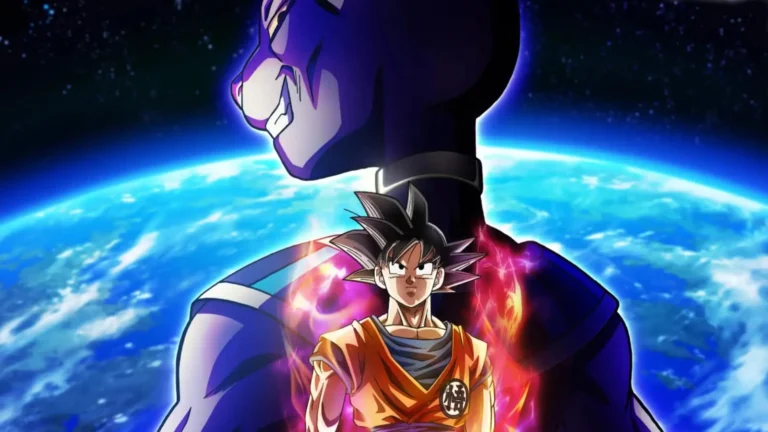
Frieza, from ‘Dragon Ball Z’ and ‘Dragon Ball Super’, is an interstellar tyrant who controls planets through military force, technological leverage, and a hierarchy of lieutenants. His transformation stages strategically manage energy, allowing him to adjust output and durability mid-battle. On Namek and beyond, his actions drive the escalation that reveals new Saiyan thresholds and power classifications.
By annihilating civilizations and enforcing economic exploitation, Frieza underpins the series’ galactic order and the Saiyan diaspora. Later developments introduce training-based evolution and further forms, demonstrating that even established power ceilings can be surpassed. This dynamic keeps ‘Dragon Ball Z’ and ‘Dragon Ball Super’ in a constant state of recalibration around emerging threats and counters.
3. Sōsuke Aizen

Sōsuke Aizen of ‘Bleach’ engineers a long deception within the Gotei 13, leveraging Kyōka Suigetsu’s complete hypnosis to misdirect allies and enemies alike. His fusion with the Hōgyoku enables rapid metamorphosis and resilience, letting him bypass conventional limits on spiritual pressure and durability. Through the Arrancar program, he builds an army with structured ranks and defined releases that bring new mechanics into play.
Aizen’s operations—information control, infiltration, and staged betrayals—recast battles as contests of perception rather than raw power. By the time his plans converge, ‘Bleach’ hinges on counter-intelligence, illusion-proof strategies, and the necessity of redundancies when a single misread can decide an entire conflict.
2. Johan Liebert

Johan Liebert, from ‘Monster’, operates without supernatural abilities, relying instead on charisma, psychological profiling, and meticulous planning. He cultivates identities, exploits institutional blind spots, and selects intermediaries who act without recognizing the full design. His background links to experimental environments and orphanage systems that produced specific behavioral patterns he can manipulate.
Johan’s methods turn ordinary settings—hospitals, schools, neighborhoods—into stages where small nudges lead to irreversible outcomes. Investigations around him require cross-border cooperation, record-tracing, and interviews that peel back layers of assumed truth. Through these techniques, ‘Monster’ examines how narratives can be authored and weaponized in everyday life.
1. Griffith

Griffith of ‘Berserk’ leads the Band of the Hawk with disciplined logistics, political networking, and battlefield acumen before undergoing a transformation that redefines the series’ power hierarchy. His choices revolve around long-range goals that prioritize statecraft, patronage, and tactical marriages of convenience. When circumstances shift, he leverages a behelit to change the rules of engagement entirely.
The result is a new geopolitical order in which armies, nobles, and supernatural forces intersect under consolidated leadership. Griffith’s strategies—city pacification, resource planning, and symbolic pageantry—reshape institutions and beliefs, positioning ‘Berserk’ to explore the mechanics of conquest, legitimacy, and the costs of grand designs.
Share your own picks for unforgettable anime antagonists in the comments!