Christopher Nolan Pushes Back On Matt Damon’s ‘The Odyssey’ Warning: “There’s a Defeatist Aspect” To That View

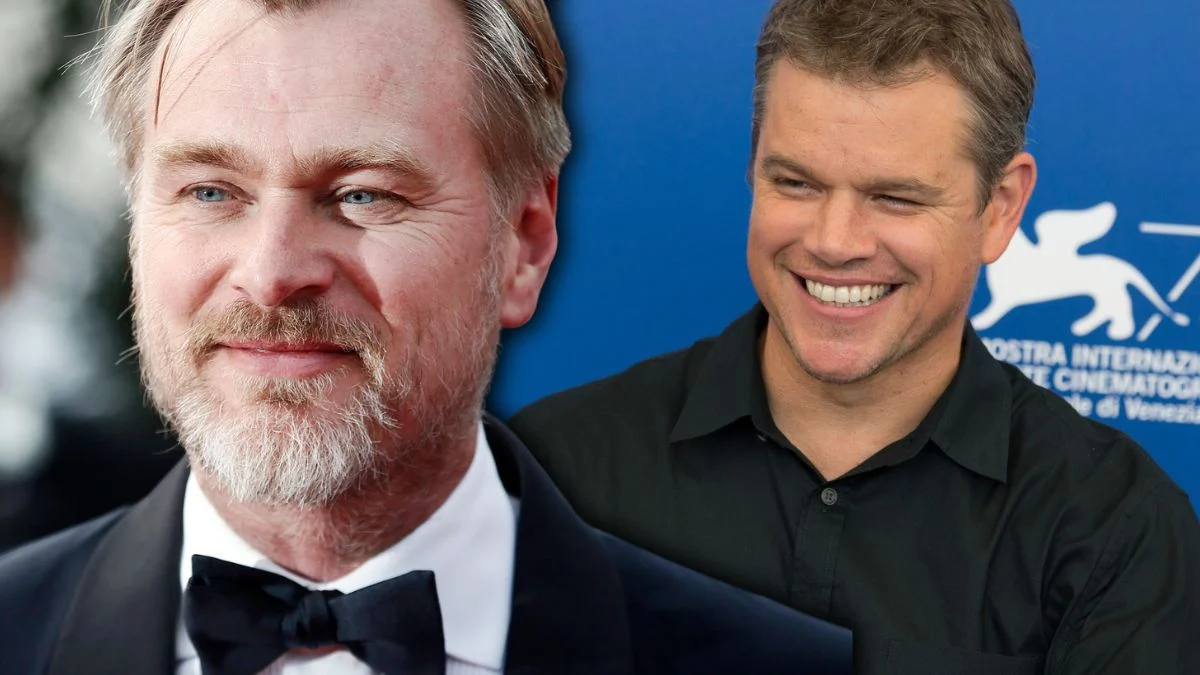

Christopher Nolan is pushing back against the idea that his upcoming film The Odyssey represents the end of a dying era in Hollywood filmmaking.
During the promotion of the epic adaptation of Homer’s famous poem, Matt Damon, who stars as Odysseus, has repeatedly suggested that movies made on this scale may soon become rare. Damon believes Nolan’s commitment to practical effects, large-format cameras, and filming around the world represents a style of filmmaking that studios may not continue supporting.
In an interview with GQ earlier this year, Damon said making The Odyssey gave him a nostalgic feeling because it reminded him of the kind of major productions he worked on early in his career.
“It was a really weird movie for me personally in the sense that I had almost a nostalgic feeling the entire time I was making it, because it felt like the movies when I started working,” Damon said. “I knew that this was the last chance I was going to have to do something like this… I don’t think people are going to be given the resources to shoot movies that way for much longer.”
However, Nolan does not share that pessimistic view. Speaking with The Telegraph, the director said he understands why Damon feels that way but believes audiences are still showing strong support for ambitious, original filmmaking.
“I think I know what [Damon] was driving at, because it does seem like a long time since somebody made a film like this in this type of way, where you travel the world, get together a cast of thousands and so on,” Nolan explained. “But there’s a defeatist aspect of viewing it that way that I don’t agree with.”
Nolan argued that cinema is still evolving and pointed to younger filmmakers and new voices as proof that the industry is far from finished.
“I think cinema is vital and essential and continues to transform itself — we’ve got all these great new young voices in movies, making the medium their own and moving it forward,” Nolan said.
The filmmaker also pointed to recent unexpected successes as evidence that audiences are still interested in unique cinematic experiences. Nolan mentioned films like Backrooms and Obsession, saying their popularity proves that younger audiences are willing to embrace challenging and unusual movies.
“This is why I never bought into the arguments that young audiences’ attention spans are too fried to enjoy a three-hour Greek epic,” Nolan said. “Those films are so mysterious and ruminative. I mean, parts of Backrooms are like David Lynch at his most obscure. And yet young people can’t get enough of them.”
Nolan also discussed the growing debate around artificial intelligence in filmmaking. While he acknowledged that AI technology could have useful applications, he believes audiences are rejecting content that feels artificial or lacks a human touch.
The director said younger viewers have been especially critical of low-quality AI-generated content, often described online as “AI slop.”
“I’ve never seen a more rapid wholesale dismissal of a supposedly foundational jump in technology in my lifetime,” Nolan said. “So much energy has been expended on bringing in AI, but if you look at that generation’s reaction, they’re utterly rejecting it.”
In another interview with AFP, Nolan continued his criticism of the idea that AI could replace human creativity.
Do you agree with Christopher Nolan that big Hollywood epics still have a future?
“The idea that it replaces human beings wholesale and human creativity, to me it’s a nonsense,” Nolan said.
For Nolan, the future of movies is not about looking backward or giving up on traditional filmmaking. Instead, he believes audiences will continue supporting stories that feel personal, creative and made with real human effort.
The Odyssey arrives in theaters on July 17, bringing Nolan’s latest large-scale vision to audiences around the world.
Have something to add? Let us know in the comments!