Most Evil Anime Villains of All Time


Some anime villains leave a quick impression and then fade, while others linger in the mind because of what they do and how precisely they do it. This list gathers characters whose actions drive their stories forward through manipulation, cruelty, or a chilling kind of purpose that shapes the worlds around them.
You will see masterminds who never raise a hand and warlords who destroy nations with a flick of a finger. You will also find monsters who wear human faces and humans who turn themselves into monsters on purpose. Studios like Madhouse, Bones, Toei Animation, and more helped bring these antagonists to life through careful direction and memorable production choices that keep their presence unforgettable.
Johan Liebert (‘Monster’)

Johan engineers crimes across Europe through careful grooming of vulnerable people and calculated acts that create chain reactions. He manipulates legal systems, charities, and schools to build a network of disposable pawns while erasing traces of his involvement at every step. The story shows how his influence persists even when he is not on screen, which makes every meeting with him feel like the end of a long trap.
The Madhouse adaptation frames Johan through quiet scenes that highlight routine settings turning unsafe. Dialogue choices and restrained music place attention on his precise wording and on the reactions of people who only realize too late that they trusted the wrong person.
Griffith (‘Berserk’)

Griffith rises from poverty to command the Band of the Hawk through strategy, political maneuvering, and battlefield success. When personal ambition and fate collide, he sacrifices allies to become Femto and secures power from a supernatural order that reshapes the series. His choices set off wars, possession, and a new reality that bends to the will of beings beyond human limits.
Anime adaptations have appeared under different studios, beginning with a classic television series and later projects that expanded key arcs. Each version tracks Griffith’s transformation with distinct visual approaches that move from grounded medieval warfare to unsettling scenes of ritual and consequence.
Light Yagami (‘Death Note’)

Light starts as a top student who discovers a notebook that kills anyone whose name he writes, then builds a hidden empire by testing rules, collecting information, and exploiting law enforcement gaps. He runs layered identities, coopts followers, and stages public executions to control global behavior. The conflict with L and later investigators turns into a study of surveillance methods and countermeasures that escalate in complexity.
The Madhouse series uses crisp editing to show Light’s decision trees and the consequences of each move. Camera framing and sound design underline how a quiet room can become the most dangerous place in the story when a pen moves across paper.
Frieza (‘Dragon Ball Z’)

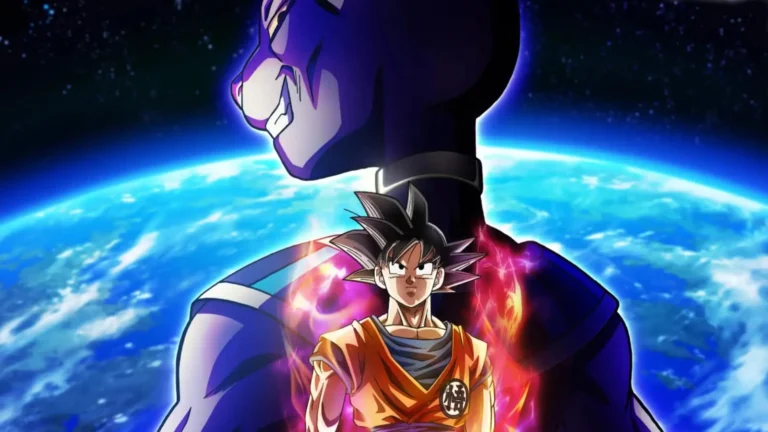
Frieza commands an interstellar trade and conquest operation that clears planets for sale and wipes out species that might resist him. He uses tiered transformations to test opponents while hiding his full power until it serves his interests. His destruction of Planet Vegeta and the events on Namek set up major conflicts that ripple across later arcs and draw multiple factions into battle.
Toei Animation presents Frieza’s forms with distinct silhouettes and pacing that build tension as each stage reveals new speed and technique. Extended fights make space for tactical adjustments, while small character beats show how his arrogance can become a weapon or a blind spot.
Sosuke Aizen (‘Bleach’)

Aizen hides in plain sight as a trusted captain, then reveals a long plan that rewrites political structures in Soul Society. He uses the Kyoka Suigetsu to control all five senses of anyone who has seen its release, which lets him stage murders, frame allies, and move through secure spaces without resistance. His experiments in Hollowfication and creation of the Hogyoku merge science and mysticism to push boundaries of power.
Studio Pierrot balances large scale battles with investigative stretches that unpack how Aizen seeded false leads years earlier. The show uses visual cues to indicate illusion and reality during clashes, which helps viewers track when characters are acting under his influence.
DIO Brando (‘JoJo’s Bizarre Adventure’)

DIO seeks immortality first through a Stone Mask and then gains a Stand that controls time. He recruits Stand users across the world through bribery and intimidation, creating a network that targets the Joestar bloodline. His tactics include attacks on allies, turning family members against each other, and using time stops to set up unavoidable strikes.
David Production presents DIO with bold color shifts and typography that emphasize the shock of time manipulation. Battle choreography focuses on timing windows and counters, which makes each second of stopped time feel like a complete arena where only DIO can move.
Naraku (‘Inuyasha’)

Naraku begins as a human corrupted by desire and becomes a demon who puppeteers others through shapeshifting and curses. He splits his body into detachments to gather shards, sow distrust among allies, and force enemies into traps that advance his goals. His barriers and strategic retreats make pursuit a test of patience as he rebuilds and returns stronger.
Sunrise keeps Naraku’s presence active through recurring encounters that show new bodies and altered weaknesses. The anime uses recurring motifs to mark his influence, which helps viewers recognize how one manipulator can extend reach across villages, clans, and eras.
Father (‘Fullmetal Alchemist: Brotherhood’)

Father starts as a being contained in a flask who gains freedom through an exchange, then creates Homunculi to serve as arms of a larger plan. He establishes a national project that uses alchemy, state power, and war to build a transmutation circle of staggering size. His calm approach to mass sacrifice and the use of seven embodiments of vice turn politics and science into parts of one machine.
Bones presents Father in two forms that highlight distance from humanity, first as a wise figure who offers answers and later as a presence that treats people as fuel. Tight plotting shows how clues planted early reveal the scale of the plan only when it is almost complete.
Shou Tucker (‘Fullmetal Alchemist: Brotherhood’)

Shou Tucker seeks to retain his State Alchemist certification and crosses a line that shocks even seasoned investigators. He fuses living beings to produce results that look like progress on paper while ignoring suffering and consent. His work turns a family home into a laboratory where everyday objects become reminders of irreversible decisions.
The Bones adaptation treats Tucker’s scenes with quiet framing that lets small domestic moments reveal hidden purpose. Sound and pacing avoid spectacle during key discoveries, which makes the consequences clearer and keeps attention on the human cost of his research.
All For One (‘My Hero Academia’)

All For One steals quirks, distributes them to followers, and reclaims or combines them to suit any confrontation. He builds criminal organizations through mentorship and manipulation while targeting public trust in heroes. His history with All Might anchors a conflict that spans generations and shapes how society writes laws and trains students.
Bones uses layered effects to depict quirk combinations and the sudden shifts in advantage they create. The anime mixes public broadcasts, classroom scenes, and street level encounters to show how one villain can pressure a culture that depends on visible symbols of safety.
Ragyo Kiryuin (‘Kill la Kill’)

Ragyo runs a fashion conglomerate that secretly uses Life Fibers to control and harvest humanity. She experiments on her own family and directs a global distribution system that hides predation behind uniforms and trends. Her leadership style blends ceremony and violence to keep subordinates loyal until they outlive their purpose.
Studio Trigger stages Ragyo’s appearances with striking lighting and ornate costume design that reflect her control of the setting. Action sequences show how Life Fibers change the rules of combat and turn clothing into a battlefield that affects every civilian caught in the rollout.
Shogo Makishima (‘Psycho-Pass’)

Makishima tests the Sibyl System by arranging crimes that slip past its scanners and unsettle public faith in automated justice. He recruits disaffected individuals, funds experiments, and targets infrastructure to expose weaknesses in a society built on quantifying mental states. His methods rely on reading people well enough to push them into choices that create maximum disruption.
Production I. G frames conversations as key battlegrounds, since a few precise sentences can redirect an entire investigation. The series contrasts sterile environments with sudden violence, which reinforces how Makishima’s plans move from theory to impact without warning.
Meruem (‘Hunter x Hunter’)

Meruem arrives as the Chimera Ant King with raw strength, then studies human culture to evaluate which systems serve his aims. He reorganizes his forces, uses living experiments to expand abilities, and challenges the world by targeting political leaders and strategic resources. His evolution raises questions about the limits of power and how empathy can appear in unexpected places while war continues around him.
The Madhouse adaptation maintains a measured pace that lets strategy and moral complexity unfold through extended scenes. Careful lighting and close shots show shifts in Meruem’s reasoning while large scale battles track the consequences of every decision he makes.
Madara Uchiha (‘Naruto Shippuden’)

Madara shapes shinobi history through early conflicts, secret agreements, and a long plan that continues after his death. He manipulates clans, uses forbidden techniques, and engineers events that bring tailed beasts and nations under one strategy. His mastery of Sharingan and Rinnegan lets him rewrite battlefields and control opponents who thought they understood the rules.
Studio Pierrot presents Madara’s return with set pieces that emphasize how one fighter can alter an entire war. The anime weaves flashbacks with current events to connect personal grudges to geopolitical outcomes, which clarifies why his ideology persists beyond a single lifetime.
Bondrewd (‘Made in Abyss’)

Bondrewd explores the Abyss by treating human lives as necessary materials for discovery. He builds facilities, secures funding, and designs artifacts that demand sacrifices from children who trust the adults around them. His experiments produce breakthroughs that expand what is possible while crossing ethical lines that other explorers refuse to approach.
Kinema Citrus renders Bondrewd’s layer with quiet detail that makes laboratories feel normal until their purpose becomes clear. The contrast between soft character designs and harsh outcomes strengthens each reveal, which keeps attention on how scientific progress can hide cruelty when no one is watching.
Share your picks for the most chilling anime villains in the comments.